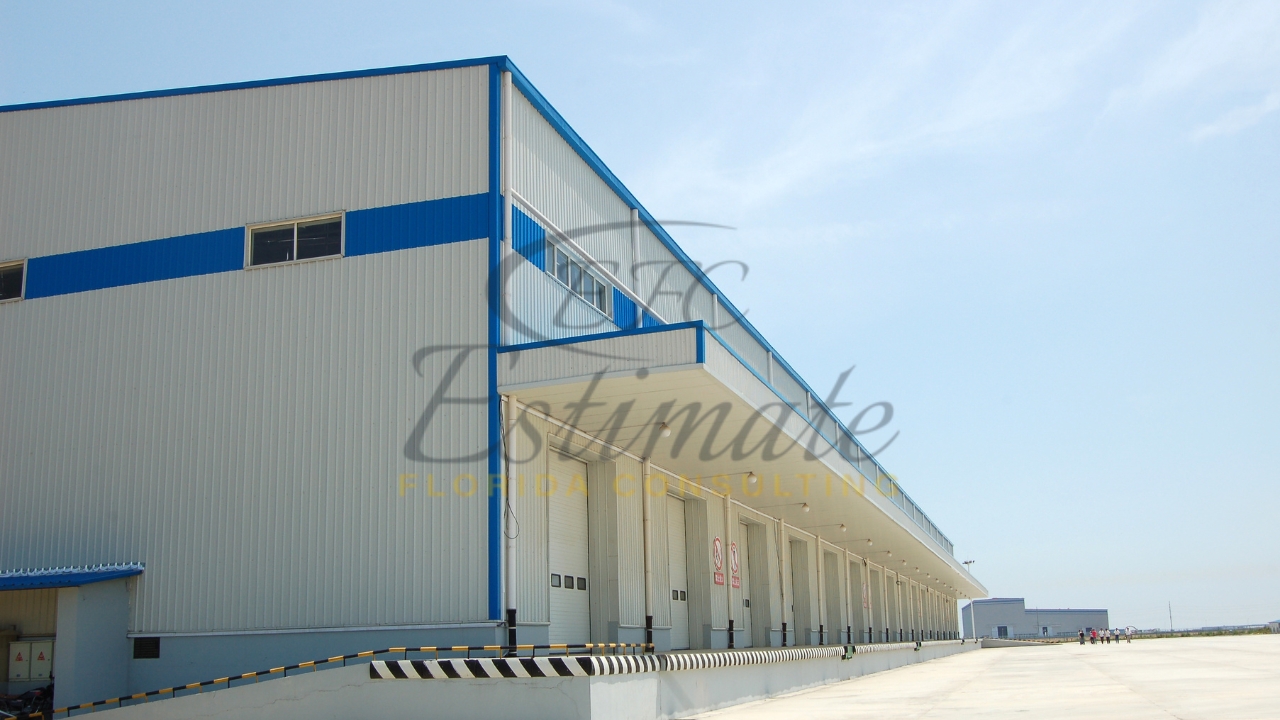
Florida remains one of the most active industrial construction markets and commercial development sectors in the United States, supported by steady population growth, expanding transportation infrastructure, increased port activity, and rising demand for e-commerce warehouses, distribution centers, and modern logistics facilities. Across North Florida, Central Florida, and South Florida, developers continue delivering warehouse buildings, fulfillment centers, and efficient industrial storage facilities that strengthen regional and national supply chains.
Understanding the warehouse build cost in Florida 2026, industrial construction cost per square foot, and overall commercial warehouse pricing is essential for accurate project budgeting, feasibility analysis, and investment planning. Costs are shaped by building size, structural systems, site development requirements, labor rates, material pricing, HVAC and electrical systems, fire protection, permitting, floodplain compliance, and hurricane-resistant construction standards. Estimate Florida Consulting delivers reliable warehouse construction cost estimates, enabling owners, developers, and contractors to make informed decisions and maintain strong cost control throughout the planning process.
Average Warehouse Construction Cost per Square Foot in Florida (2026)
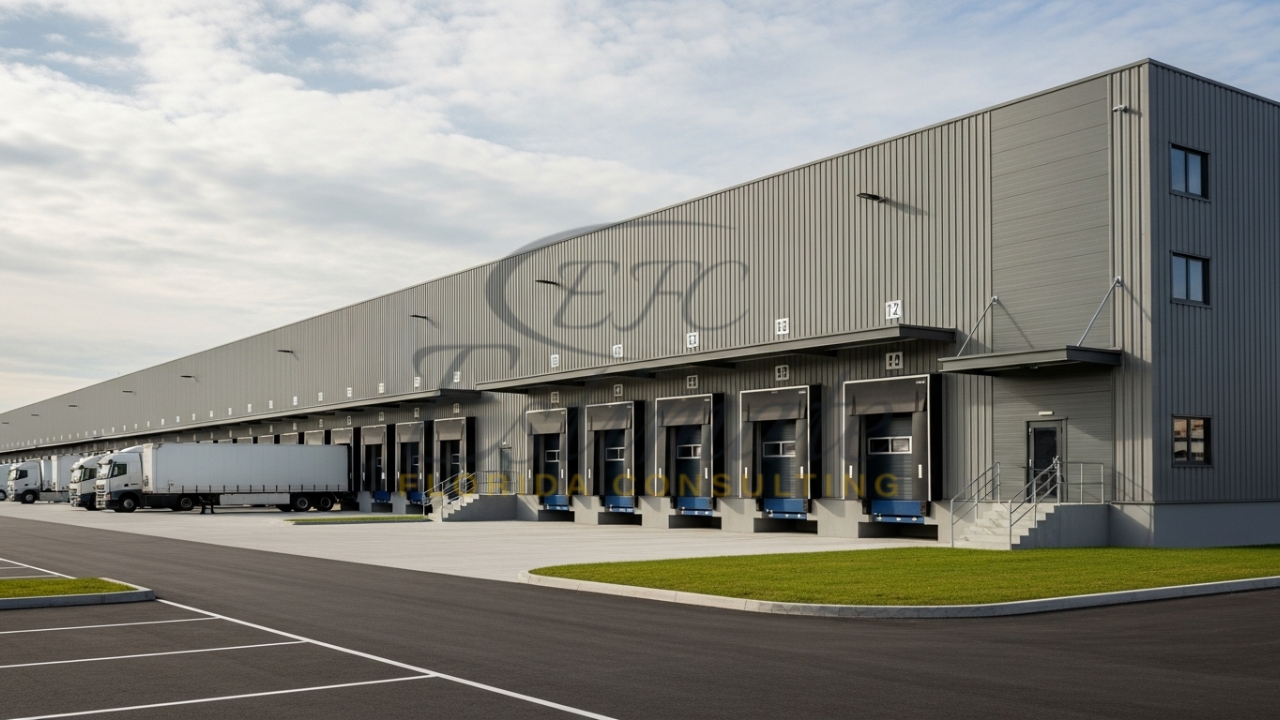
Warehouse construction costs in Florida typically fall within a broad range because industrial warehouse projects vary significantly in scope, design complexity, and operational use. Cost per square foot depends heavily on warehouse functionality, storage requirements, interior improvements, structural system selection, ceiling clear height, mechanical systems, and automation readiness. Basic warehouse shells intended for storage or light distribution generally sit at the lower end of the pricing spectrum, while high-volume logistics warehouses, e-commerce fulfillment centers, manufacturing facilities, and cold storage buildings require substantially higher capital investment.
In addition to operational requirements, regional labor market conditions, construction insurance costs, building code enforcement, environmental regulations, and coastal construction standards directly affect per-square-foot warehouse pricing. Warehouses located in high-wind zones or flood-prone regions must meet enhanced structural and foundation requirements, increasing both material quantities and construction labor complexity.
Warehouse Construction Cost per Square Foot
| Warehouse Type | Cost per Sq Ft (Low) | Cost per Sq Ft (High) |
| Basic Warehouse Shell | $78 | $117 |
| Standard Distribution Warehouse | $111 | $163 |
| Logistics / Fulfillment Center | $137 | $202+ |
| Manufacturing Warehouse | $163 | $273+ |
| Cold Storage Warehouse | $221 | $371+ |
These figures represent warehouse construction-only costs and exclude industrial land acquisition, financing fees, warehouse racking systems, material handling equipment, automation technology, and tenant-specific build-outs. Final construction pricing often depends on site constraints, soil conditions, utility availability, zoning approvals, and permitting complexity encountered during pre-construction.
Total Warehouse Build Cost by Size in Florida
Warehouse size plays a significant role in determining total industrial construction cost, but it is not the only variable influencing project budgets. Larger warehouse facilities require greater upfront capital but often achieve lower average construction cost per square foot due to economies of scale, efficient structural layouts, and simplified building geometry. Smaller warehouse buildings may experience higher per-square-foot pricing because fixed costs such as permitting, mobilization, utilities, and inspections are distributed across fewer square feet.
Total project budgets increase further as warehouse facilities grow more complex. Larger distribution centers and logistics hubs often require higher clear heights, reinforced concrete slabs, expanded electrical service, advanced fire protection systems, and additional loading dock positions, all of which increase overall construction investment.
Estimated Total Warehouse Construction Cost
| Warehouse Size | Estimated Low Cost | Estimated High Cost |
| 5,000 sq ft | $383,000 | $930,000 |
| 10,000 sq ft | $761,000 | $1.78 million |
| 20,000 sq ft | $1.52 million | $3.58 million |
| 30,000 sq ft | $2.28 million | $5.40 million |
| 50,000 sq ft | $3.90 million | $9.30 million |
| 100,000+ sq ft | $7.60 million | $18.60+ million |
When analyzing warehouse budgets, developers must also consider future expansion potential, operational scalability, tenant flexibility, lease requirements, and long-term asset performance, all of which influence initial design and construction decisions.
Regional Warehouse Construction Cost Differences Across Florida
Construction costs for warehouses vary considerably across Florida due to differences in regional labor markets, industrial land pricing, insurance premiums, transportation access, and local regulatory requirements. Inland and North Florida markets typically offer more competitive pricing due to lower labor costs, reduced exposure to hurricane risk, and simplified permitting processes. In contrast, South Florida and coastal regions experience higher warehouse construction costs driven by stricter building codes, elevated insurance requirements, and enhanced material specifications.
Regional cost differences are also influenced by market demand and development density. Warehouse projects located near ports, airports, rail corridors, and major interstate highways often face higher construction pricing due to increased competition for skilled labor and materials.
| Florida Region | Cost Impact |
| Inland & North Florida | Baseline pricing |
| Central Florida | 5% – 10% higher |
| South Florida | 15% – 30% higher |
| Coastal & Flood-Zone Areas | 20% – 35% higher |
Warehouse Construction Methods and Cost Comparison
The construction method selected for a warehouse has a direct impact on overall construction cost, project duration, labor efficiency, structural performance, and long-term durability. Pre-engineered metal buildings are widely used for industrial construction because they allow faster erection schedules, reduced labor hours, predictable material quantities, and lower construction risk. Tilt-up concrete construction is often selected for larger distribution facilities where fire resistance, security, and structural longevity are priorities.
Cold storage warehouses represent a separate category of industrial construction, requiring specialized wall assemblies, thermal insulation systems, refrigeration infrastructure, and backup power, which significantly increase project complexity and cost.
| Construction Method | Cost per Sq Ft |
| Pre-Engineered Metal Building (PEMB) | $78 – $130 |
| Tilt-Up Concrete Construction | $117 – $189 |
| Conventional Steel Framing | $143 – $234 |
| Cold Storage Construction Systems | $221 – $371+ |
Land Acquisition, Site Selection, and Industrial Zoning
Land acquisition and site selection play a critical role in the total cost of warehouse development. Industrial land prices in Florida vary widely depending on proximity to interstates, ports, rail terminals, airports, freight corridors, and logistics hubs. Sites closer to transportation infrastructure offer operational advantages but often come with higher land acquisition and site development costs.
Zoning approvals, utility access, environmental constraints, traffic impact requirements, and access design can significantly affect both construction schedules and industrial development budgets. Proper site selection helps reduce costly redesigns and regulatory delays later in the project lifecycle.
Soil Conditions, Drainage, and Stormwater Management
Florida’s soil conditions and high groundwater levels often require soil stabilization, engineered fill, dewatering systems, and enhanced foundation design during warehouse construction. Poor soil quality increases earthwork and concrete costs and may affect structural design decisions.
Stormwater management is another major consideration. Retention ponds, underground drainage systems, erosion control measures, and environmental compliance are mandatory for most warehouse developments and can represent a substantial portion of overall site development costs, particularly for large industrial parcels.
Fire Protection, Life Safety, and Code Compliance
Fire protection systems are a significant cost driver for warehouse construction, particularly for high-pile storage warehouses, distribution centers, and manufacturing facilities. Depending on building size and storage height, projects may require advanced sprinkler systems, fire pumps, water storage tanks, fire-rated construction assemblies, and enhanced life-safety features.
These systems are essential for code compliance, insurance approval, tenant requirements, and long-term operational safety, making them a critical component of warehouse construction budgeting.
Electrical Infrastructure, Power Capacity, and Technology Readiness
Modern warehouses require robust electrical infrastructure to support high-bay LED lighting, warehouse automation systems, conveyor equipment, data and communication networks, security systems, and future technology upgrades. Facilities designed for e-commerce fulfillment or manufacturing typically require higher power capacity and more complex electrical distribution systems.
Planning electrical infrastructure early in the design process helps avoid costly retrofits and supports long-term operational efficiency and scalability.
HVAC Requirements and Climate Control Considerations
HVAC requirements vary significantly depending on warehouse use and occupancy. Basic storage warehouses may require minimal climate control, while manufacturing facilities, pharmaceutical storage, food distribution centers, and temperature-controlled warehouses demand advanced HVAC systems with higher energy consumption.
Increased HVAC capacity raises mechanical costs, coordination complexity, and operational expenses, making accurate planning essential during pre-construction budgeting.
Truck Courts, Loading Docks, and Site Circulation
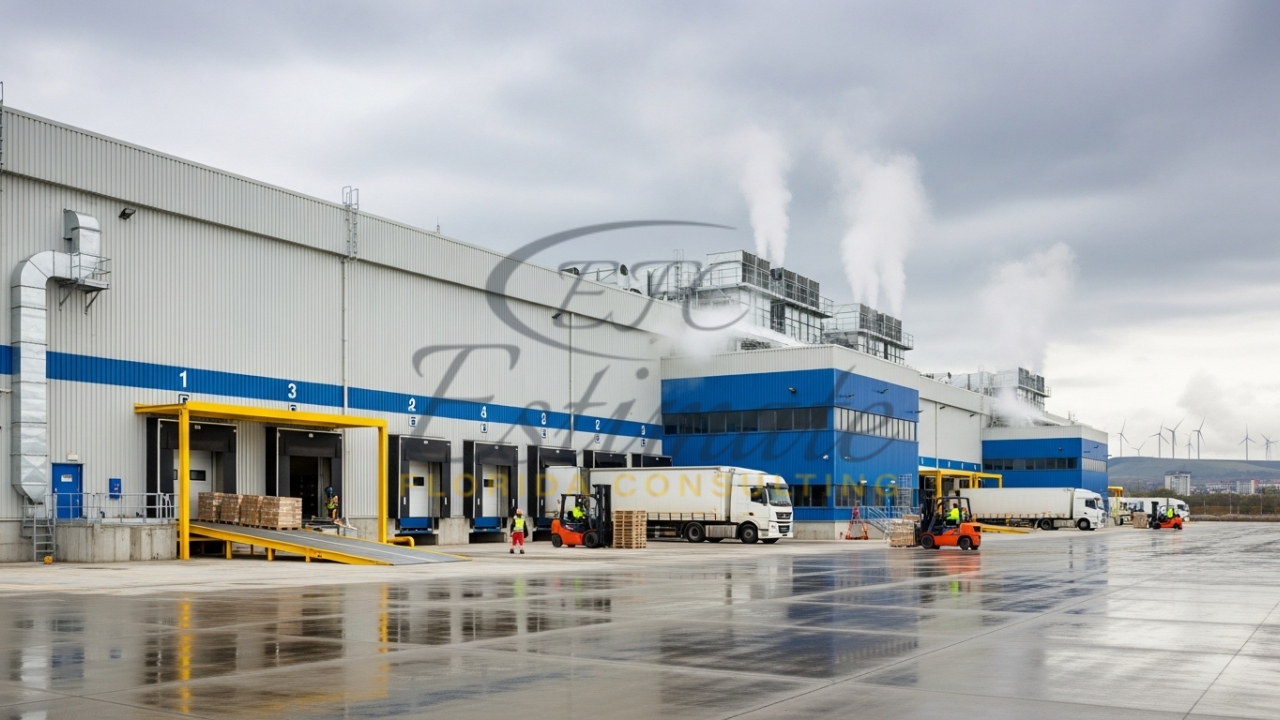
Efficient truck circulation is essential for warehouse operations and logistics performance. Truck courts, loading docks, reinforced pavement, trailer staging areas, and site circulation layouts all contribute to site development costs and daily operational efficiency.
High-throughput logistics and distribution facilities often require deeper truck courts, higher dock counts, and heavy-duty pavement sections to support frequent truck traffic and long-term durability.
Parking, Employee Facilities, and Tenant Improvements
Most warehouse projects include employee parking areas, office space, restrooms, break rooms, locker rooms, and support facilities to meet operational and regulatory requirements. Tenant improvements such as mezzanines, office interiors, specialized flooring, and data infrastructure can significantly increase construction costs beyond base shell pricing.
Careful planning of these elements helps balance functionality, tenant needs, and overall project budgets.
Energy Efficiency, Sustainability, and Long-Term Operating Costs
Energy-efficient design strategies are increasingly incorporated into warehouse construction to reduce long-term operating costs and improve asset performance. LED lighting systems, insulated wall panels, reflective roofing membranes, energy-efficient HVAC equipment, and smart building controls contribute to lower utility expenses and improved sustainability.
Although these features may increase initial construction costs, they often enhance asset value, tenant appeal, and long-term return on investment.
Future Expansion and Flexible Warehouse Design
Designing warehouses with future expansion in mind allows businesses to scale operations without major disruptions. Expandable structural systems, scalable utility infrastructure, flexible layouts, and modular building components help reduce future capital expenditures and extend the functional life of the facility.
Warehouse Construction Cost Estimating Services by Estimate Florida Consulting
Estimate Florida Consulting provides professional warehouse construction cost estimating services for industrial projects across Florida. Services include conceptual cost modeling, detailed material takeoffs, labor cost analysis, pre-construction budgeting, and value engineering support for warehouses, distribution centers, manufacturing facilities, and cold storage buildings.
Each estimate reflects current Florida market pricing, regional labor conditions, site-specific constraints, and local building code requirements, helping clients make informed financial decisions before construction begins.
Why Accurate Warehouse Cost Estimating Matters?
Accurate cost estimating is essential for aligning design intent, financing strategy, and construction execution. Inaccurate budgets can lead to financing gaps, project delays, scope reductions, and cost overruns. Professional estimating helps manage risk, improve cost control, and ensure realistic expectations throughout the project lifecycle.
Why Choose Estimate Florida Consulting?
Estimate Florida Consulting is a trusted provider of warehouse construction cost estimates for developers, contractors, and investors across Florida. Our team specializes in industrial and commercial construction estimating, with a deep understanding of regional labor rates, material pricing, permitting requirements, and Florida Building Code compliance. We prepare accurate, data-driven estimates that account for site conditions, warehouse size, construction method, clear height requirements, and mechanical, electrical, and fire protection systems. Each estimate includes detailed material takeoffs, labor cost analysis, and realistic budgeting to support financing, planning, and decision-making. By choosing Estimate Florida Consulting, clients reduce the risk of cost overruns, avoid budget surprises, and gain clear financial insight before construction begins—helping warehouse projects move forward with confidence and control.
Conclusion
Warehouse construction in Florida continues to be driven by strong demand from logistics, e-commerce, manufacturing, and industrial storage sectors. As this guide shows, the warehouse build cost in Florida 2026 is shaped by a wide range of factors, including building size, construction method, site conditions, regional labor markets, code compliance, and operational requirements. From basic warehouse shells to advanced logistics hubs and cold storage facilities, understanding cost drivers early allows developers and investors to plan more accurately and reduce financial risk. With detailed cost analysis, realistic budgeting, and Florida-specific market insight, Estimate Florida Consulting helps clients navigate complex construction variables, maintain cost control, and move forward with confidence throughout the warehouse development process.
FAQs: Warehouse Build Cost in Florida 2026
- How much does it cost to build a warehouse in Florida in 2026?
Warehouse construction costs in Florida typically range from $78 to $200+ per square foot, depending on warehouse type, size, location, and level of mechanical and electrical systems.
- What is the average cost to build a 50,000 sq ft warehouse in Florida?
A 50,000-square-foot warehouse generally costs between $3.9 million and $9.3 million, depending on construction method, site conditions, and operational complexity.
- Are warehouse construction costs higher in South Florida?
Yes. South Florida and coastal areas usually have higher warehouse construction costs due to stricter hurricane-resistant building codes, floodplain compliance, higher insurance costs, and labor pricing.
- What is the most cost-effective warehouse construction method?
Pre-engineered metal buildings (PEMB) are typically the most cost-effective option, offering faster construction timelines and lower labor costs compared to other methods.
- Do warehouse construction costs include land and equipment?
No. Warehouse construction costs generally exclude land acquisition, financing, racking systems, automation equipment, and tenant improvements, which should be budgeted separately.
- Why do cold storage warehouses cost more to build?
Cold storage facilities require specialized insulation, refrigeration systems, backup power, and higher energy infrastructure, making them significantly more expensive than standard warehouses.
- How long does it take to build a warehouse in Florida?
Most warehouse projects take 6 to 14 months to complete, depending on size, permitting timelines, construction method, and weather conditions.
- Why is professional warehouse cost estimating important?
Accurate cost estimating helps prevent budget overruns, financing gaps, and construction delays by aligning design decisions with real-world Florida construction costs.