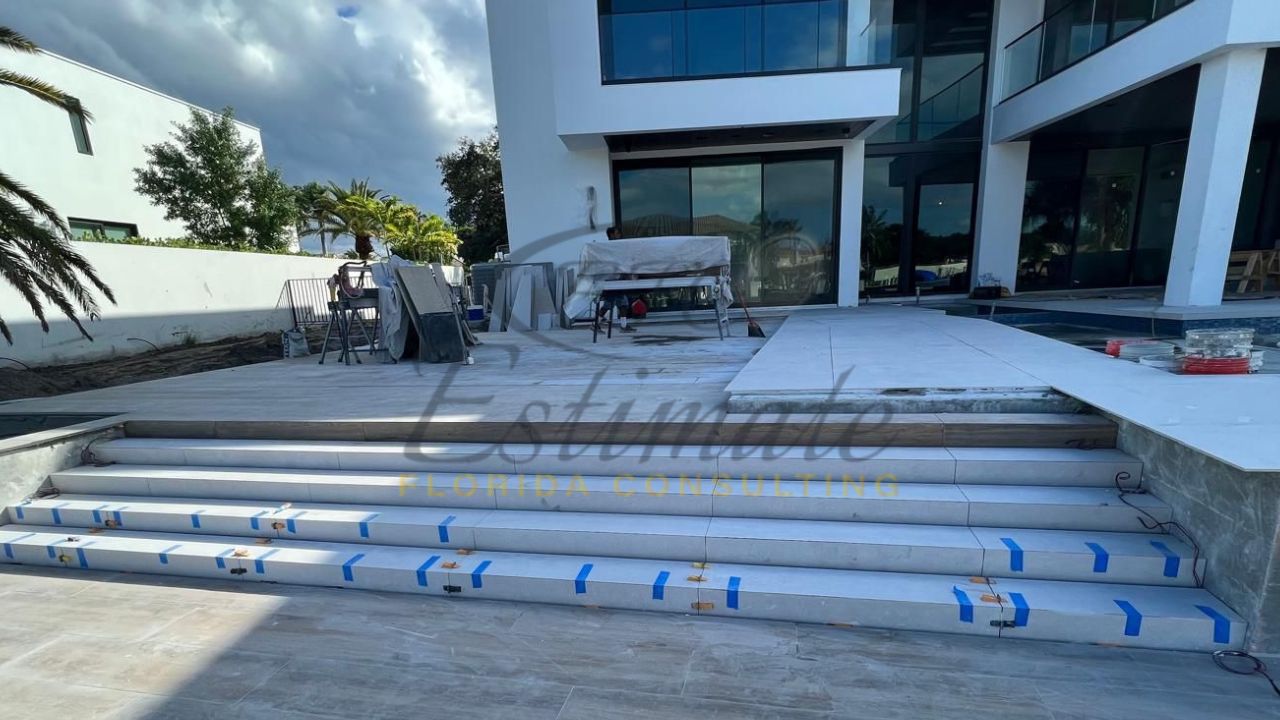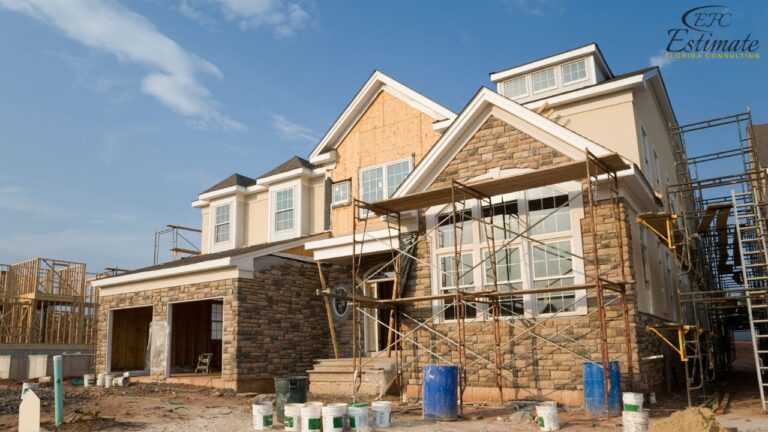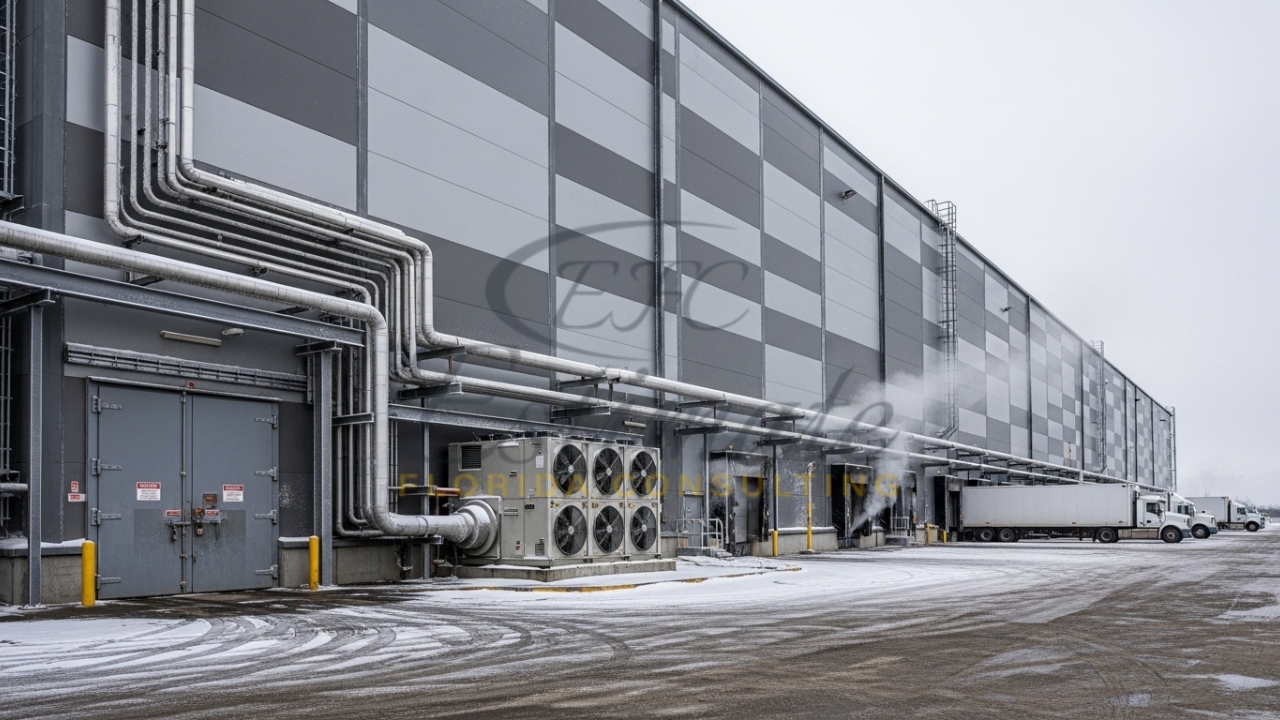
Cold storage construction in Florida has become one of the fastest-growing segments of the commercial and industrial construction market. With Florida’s expanding population, strong port connectivity, agricultural exports, pharmaceutical growth, and e-commerce demand, the need for refrigerated warehouses, freezer storage facilities, and temperature-controlled distribution centers continues to rise. Businesses handling perishable goods depend on reliable cold storage warehouse construction to maintain product quality, comply with regulatory standards, and control operational risk.
Because of Florida’s hot, humid climate, hurricane exposure, and strict building regulations, cold storage facilities require specialized design, advanced materials, and precise execution. Partnering with experienced cold storage construction Florida contractors—along with professional construction cost estimators—is essential to control commercial construction costs, reduce delays, and ensure long-term operational efficiency.
Estimate Florida Consulting plays a critical role in this process by providing accurate cold storage construction cost estimates, trade-specific takeoffs, and Florida-based pricing insight for developers, contractors, and investors.
What Is Cold Storage Construction?
Cold storage construction refers to the design, engineering, and construction of temperature-controlled industrial facilities built to maintain regulated temperature and humidity conditions for perishable, pharmaceutical, or sensitive products. These refrigerated warehouse buildings may operate in chilled, frozen, or deep-freeze temperature ranges depending on cold chain storage requirements. Unlike conventional warehouse construction, cold storage facility construction demands airtight building assemblies, thermal bridging control, and advanced mechanical and refrigeration systems.
Cold storage warehouse construction typically includes:
- High-performance thermal insulation systems
- Airtight building envelopes and controlled air infiltration
- Vapor barriers and moisture mitigation systems
- Industrial refrigeration and cooling equipment
- Cold storage floor slabs designed to prevent frost heave
In Florida, cold storage construction must also address high humidity exposure, salt-air corrosion, solar heat gain, and hurricane wind-load resistance, making these facilities significantly more complex than standard industrial warehouse buildings.
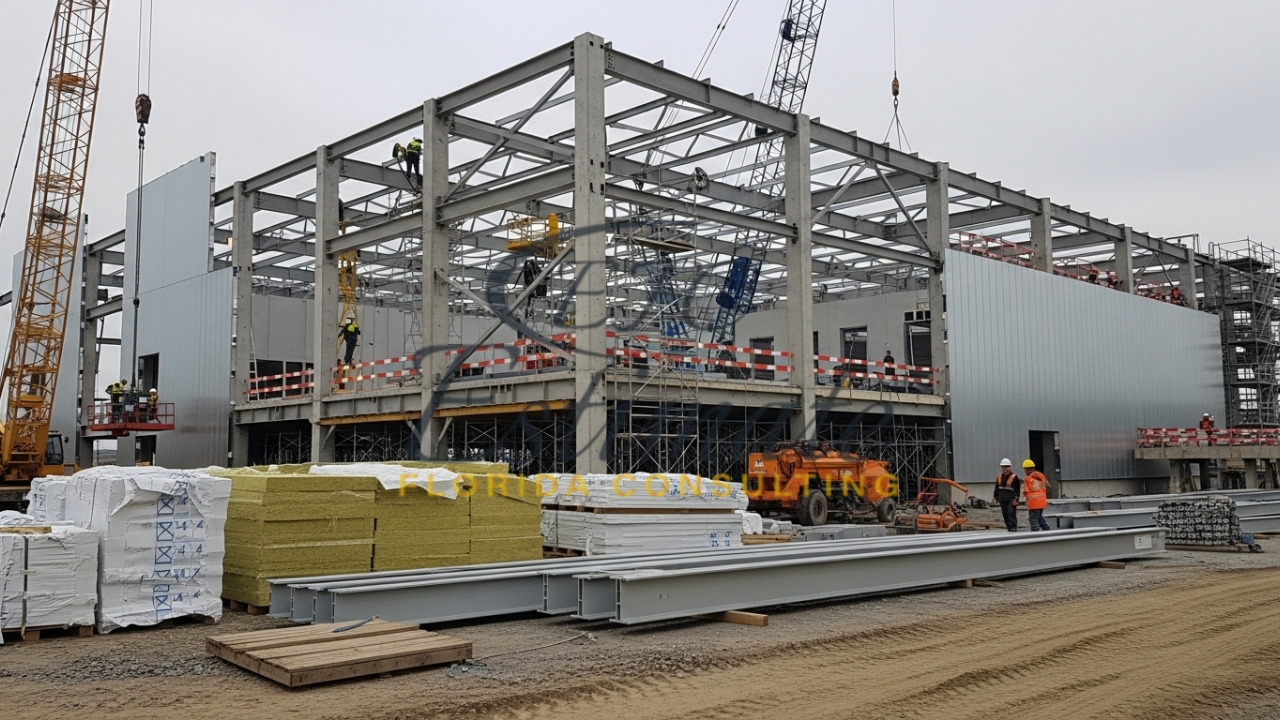
Why Cold Storage Construction Costs More Than Standard Warehouses?
Cold storage construction costs in Florida are significantly higher than traditional warehouse construction costs due to the high level of technical specialization, refrigeration integration, and energy performance requirements. While a standard warehouse focuses on structural framing and basic MEP systems, cold storage buildings integrate mechanical, electrical, refrigeration, and thermal control systems throughout the entire facility.
Primary cold storage cost drivers include:
- Heavy-duty industrial refrigeration systems
- High R-value insulated metal wall and roof panels
- Specialized cold storage concrete floor systems
- Advanced vapor control and condensation prevention
- Energy efficiency, redundancy, and backup system requirements
These systems must operate continuously to maintain stable internal conditions, prevent moisture intrusion, and minimize thermal loss—especially critical in Florida’s warm and humid climate.
Average Cold Storage Construction Cost in Florida
The average cost to build a cold storage warehouse in Florida depends on temperature range, facility size, automation level, and operational complexity. Cold storage facilities are among the highest-cost industrial buildings per square foot due to refrigeration infrastructure and insulation demands.
Typical cold storage construction cost ranges include:
- Refrigerated warehouse construction: $250 – $400 per sq ft
- Freezer warehouse construction: $350 – $500+ per sq ft
- Pharmaceutical cold storage facilities: $300 – $450 per sq ft
Costs increase further for ultra-low temperature storage, automated cold storage systems, high-clear ceiling heights, and coastal Florida construction upgrades. Accurate preconstruction cost estimating is essential for financing, budgeting, and feasibility planning.
Florida-Specific Challenges in Cold Storage Construction
Climate and Humidity Control
Florida’s hot and humid environment creates continuous moisture pressure on cold storage structures. Without proper vapor barriers, insulation continuity, and air sealing, condensation can develop within walls, ceilings, and slab systems—leading to mold growth, steel corrosion, and structural degradation. Cold storage contractors must implement advanced humidity control, dew-point management, and airtight construction techniques to protect long-term building performance.
Hurricane and Wind-Load Requirements
Cold storage facilities must meet stringent Florida hurricane resistance standards and wind-load engineering requirements. Structural steel framing, roof assemblies, wall panels, and anchoring systems must be engineered to withstand extreme storm conditions, increasing material costs, engineering fees, and installation labor.
Coastal Corrosion Exposure
In coastal regions, cold storage warehouse construction requires corrosion-resistant steel, protective coatings, stainless fasteners, and upgraded mechanical systems. Salt-air exposure accelerates equipment wear, increasing upfront construction investment but reducing long-term maintenance costs.
Key Factors Affecting Cold Storage Construction Costs
Temperature Range and Storage Type
Temperature range is the most significant cost driver. Chilled storage facilities require less insulation and refrigeration capacity, while freezer and deep-freeze warehouses demand thicker panels, larger compressors, and frost-protection systems. Lower temperature requirements increase both construction costs and operating expenses.
Insulation Systems and Building Envelope
High-performance insulated metal panels (IMPs) are standard in cold storage construction. Thicker panels with higher R-values increase upfront costs but deliver improved energy efficiency, thermal stability, and condensation resistance.
Refrigeration and Mechanical Systems
Refrigeration systems typically represent 30%–50% of total cold storage construction costs. System selection—such as ammonia refrigeration, CO₂ systems, or hybrid refrigeration solutions—impacts safety compliance, energy usage, and long-term maintenance.
Floor Slab Engineering
Cold storage slab systems must prevent frost heave, requiring insulated subgrades, vapor barriers, and heated floor assemblies. Poor slab design leads to cracking, uneven floors, and costly operational disruptions.
Automation and Material Handling Systems
Automated storage and retrieval systems (ASRS), conveyors, and robotic pallet handling increase upfront costs but reduce labor dependency, improve throughput, and influence building height, column spacing, and structural loads.
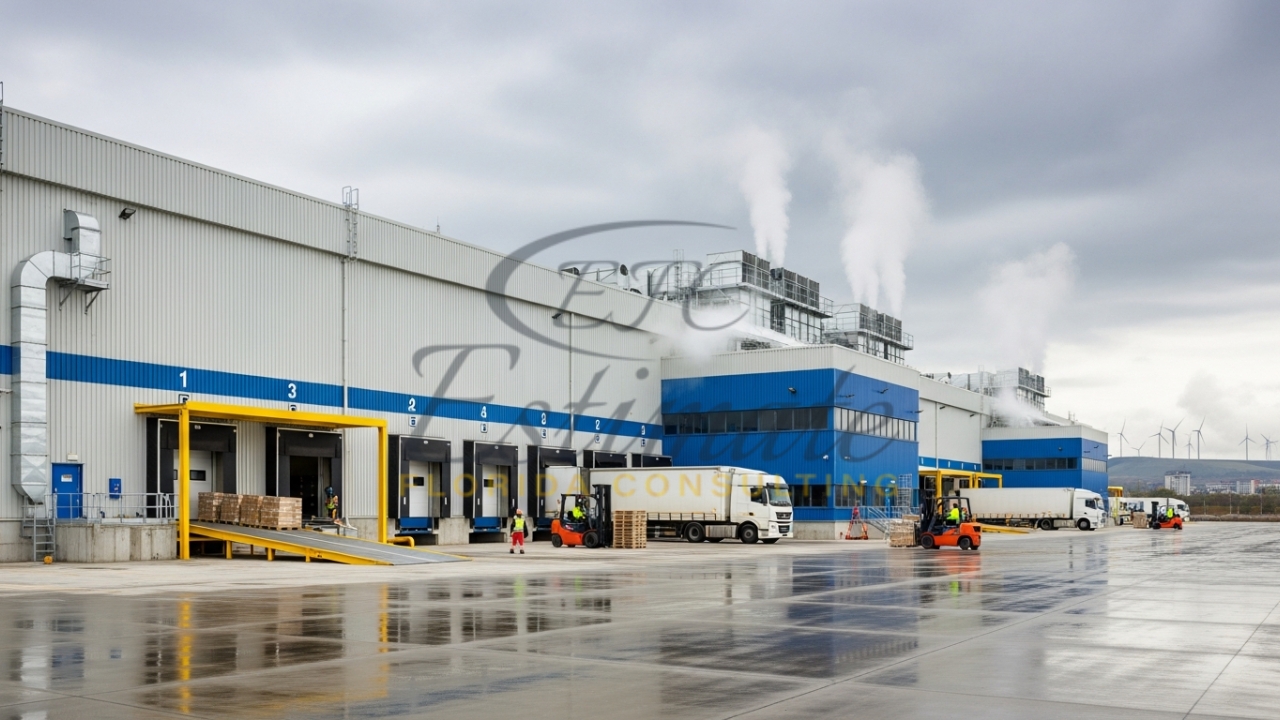
Types of Cold Storage Facilities Built in Florida
Food and Beverage Cold Storage
Food distribution centers and frozen food warehouses require strict sanitation, temperature uniformity, and efficient dock layouts. These facilities often include blast freezers and high-turnover cold storage zones.
Pharmaceutical and Medical Cold Storage
Pharmaceutical cold storage requires precise temperature validation, redundancy, monitoring systems, and regulatory compliance. Construction costs are higher due to backup power, monitoring technology, and compliance documentation.
Agricultural Cold Storage
Agricultural cold storage warehouses support Florida’s produce and export industries, requiring multi-temperature zones, moisture control, and proximity to ports or logistics hubs.
E-Commerce and Logistics Cold Storage
Cold storage logistics centers emphasize speed, automation, scalability, and last-mile delivery efficiency for grocery and meal distribution services.
Energy Efficiency and Sustainability in Cold Storage Construction
Energy efficiency is critical due to continuous refrigeration operation. Modern cold storage facilities integrate high-efficiency refrigeration, thermal envelope optimization, and smart building automation to reduce operating costs.
Common energy-saving features include:
- High R-value insulation systems
- Energy-efficient compressors
- LED lighting with occupancy sensors
- Variable-speed drives
- Building automation and monitoring systems
Fire Protection and Life Safety Systems
Cold storage fire protection presents challenges due to freezing conditions. Florida cold storage construction often requires dry or pre-action sprinkler systems, fire-rated insulated panels, and advanced detection systems to meet fire code compliance and insurance requirements.
Permitting and Regulatory Requirements in Florida
Cold storage construction must comply with:
- Florida Building Code (FBC)
- Local zoning and land-use regulations
- Energy efficiency standards
- FDA and USDA food safety requirements
Early involvement of experienced contractors and estimators reduces permitting delays, inspection issues, and scheduling risks.
Importance of Accurate Cold Storage Cost Estimating
Cold storage projects carry higher financial risk due to mechanical complexity and material volatility. Inaccurate estimates can result in budget overruns, construction delays, and financing challenges. Professional cost estimating improves budget certainty and risk management.
Role of Estimate Florida Consulting in Cold Storage Projects
Estimate Florida Consulting provides specialized cold storage construction estimating services tailored to Florida’s market conditions. Our services support developers, contractors, and investors throughout the project lifecycle.
We provide:
- Detailed trade-by-trade cost estimates
- Refrigeration and insulation system takeoffs
- Labor and material pricing analysis
- Feasibility studies and budget planning
- Risk reduction through accurate forecasting
Our expertise helps clients make informed decisions before construction begins.
Expansion and Scalability Planning
Forward-looking cold storage facilities are designed with future expansion in mind. Structural systems, refrigeration capacity, and electrical infrastructure can be sized to accommodate growth, reducing future retrofit costs and downtime.
Scalable cold storage design improves long-term return on investment and operational flexibility.
Risk Management in Cold Storage Construction
Cold storage construction carries elevated risk due to continuous operation requirements and system dependency. Common risks include refrigeration failure, moisture intrusion, and energy inefficiency. Proper planning, quality construction, and accurate cost estimating are essential for risk mitigation.
Conclusion
Cold storage construction in Florida is a highly specialized investment that goes far beyond standard warehouse development. From managing extreme humidity and hurricane exposure to integrating complex refrigeration, insulation, and life-safety systems, these facilities demand precise planning and expert execution. Construction costs are higher, risks are greater, and mistakes can lead to long-term operational losses. That’s why working with experienced cold storage construction Florida contractors—and accurate cost estimators—is essential for success. With detailed estimating, Florida-specific pricing insight, and trade-level forecasting, Estimate Florida Consulting helps developers, contractors, and investors control budgets, reduce risk, and build cold storage facilities that perform reliably, comply with regulations, and remain scalable for future growth.
FAQs – Cold Storage Construction Florida
- How much does it cost to build a cold storage warehouse in Florida?
Cold storage construction costs in Florida typically range from $250 to $500+ per square foot, depending on temperature requirements, facility size, automation level, and refrigeration complexity. Freezer and pharmaceutical facilities are usually the most expensive.
- Why is cold storage construction more expensive than standard warehouses?
Cold storage facilities require industrial refrigeration systems, high R-value insulation, airtight building envelopes, vapor barriers, and specialized floor slabs. These systems operate continuously and must perform reliably in Florida’s hot, humid climate.
- What factors most affect cold storage construction costs in Florida?
Key cost drivers include temperature range, insulation thickness, refrigeration system type, slab design, automation systems, hurricane wind-load requirements, and coastal corrosion protection.
- How does Florida’s climate impact cold storage facility design?
Florida’s humidity and heat increase the risk of condensation, mold, corrosion, and energy loss. Cold storage buildings must use advanced vapor control, air sealing, moisture mitigation, and humidity management systems to protect long-term performance.
- How long does it take to build a cold storage facility in Florida?
Most cold storage projects take 12 to 24 months, depending on permitting, facility size, refrigeration complexity, and automation level. Early cost estimating and contractor involvement can significantly reduce delays.
- What type of refrigeration system is best for cold storage warehouses?
Common systems include ammonia refrigeration, CO₂ systems, and hybrid solutions. The best choice depends on safety requirements, energy efficiency goals, operating temperature, and long-term maintenance strategy.
- Do cold storage facilities require special permitting in Florida?
Yes. Cold storage construction must comply with the Florida Building Code (FBC), local zoning laws, energy standards, and FDA/USDA regulations. Fire protection, refrigeration safety, and energy compliance are closely reviewed.
- Why is professional cost estimating important for cold storage projects?
Cold storage projects carry high financial risk due to mechanical complexity and material volatility. Accurate cost estimating prevents budget overruns, supports financing approval, improves scheduling, and reduces construction risk, especially in Florida’s regulated environment.