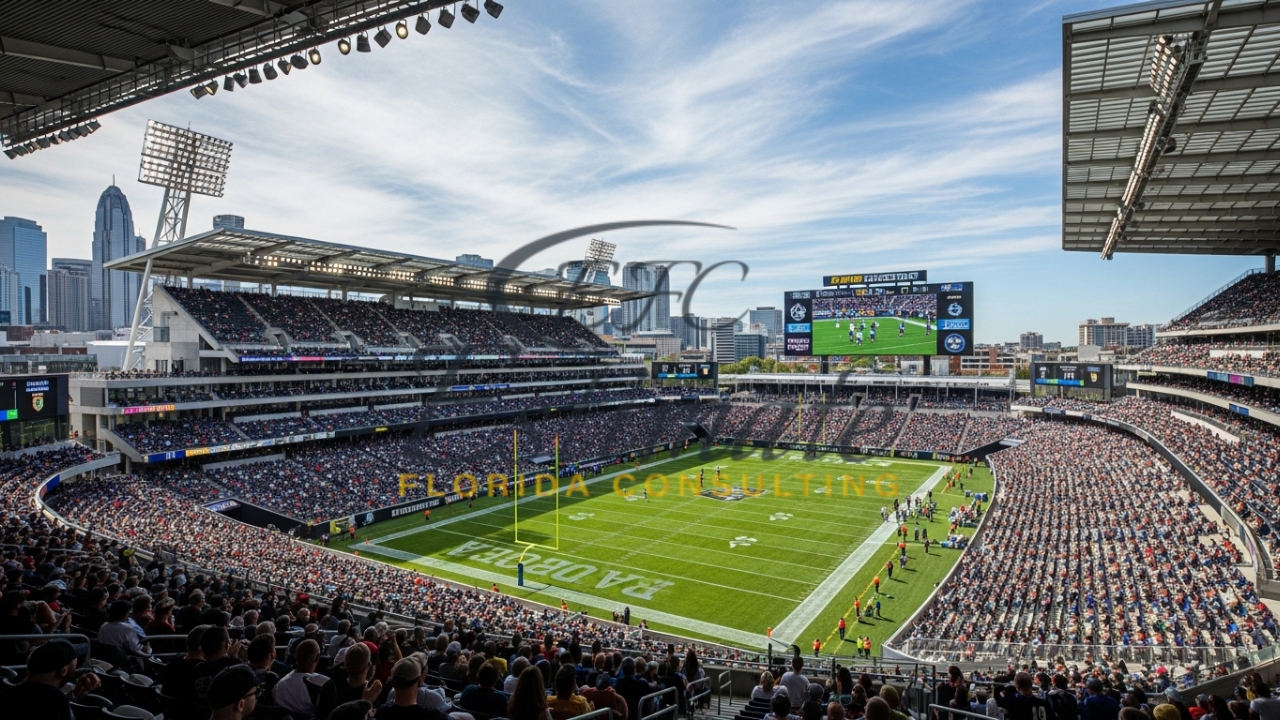
Building a 40,000-seat stadium is one of the most complex forms of large-scale commercial construction, combining advanced structural engineering, high-capacity building systems, and strict regulatory compliance. These sports stadium construction projects are designed to host professional sports, international tournaments, concerts, and large public events, requiring substantial investment in stadium infrastructure development, safety systems, and fan amenities. As a result, understanding the cost to build a 40,000 seat stadium involves evaluating not just building size, but also stadium design complexity, long-term operating requirements, and market expectations.
At Estimate Florida Consulting, we assist developers, municipalities, and private investors with accurate stadium construction cost estimates, feasibility studies, and preconstruction planning. Early budget clarity is critical for securing funding, managing public-private partnerships, and maintaining cost control on large stadium construction projects.
Average Cost to Build a 40,000 Seat Stadium
The stadium construction cost for a 40,000-seat venue varies significantly based on location, architectural ambition, and the level of premium features included. Unlike smaller sports facilities, projects of this scale require custom stadium engineering, extensive site development, and advanced crowd-management systems, all of which influence total cost.
In today’s market, the cost to build a 40,000 seat stadium typically ranges from $800 million to $1.6 billion, depending on whether the stadium is open-air, partially covered, or fully enclosed. Highly iconic stadiums with signature architecture, retractable roofs, or mixed-use development components often exceed standard sports stadium development costs.
Cost Per Seat and Cost Per Square Foot
To compare large venue projects, owners often analyze stadium construction cost per seat and stadium construction cost per square foot. These metrics provide useful benchmarks for evaluating efficiency and investment scale across different markets.
For a 40,000-seat stadium, the cost per seat generally falls between $20,000 and $40,000+, while the cost per square foot typically ranges from $600 to $1,200+. Premium seating areas, luxury suites, advanced technology, and high-end finishes push stadium construction pricing toward the upper end of these ranges.
Site Selection and Land Development Costs
Site selection is a major driver of stadium project budgeting. A 40,000-seat stadium requires significant land not only for the structure itself but also for parking, transportation access, security zones, and support facilities. These stadium site development costs often represent a substantial portion of the overall budget.
Land development expenses may include grading, utility relocation, roadway improvements, stormwater management, and environmental mitigation. Urban stadium projects often face higher stadium land acquisition costs and infrastructure upgrades, while suburban developments may require larger parking areas and expanded road networks.
Structural Systems and Stadium Bowl Construction
The structural system is one of the largest contributors to stadium construction cost. Most 40,000-seat venues rely on reinforced concrete, structural steel, or hybrid systems to support long-span roofs, tiered seating bowls, and expansive concourse areas.
The stadium bowl itself—including seating tiers, risers, concourses, and circulation zones—requires precise engineering to ensure sightlines, accessibility, and safe crowd flow. These elements account for a significant share of large stadium construction costs and must be carefully coordinated during design and estimating.
Roofing Systems and Weather Protection
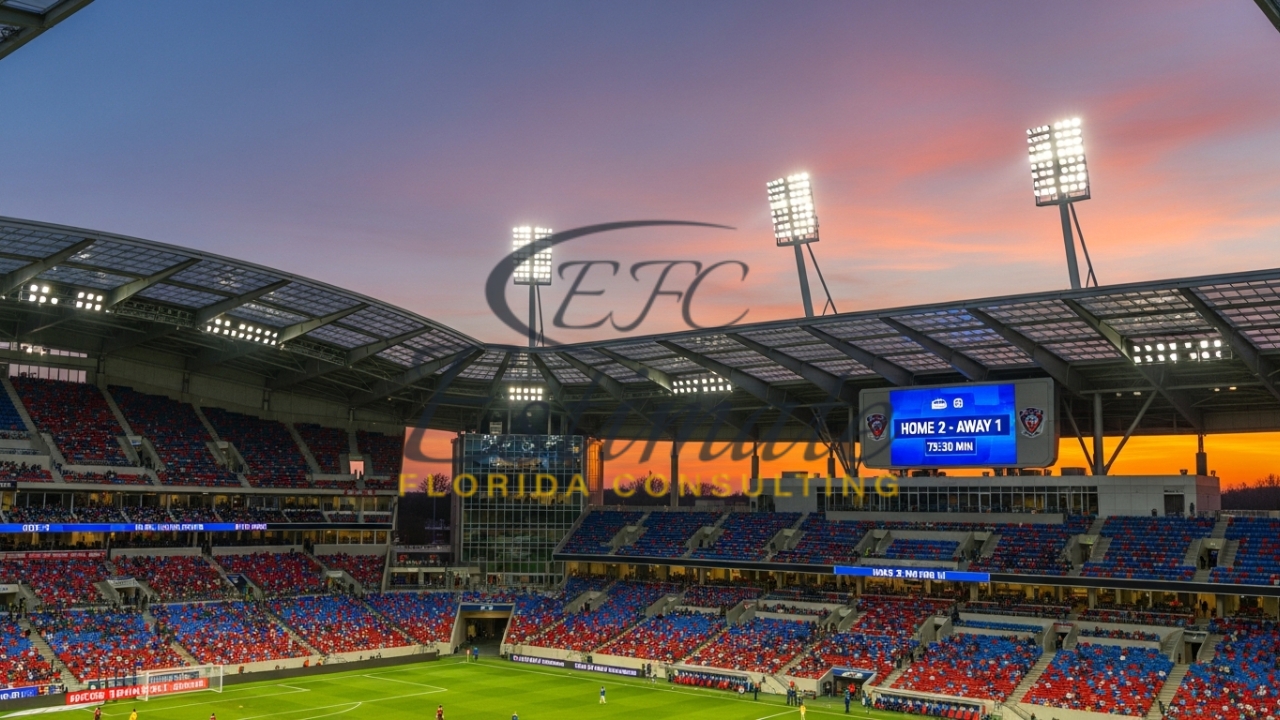
Roof design has a major impact on sports stadium construction cost. Open-air stadiums are typically the most economical option, while fixed-roof and retractable-roof stadiums dramatically increase construction complexity and budget requirements.
Roof systems may include long-span steel trusses, cable-supported structures, or retractable mechanisms with advanced controls. While these systems increase stadium construction pricing, they improve fan comfort and allow year-round event scheduling, enhancing long-term revenue potential.
Seating, Premium Areas, and Fan Amenities
Modern stadiums are designed to maximize fan experience and revenue generation. A 40,000-seat stadium typically includes general seating, club seating, luxury suites, press areas, and hospitality lounges, all of which affect stadium seating construction cost.
Premium seating and VIP areas significantly increase sports stadium development cost due to higher finish levels, dedicated mechanical systems, private access control, and enhanced services. These features, however, play a critical role in long-term profitability.
Mechanical, Electrical, and Plumbing (MEP) Systems
MEP systems represent a major portion of stadium construction cost per square foot. HVAC systems must support tens of thousands of occupants, while electrical systems power lighting, scoreboards, broadcast equipment, and digital displays.
Plumbing systems require high-capacity water supply and drainage to accommodate restrooms, concessions, and maintenance operations. Accurate stadium MEP cost estimating is essential to ensure system reliability and avoid costly upgrades after construction.
Technology, Scoreboards, and Broadcast Infrastructure
Technology is a defining feature of modern stadiums. Large LED video boards, ribbon displays, sound systems, Wi-Fi networks, and broadcast infrastructure are essential for fan engagement and televised events.
Technology and audiovisual systems alone can cost $50 million to $150 million or more, making them a significant component of stadium construction pricing. These systems must be integrated early into planning to align with overall stadium project budgeting.
Safety, Security, and Code Compliance
Stadiums must comply with strict safety, security, and accessibility standards. Fire protection systems, emergency egress, surveillance, access control, and crowd management infrastructure are critical components of stadium life safety construction costs.
Compliance with building codes, ADA requirements, and event security regulations directly affects design complexity and large stadium construction costs, particularly for publicly funded venues.
Parking, Transportation, and Public Infrastructure
A 40,000-seat stadium requires extensive transportation and infrastructure planning. Costs may include surface parking, parking garages, public transit integration, pedestrian bridges, and traffic control systems.
In many cases, off-site stadium infrastructure development costs are funded through public investment, adding another layer to overall project budgeting and financial planning.
Construction Timeline and Labor Costs
Stadium construction typically spans 3 to 5 years, depending on project complexity and funding structure. Long schedules increase labor costs, financing expenses, and exposure to material price escalation.
Regional labor rates, union requirements, and skilled workforce availability significantly influence stadium construction cost estimates, particularly in major metropolitan markets.
Operating Costs and Long-Term Financial Considerations
Beyond construction, stadium lifecycle costs play a critical role in long-term success. Staffing, utilities, maintenance, security, and capital replacements contribute to overall stadium ownership cost.
Energy-efficient systems, durable materials, and smart building technologies can reduce long-term stadium operating costs and improve financial sustainability.
Pre-Construction Planning and Feasibility Analysis
Before committing to a stadium project of this magnitude, comprehensive pre-construction planning and feasibility analysis are essential. A 40,000-seat stadium involves significant capital investment, long development timelines, and multiple stakeholders. Feasibility studies evaluate site conditions, zoning regulations, environmental constraints, anticipated construction costs, and projected revenue streams to determine whether the project is financially and logistically viable.
Early feasibility analysis also allows developers and public agencies to test different design concepts, seating capacities, and amenity levels against realistic budget scenarios. Adjustments made during this phase are far more cost-effective than changes introduced after construction has begun.
Mixed-Use Development and Revenue-Generating Components
Modern stadium projects are increasingly part of larger mixed-use developments that include retail spaces, hotels, offices, residential units, and entertainment districts. While these components increase overall project complexity, they can significantly enhance long-term revenue and economic impact.
Incorporating mixed-use elements affects stadium construction cost due to shared infrastructure, utility coordination, and phased construction requirements. However, when planned effectively, these developments help offset operating costs and improve overall project return on investment.
Long-Term Maintenance and Capital Replacement Planning
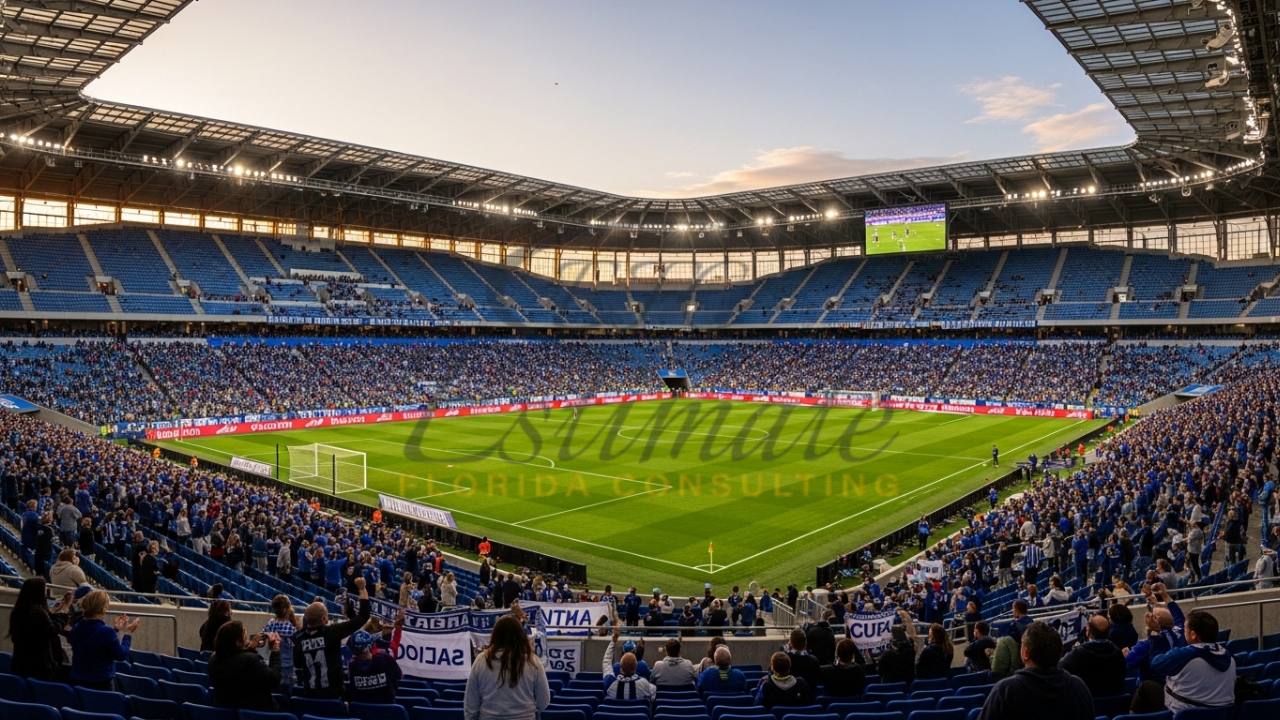
Beyond initial construction, long-term maintenance and capital replacement planning are critical to the financial success of a stadium. Seating systems, roofing components, mechanical equipment, technology infrastructure, and exterior finishes all require periodic replacement or upgrades.
Evaluating these long-term costs during the planning phase allows owners to select materials and systems that balance upfront cost with durability and lifecycle performance. This proactive approach helps control stadium ownership costs over decades of operation.
Why Choose Us – Estimate Florida Consulting
At Estimate Florida Consulting, we provide accurate, project-specific stadium cost estimating services for large-scale developments such as 40,000-seat stadiums. Our team understands the complexity of sports stadium construction, from structural systems and site infrastructure to MEP coordination and safety compliance.
We deliver detailed quantity takeoffs and realistic stadium construction budgets that support funding approvals, contractor bidding, and long-term cost control. With a focus on accuracy and transparency, we help owners and developers move forward with confidence on high-value stadium projects.
Conclusion
The cost to build a 40,000-seat stadium is shaped by far more than seating capacity alone. From structural systems and roofing design to technology integration, site development, and long-term operating considerations, every decision made during planning has a direct impact on total project cost and financial performance. With current market conditions, most stadiums of this scale require an investment ranging from $800 million to $1.6 billion, depending on location, design complexity, and amenities.
Successful stadium developments begin with accurate pre-construction planning, realistic cost estimating, and a clear understanding of both construction and lifecycle expenses. At Estimate Florida Consulting, we help developers, municipalities, and investors manage risk, control budgets, and make informed decisions throughout every phase of stadium development. With the right cost intelligence in place, large stadium projects can deliver lasting economic value, community impact, and long-term financial sustainability.
Frequently Asked Questions (FAQs)
- How much does it cost to build a 40,000-seat stadium?
The cost to build a 40,000-seat stadium typically ranges from $800 million to $1.6 billion, depending on factors such as location, roof type, premium seating, technology systems, and infrastructure requirements.
- What is the average cost per seat for a 40,000-seat stadium?
Most projects fall between $20,000 and $40,000+ per seat. Stadiums with luxury suites, retractable roofs, and advanced fan amenities often exceed this range.
- What factors most influence stadium construction costs?
Key cost drivers include site selection, structural systems, roofing design, seating configuration, MEP systems, technology and scoreboards, safety and security requirements, and parking and transportation infrastructure.
- How long does it take to build a 40,000-seat stadium?
Construction timelines typically range from 3 to 5 years, depending on project complexity, funding structure, permitting timelines, and weather conditions.
- Are stadiums usually publicly or privately funded?
Many stadiums are developed through public-private partnerships, combining public funding, private investment, and long-term financing. Accurate cost estimates are essential to secure approvals and manage these funding structures.
- How much do technology and scoreboards add to the total cost?
Technology and audiovisual systems—including LED video boards, sound systems, Wi-Fi, and broadcast infrastructure—can cost $50 million to $150 million or more, depending on size and sophistication.
- What are the long-term operating costs of a stadium?
Long-term costs include staffing, utilities, maintenance, security, insurance, and capital replacements. Energy-efficient systems and durable materials can significantly reduce ongoing operating expenses.
- How can Estimate Florida Consulting help with stadium projects?
Estimate Florida Consulting provides stadium cost estimating, quantity takeoffs, feasibility studies, and budget validation for large-scale stadium developments. Our services help clients control costs, secure funding, and move forward with confidence.