Building a movie theater is a highly specialized form of commercial construction that combines architectural design, advanced technology, and strict regulatory compliance. Unlike standard retail or entertainment buildings, a commercial movie theater building requires enhanced acoustic performance, long-span structural framing, specialized seating layouts, and high-capacity mechanical and electrical systems. Because of these factors, understanding how much it costs to build a movie theater requires a comprehensive review of cinema-specific construction requirements, equipment costs, and long-term operational considerations.
For developers, investors, and entertainment venue operators, early-stage cost clarity is critical. Without accurate movie theater construction cost estimates and preconstruction planning, cinema projects can quickly exceed budgets due to underestimated projection equipment costs, soundproofing requirements, or code-driven upgrades.
Average Cost to Build a Movie Theater
The cost to build a movie theater is typically measured using cinema construction cost per square foot, but square footage alone does not define the full investment. Factors such as the number of auditoriums, seating capacity, ceiling heights, and level of technology all play a significant role in determining total project cost.
A small neighborhood cinema designed for basic digital screenings will have a much lower movie theater development cost than a luxury multiplex featuring recliner seating, dine-in service, immersive sound systems, and large-format screens. As the audience experience level increases, so does construction complexity and overall budget.
Typical Construction Cost Ranges (Adjusted for Current Market Conditions)
Most cinema building construction projects fall into three general categories based on size and experience level.
- Small theaters (1–3 screens): $195–$390 per square foot
- Mid-size theaters (4–8 screens): $260–$520 per square foot
- Large multiplex theaters (10+ screens): $325–$650+ per square foot
These figures reflect current market conditions and include base building construction and interior build-out. Costs may increase further for premium seating, advanced projection systems, or high-end finishes.
Total Project Cost by Theater Size
When converted into total development cost, building a cinema represents a major capital investment.
- Small movie theaters: $2.6 million – $6.5 million
- Mid-size cinemas: $7.8 million – $19.5 million
- Large multiplex theaters: $19.5 million – $39+ million
These estimates typically exclude land acquisition and owner-furnished equipment, which can significantly increase the overall cinema investment cost.
Site Selection and Land Development Considerations
Site selection plays a major role in determining the final movie theater construction cost. Theaters are commonly built as part of shopping centers, mixed-use developments, or standalone entertainment venues. Site conditions such as soil quality, grading, stormwater management, and utility availability directly affect land development expenses.
Urban locations often require structured parking and complex zoning approvals, while suburban sites may allow surface parking at a lower cost. Early apartment and entertainment venue site planning helps developers understand how land conditions influence overall feasibility.
Shell Construction vs. Interior Build-Out Costs
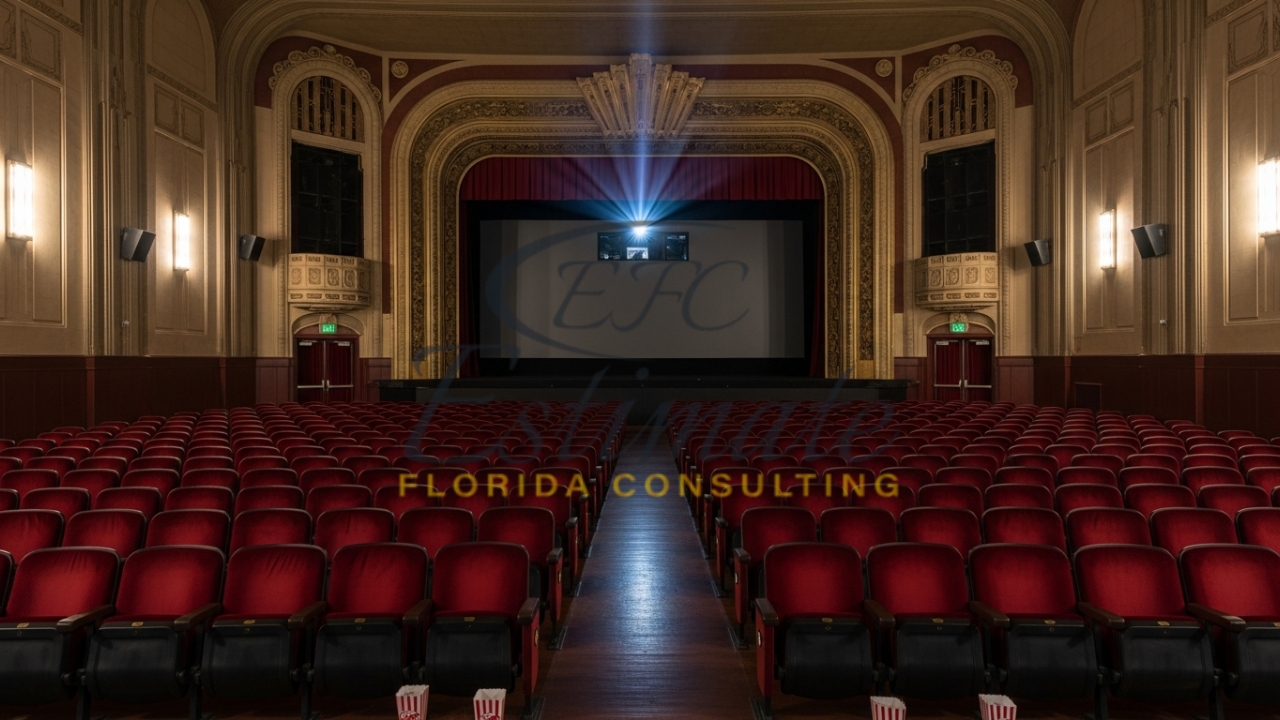
Movie theater budgets are typically divided between shell construction and interior build-out. The shell includes foundations, structural framing, exterior walls, roofing systems, and base utilities. Interior build-out covers auditoriums, stadium seating construction, lobbies, concessions, restrooms, and specialty systems.
In most cases, interior build-out costs exceed shell costs due to soundproofing for movie theaters, acoustic wall assemblies, tiered seating platforms, and integrated technology. Understanding this cost balance is critical for accurate budgeting and financing.
Auditorium Design, Seating Layout, and Revenue Impact
Each auditorium requires precise movie theater seating layout design to ensure proper sightlines, accessibility, and audience comfort. Seating configuration directly impacts both construction cost and long-term revenue.
Standard stadium seating remains the most economical option. However, recliner seating, VIP auditoriums, and private screening rooms reduce seat count while increasing per-ticket revenue. These premium layouts increase construction cost due to additional floor space, upgraded finishes, and more complex mechanical and electrical systems.
Structural Framing and Acoustic Construction Requirements
Movie theaters demand superior acoustic performance compared to nearly all other commercial buildings. Acoustic wall assemblies for theaters, vibration isolation systems, and soundproofing materials are essential to prevent audio bleed between auditoriums.
Structurally, theaters often require long-span steel construction to eliminate interior columns that would obstruct viewing angles. Higher ceiling heights and heavier roof loads increase material quantities, which directly impacts the overall cinema building construction cost.
Mechanical, Electrical, and HVAC Systems for Movie Theaters
Movie theater HVAC systems must support high occupant loads while operating quietly enough to avoid disrupting the viewing experience. These systems are typically larger and more complex than those used in retail buildings, requiring advanced ductwork, zoning controls, and sound attenuation.
Electrical systems must support digital cinema projection systems, sound equipment, lighting control systems, digital signage, concessions, and emergency power. Accurate coordination of mechanical, electrical, and plumbing systems is essential to avoid costly rework and schedule delays.
Projection, Sound, and Cinema Technology Costs
Projection and sound equipment represent one of the largest non-structural expenses in a cinema project. Each auditorium requires projection equipment, high-gain screens, surround sound speakers, amplifiers, servers, and automation controls.
The movie theater projection equipment cost typically ranges from $195,000 to $390,000 per screen, depending on image quality, brightness, sound format, and whether immersive systems such as Dolby Atmos or large-format screens are used.
Lobby, Concession, and Food Service Build-Out
Modern theaters rely heavily on concession and food service revenue. As a result, lobby and concession areas often include full-service kitchens, bars, and dining zones. These features increase construction costs due to additional plumbing, grease traps, ventilation systems, refrigeration, and commercial kitchen equipment.
Food service infrastructure must also comply with health department regulations, which adds another layer of complexity to movie theater architectural design.
Accessibility, Fire Protection, and Life Safety Compliance
All movie theaters must meet ADA compliance requirements, including wheelchair seating, companion seating, accessible restrooms, ramps, and assistive listening systems. These requirements affect auditorium geometry, aisle widths, and seating layouts.
Fire protection and life safety systems—such as sprinklers, fire alarms, smoke control, and emergency lighting—are critical due to high occupant loads. These systems significantly influence the overall cinema construction cost per square foot but are essential for safe operation.
Location, Zoning, and Florida Code Requirements
Construction costs vary by region due to labor rates, permitting fees, and code requirements. In Florida, hurricane-resistant commercial construction, wind-load design, impact-rated materials, and fire-rated assemblies can significantly increase costs.
Integrating Florida Building Code compliance early into planning helps prevent budget overruns during permitting and construction.
Construction Scheduling, Risk Management, and Cost Control
Construction schedules directly affect financing costs and opening timelines. Movie theaters require careful coordination between general contractors, specialty trades, and technology vendors.
Professional estimating allows developers to identify cost-sensitive areas early, apply realistic contingencies, and implement value engineering for commercial buildings without compromising performance or code compliance.
Pre-Construction Planning and Feasibility Analysis for Movie Theaters
Before moving into detailed architectural drawings, successful cinema projects begin with thorough pre-construction planning and feasibility analysis. This phase evaluates movie theater development cost, zoning constraints, site conditions, and projected return on investment. Understanding feasibility early allows developers to determine whether the proposed cinema building construction scope aligns with local market demand and financial expectations.
Early feasibility studies also help identify risks related to cinema construction cost per square foot, permitting timelines, and specialized systems such as soundproofing and projection infrastructure. Addressing these factors during preconstruction reduces redesign costs and supports more accurate movie theater cost estimation.
Tenant Improvement Costs for Leased Theater Spaces
When a movie theater is developed as a tenant space within a shopping center or mixed-use project, tenant improvement (TI) costs become a major component of the overall commercial movie theater building budget. These costs typically include interior demolition, auditorium build-outs, acoustic wall assemblies for theaters, seating platforms, and technology integration.
Tenant improvement scope varies based on existing building conditions and lease agreements. Accurate construction quantity takeoff services ensure TI costs are clearly defined, helping landlords and operators manage cinema development feasibility and avoid disputes during construction.
Renovation vs. New Construction Cost Comparison
In some cases, developers evaluate renovating an existing structure instead of pursuing new cinema building construction. While renovations may reduce shell costs, they often introduce challenges related to outdated utilities, limited ceiling heights, and inadequate structural framing for modern auditoriums.
Renovation projects frequently require extensive soundproofing for movie theaters, HVAC upgrades, and code compliance improvements. A detailed comparison between renovation and new construction is essential to determine the most cost-effective approach for long-term movie theater investment cost.
Technology Infrastructure and Future-Proofing for Cinemas
Modern movie theaters rely heavily on digital infrastructure, including data cabling, automation controls, and digital cinema projection systems. Planning for future upgrades during construction allows developers to reduce long-term retrofit costs and maintain competitive advantage.
Future-proofing considerations may include additional conduit pathways, expanded electrical capacity, and flexible projection booth layout design. Incorporating these features during initial construction is far more cost-effective than retrofitting after opening.
Insurance, Safety, and Risk Mitigation Considerations
Movie theaters typically carry higher insurance requirements due to large occupant loads, specialized equipment, and public access. Construction methods, fire-rated assemblies for cinemas, and life safety systems directly influence insurance premiums and long-term liability exposure.
Investing in durable materials, robust fire separation systems, and enhanced fire safety requirements for cinemas may increase initial construction cost but can significantly reduce operational risk over the building’s lifecycle.
Long-Term Maintenance and Capital Replacement Planning
Beyond initial construction, long-term operating expenses play a key role in determining overall profitability. Long-term operating cost analysis includes HVAC maintenance, seating replacement, projection system upgrades, and routine facility upkeep.
Selecting durable finishes, energy-efficient systems, and reliable equipment during construction can reduce maintenance costs and extend replacement cycles, improving overall entertainment venue development cost performance.
Why Choose Us – Estimate Florida Consulting
At Estimate Florida Consulting, we specialize in movie theater cost estimation, commercial quantity takeoffs, and preconstruction budgeting for complex entertainment facilities. Our team understands the unique requirements of cinema construction, from acoustic assemblies and HVAC design to projection system integration and life safety compliance.
Every estimate we prepare is based on detailed quantity takeoffs, current market pricing, and project-specific scope analysis. This approach helps developers secure financing, compare contractor bids accurately, and maintain control over construction costs from concept through completion.
Conclusion
Building a movie theater is a complex commercial development that extends far beyond standard construction costs. From specialized structural framing and advanced acoustic assemblies to high-capacity HVAC systems and cinema-grade projection technology, every component directly influences the total movie theater investment cost. As outlined, cinema construction costs can range widely based on theater size, number of screens, seating experience, location, and regulatory requirements—particularly in markets like Florida with strict wind-load, fire safety, and accessibility codes.
Successful cinema projects depend on early-stage feasibility analysis, accurate quantity takeoffs, and realistic budgeting that accounts for both construction and long-term operational considerations. Whether developing a small neighborhood theater, a mid-size cinema, or a large multiplex, understanding where costs originate allows developers to manage risk, protect ROI, and avoid costly redesigns. With professional preconstruction planning and expert cost estimation, movie theater projects can move forward with confidence, financial clarity, and long-term sustainability.
Frequently Asked Questions (FAQs)
- How much does it cost to build a movie theater per square foot?
The cost to build a movie theater typically ranges from $195 to $650+ per square foot, depending on the number of screens, seating type, technology level, and location. Luxury multiplex theaters with premium seating and immersive sound systems fall on the higher end of this range.
- What is the average total cost to build a movie theater?
Total movie theater construction costs generally range from $2.6 million for small theaters to $39 million or more for large multiplex cinemas, excluding land acquisition and owner-furnished equipment like projection systems.
- What factors have the biggest impact on movie theater construction costs?
Key cost drivers include the number of auditoriums, acoustic soundproofing requirements, seating layout, structural long-span framing, HVAC capacity, projection and sound equipment, code compliance, and location-specific regulations.
- How much does movie theater projection and sound equipment cost?
Cinema projection and sound equipment typically costs $195,000 to $390,000 per screen, depending on image resolution, brightness, sound format, and whether immersive systems or large-format screens are used.
- Is it cheaper to renovate an existing building into a movie theater?
Renovations may reduce shell costs but often require extensive upgrades for soundproofing, ceiling height adjustments, structural reinforcement, HVAC expansion, and code compliance. In many cases, new construction offers better long-term value and design flexibility.
- How does seating type affect movie theater construction cost?
Standard stadium seating is the most cost-effective option. Recliner seating, VIP auditoriums, and dine-in theaters increase construction costs due to larger floor areas, upgraded finishes, and more complex mechanical and electrical systems.
- Do movie theater costs vary by location?
Yes. Labor rates, permitting fees, zoning requirements, and building codes significantly affect costs. In Florida, hurricane-resistant construction, impact-rated materials, and enhanced fire and wind-load requirements can increase overall cinema construction costs.
- Why is preconstruction planning important for movie theater projects?
Preconstruction planning helps identify feasibility risks, refine budgets, evaluate site conditions, and account for specialized systems early. Accurate estimates and quantity takeoffs reduce change orders, control costs, and improve financing and bidding accuracy.