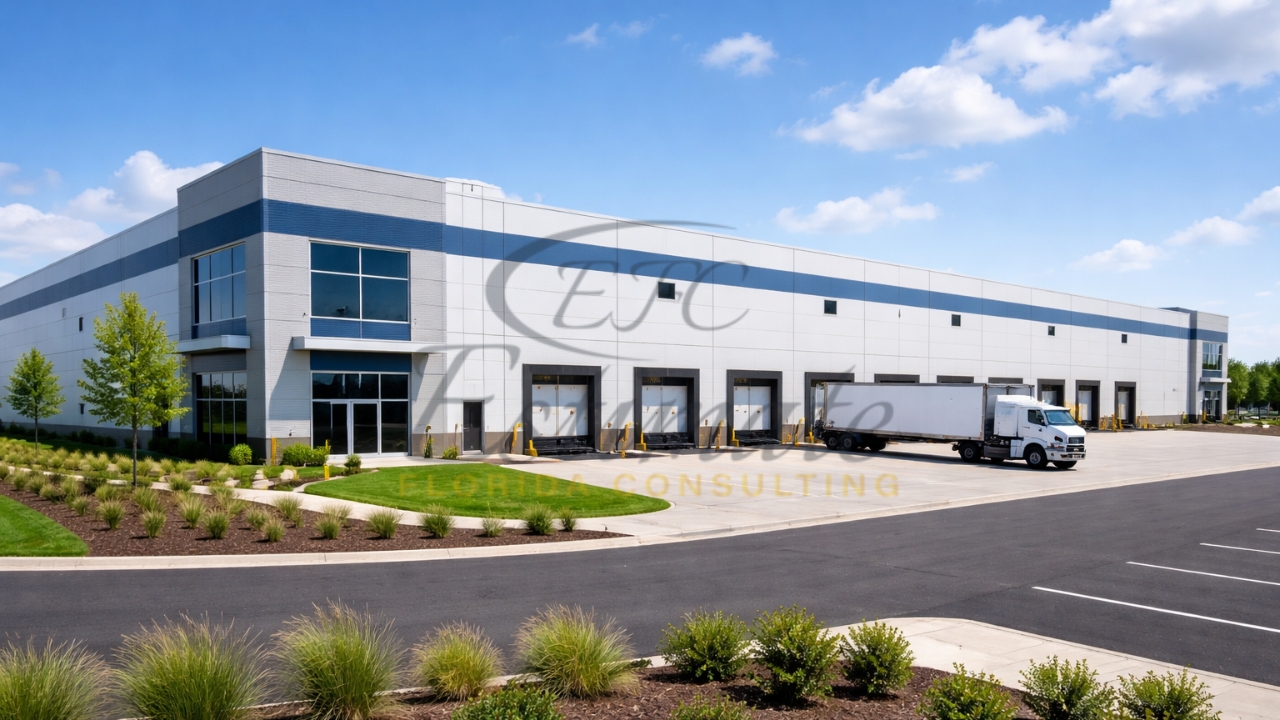
Warehouse construction in Florida is a major investment for businesses involved in logistics operations, distribution facilities, industrial storage, manufacturing plants, fulfillment centers, and e-commerce warehouses. Whether you are planning a small storage building or a large distribution warehouse, understanding the warehouse construction cost per sq ft Florida is essential for budget planning, financial forecasting, and long-term project feasibility.
Construction costs vary widely based on warehouse size, structural design, building materials, site conditions, interior build-out scope, and Florida Building Code compliance. This guide explains warehouse construction pricing in simple terms and shows why accurate planning—when Estimate Florida Consulting provides professional estimates—helps avoid budget overruns, delays, and unexpected construction risks.
Average Warehouse Construction Cost Per Sq Ft in Florida
The average warehouse construction cost per square foot in Florida generally ranges between $49 and $124 per sq ft, depending on the warehouse type, operational requirements, material selection, and construction complexity. Basic shell warehouses with minimal systems fall on the lower end, while distribution centers, climate-controlled facilities, and high-bay logistics warehouses fall on the higher end of the pricing range.
These costs typically include core-and-shell construction, such as structural framing, roofing systems, exterior walls, slab-on-grade foundations, and basic electrical and lighting. Costs increase when projects require office build-outs, advanced fire protection systems, energy-efficient upgrades, or specialized storage conditions.
Warehouse Construction Cost by Warehouse Type
Different warehouse functions require different construction standards, which directly affect industrial construction cost per square foot in Florida.
| Warehouse Type | Cost Per Sq Ft (Florida) |
| Basic Storage Warehouse | $49 – $72 |
| Steel-Frame Warehouse | $59 – $91 |
| Distribution Center | $72 – $111 |
| Climate-Controlled Warehouse | $85 – $124 |
| High-Bay Logistics Warehouse | $91 – $143+ |
Warehouses with higher clear heights, reinforced concrete slabs, ESFR fire sprinkler systems, heavy racking loads, and automated material handling systems generally cost more due to increased structural, mechanical, and fire-protection requirements.
How Warehouse Size Affects Construction Cost?
Warehouse size has a direct impact on both total project cost and per-square-foot efficiency. Smaller warehouses often have higher per-square-foot costs because fixed expenses—such as architectural design, engineering, permits, inspections, and utility connections—are spread across fewer square feet.
| Warehouse Size | Estimated Total Cost |
| 10,000 sq ft | $494,000 – $975,000 |
| 25,000 sq ft | $1.24M – $2.73M |
| 50,000 sq ft | $2.47M – $5.85M |
| 100,000 sq ft | $4.94M – $12.35M |
| 200,000+ sq ft | $9.88M – $26M+ |
Larger warehouses benefit from economies of scale, but they often require additional truck courts, loading docks, stormwater systems, and infrastructure improvements, which increase total construction budgets.
Structural System and Material Cost Factors
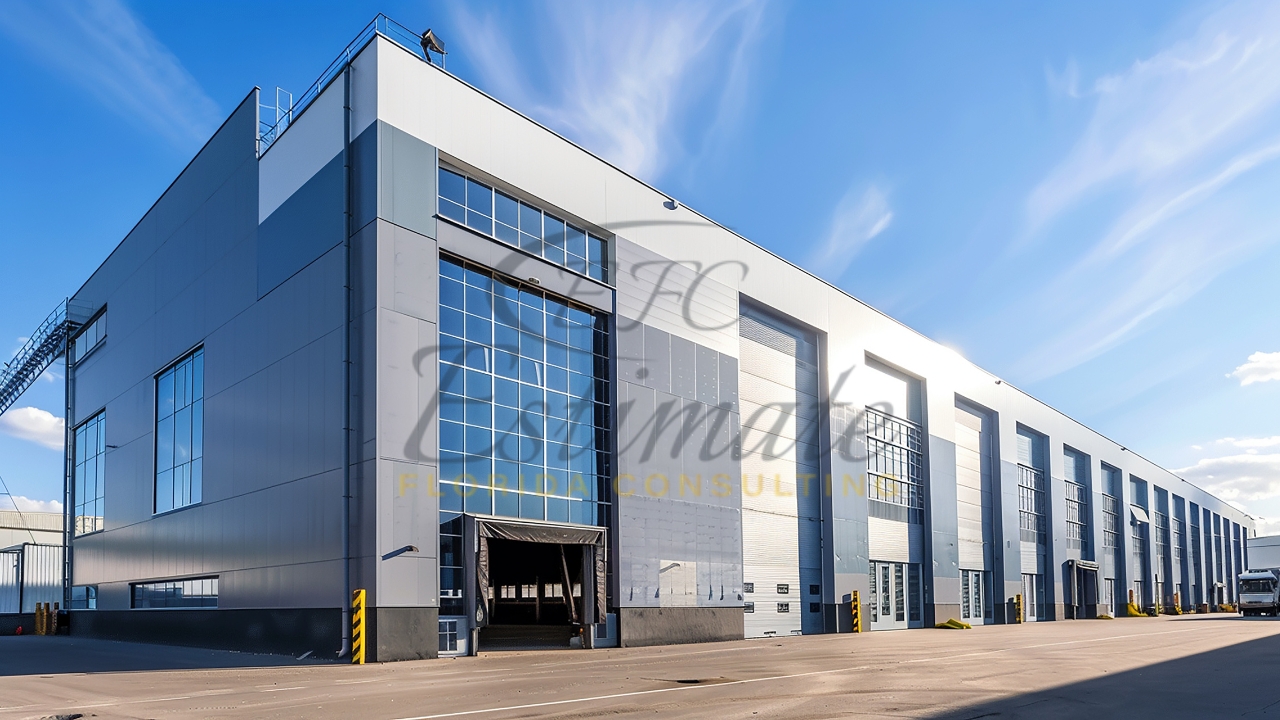
Most Florida warehouses are constructed using pre-engineered metal buildings (PEMB) or structural steel framing systems due to durability, speed of construction, and cost efficiency. These systems are commonly used in industrial warehouse construction, logistics facilities, and distribution centers.
Because Florida is a hurricane-prone state, warehouses must meet strict wind-load, anchoring, and bracing requirements, increasing steel weight and connection costs. Large distribution centers may also use concrete tilt-up wall construction, which offers durability and security but increases foundation, crane, and labor costs.
Site Work, Foundations, and Concrete Slab Costs
Site preparation is one of the most critical and underestimated components of warehouse construction cost per sq ft Florida projects require. Site work includes land clearing, grading, excavation, soil stabilization, drainage systems, and stormwater management.
Concrete slab design is especially important for warehouses handling forklifts, pallet racking, heavy equipment, and high-pile storage. Thicker slabs, increased reinforcement, vapor barriers, and moisture protection all raise foundation costs but are necessary for long-term structural performance.
Roofing and Exterior Wall Systems
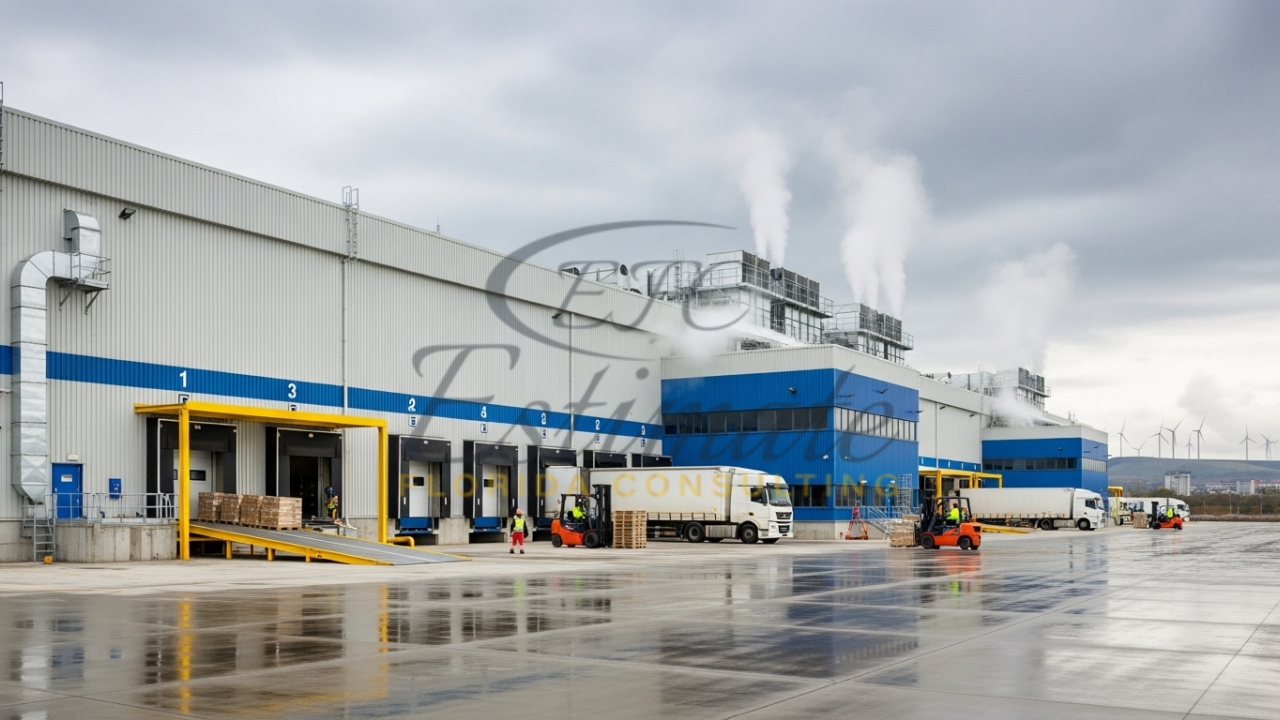
Warehouse roofing systems typically include standing-seam metal roofs, TPO membrane roofs, or insulated metal roof panels, depending on budget and energy-efficiency goals. Florida energy codes often require insulation, reflective roofing materials, and thermal performance standards to reduce heat gain.
Exterior wall systems may consist of metal panels, masonry walls, insulated sandwich panels, or tilt-up concrete panels. These systems influence durability, maintenance requirements, weather resistance, and long-term operating costs.
Mechanical, Electrical, and Fire Protection Systems
Basic warehouses may only require LED lighting, exhaust ventilation, and limited plumbing, while operational warehouses demand HVAC systems, upgraded electrical service, emergency power, and advanced fire protection systems.
Fire protection is a major cost driver. Florida fire codes often require ESFR sprinkler systems, fire alarms, smoke detection, and emergency lighting, particularly in high-bay or high-pile storage warehouses. These systems must be included early in cost planning.
Interior Build-Out and Office Space Costs
Many warehouses include administrative offices, restrooms, locker rooms, break areas, mezzanines, and employee facilities. While warehouse shell construction is relatively affordable, interior office build-outs significantly increase costs.
Finished office areas inside warehouses typically range from $155 to $325 per sq ft, depending on finish quality, layout complexity, mechanical systems, and electrical requirements. Early planning helps prevent unexpected budget increases.
Warehouse Design Layout and Operational Efficiency
Warehouse construction cost per sq ft Florida developers encounter is closely tied to layout efficiency and operational flow. Efficient layouts consider column spacing, aisle widths, dock positioning, racking configuration, and forklift circulation.
Poor layout planning can increase construction scope by requiring additional structural steel, slab reinforcement, or mechanical changes. Coordinating design and estimating early helps optimize space usage and reduce long-term operational inefficiencies.
Cold Storage and Temperature-Controlled Warehouse Considerations
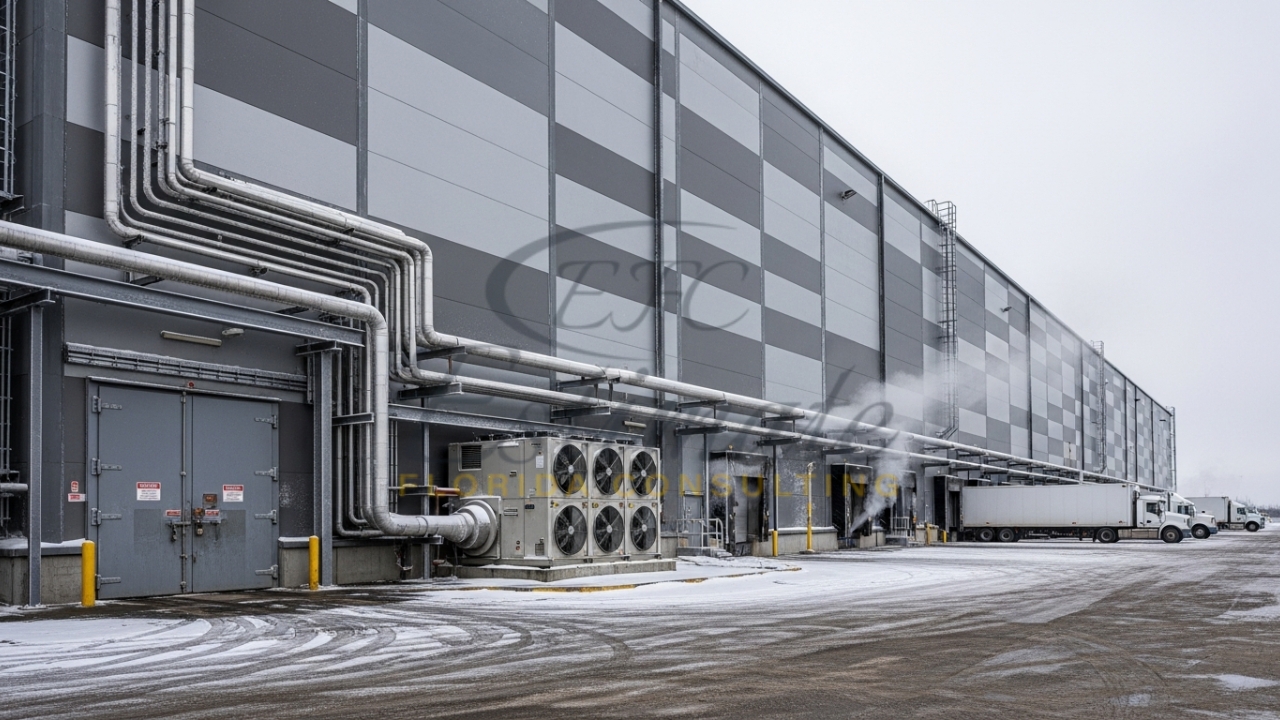
Cold storage and temperature-controlled warehouses require specialized insulation systems, vapor barriers, refrigerated wall panels, and advanced mechanical equipment. These facilities must also manage condensation control, humidity regulation, and energy efficiency, especially in Florida’s climate.
Because of these requirements, cold storage warehouses involve higher construction complexity and must be carefully estimated to avoid cost overruns.
Warehouse Expansion and Future Growth Planning
Many warehouse owners plan for future expansion during initial construction. Designing facilities with expandable structural bays, knock-out wall panels, oversized utilities, and flexible dock layouts allows for growth without major disruption.
Planning for expansion during early estimating helps reduce future retrofit costs and improves long-term asset value.
Security Systems and Site Protection Requirements
Warehouses often require security fencing, controlled access gates, surveillance systems, exterior lighting, and secured entry points, especially for high-value inventory or 24/7 operations.
Security infrastructure affects electrical systems, site work, and technology integration, making early planning essential to avoid late-stage cost increases.
Parking Areas, Employee Facilities, and Site Amenities
Warehouse construction scope often includes employee parking, truck staging areas, sidewalks, signage, landscaping, and ADA-compliant access routes. These elements are frequently underestimated during early budgeting.
Local zoning codes may also require minimum parking counts and traffic circulation planning, which affect site layout and construction costs.
Impact of Supply Chain and Material Availability
Warehouse construction schedules and budgets are influenced by material lead times, steel availability, roofing system procurement, and specialty equipment delivery. Delays can extend construction timelines and increase indirect costs.
Professional estimating accounts for current market conditions, procurement risks, and scheduling impacts, helping owners plan realistically.
Sustainability and Green Warehouse Construction Trends
Many modern warehouses include energy-efficient lighting, solar-ready roofing, low-emission materials, and water-efficient plumbing systems. Sustainable warehouse design supports operational savings, environmental compliance, and tenant demand.
Balancing sustainability goals with construction budgets requires careful planning during the estimating phase.
Pre-Construction Planning and Cost Reviews
Pre-construction planning helps identify design conflicts, scope gaps, and budget risks before construction begins. Regular cost reviews allow owners to make informed decisions about materials, systems, and layouts early.
This approach minimizes change orders and keeps warehouse projects financially controlled.
Long-Term Maintenance and Lifecycle Cost Considerations
Warehouse construction decisions affect maintenance requirements and building performance for decades. Durable materials, efficient systems, and quality workmanship reduce long-term repair and replacement costs.
Lifecycle cost planning focuses on energy usage, maintenance schedules, and asset longevity, not just initial construction cost per square foot.
Why Accurate Warehouse Cost Estimating Matters?
Using average pricing alone often leads to incomplete budgets and financing challenges. Every warehouse has unique requirements based on location, size, function, and regulatory compliance.
Accurate estimating considers real-time material pricing, labor conditions, site constraints, and construction sequencing, allowing owners to plan confidently and compare contractor bids fairly.
How Professional Estimating Supports Warehouse Projects?
When Estimate Florida Consulting provides professional estimates, warehouse owners receive a clear, itemized breakdown covering site work, structure, systems, finishes, and regulatory costs.
This detailed approach reduces budget overruns, schedule delays, and unexpected expenses, making warehouse construction projects easier to manage and finance.
Conclusion: Build Your Florida Warehouse with Confidence
Warehouse construction in Florida requires careful planning, accurate budgeting, and strict code compliance. Construction cost per square foot is shaped by structure type, site conditions, building systems, and operational needs—not just building size.
When Estimate Florida Consulting provides professional estimates, property owners gain clarity, cost control, and confidence—ensuring warehouse projects are planned correctly and delivered without costly surprises.
Frequently Asked Questions (FAQs)
- What is the average warehouse construction cost per square foot in Florida?
The average warehouse construction cost per sq ft in Florida typically ranges from $49 to $124, depending on warehouse type, size, structural system, site conditions, and building code requirements. Specialized facilities such as climate-controlled or high-bay logistics warehouses usually fall at the higher end of this range. - Why does warehouse construction cost vary so much in Florida?
Warehouse construction costs vary due to factors such as hurricane wind-load requirements, soil conditions, slab thickness, fire protection systems, building height, material selection, and site development needs. Florida’s strict building codes and weather-resilience standards significantly influence pricing. - Does a larger warehouse cost less per square foot to build?
Yes, larger warehouses generally have lower per-square-foot costs due to economies of scale. Fixed expenses like design, permits, and utility connections are spread over more square footage, although total project costs increase with added infrastructure such as truck courts and stormwater systems. - What type of warehouse is the most expensive to build in Florida?
Cold storage warehouses, high-bay logistics facilities, and climate-controlled distribution centers are the most expensive to construct. These facilities require advanced insulation, refrigeration systems, ESFR sprinklers, reinforced slabs, and higher mechanical and electrical capacity. - Are site work and concrete slab costs included in warehouse construction pricing?
Yes, site preparation and slab-on-grade foundations are major components of warehouse construction costs. Projects requiring soil stabilization, drainage systems, thicker slabs, or heavy-load reinforcement will see higher per-square-foot pricing. - How much does office build-out inside a warehouse add to the total cost?
Office build-outs inside warehouses can significantly increase construction costs. Finished office areas typically range from $155 to $325 per sq ft, depending on finishes, HVAC systems, electrical scope, and layout complexity. - How do Florida building codes affect warehouse construction costs?
Florida Building Code requirements for wind resistance, fire protection, energy efficiency, and structural anchoring increase material quantities and labor scope. Compliance with these codes is mandatory and must be included in accurate warehouse cost estimates. - Why should I use a professional estimator for warehouse construction in Florida?
Professional estimating ensures all cost factors—site work, structure, systems, permits, and code compliance—are accurately included. When Estimate Florida Consulting provides professional estimates, warehouse owners gain reliable budgets, reduced risk of change orders, and better financial planning for construction and financing.