











- Homepage
- Sonotube Concrete Estimator
Sonotube Concrete Estimator
Leading provider of estimate services.
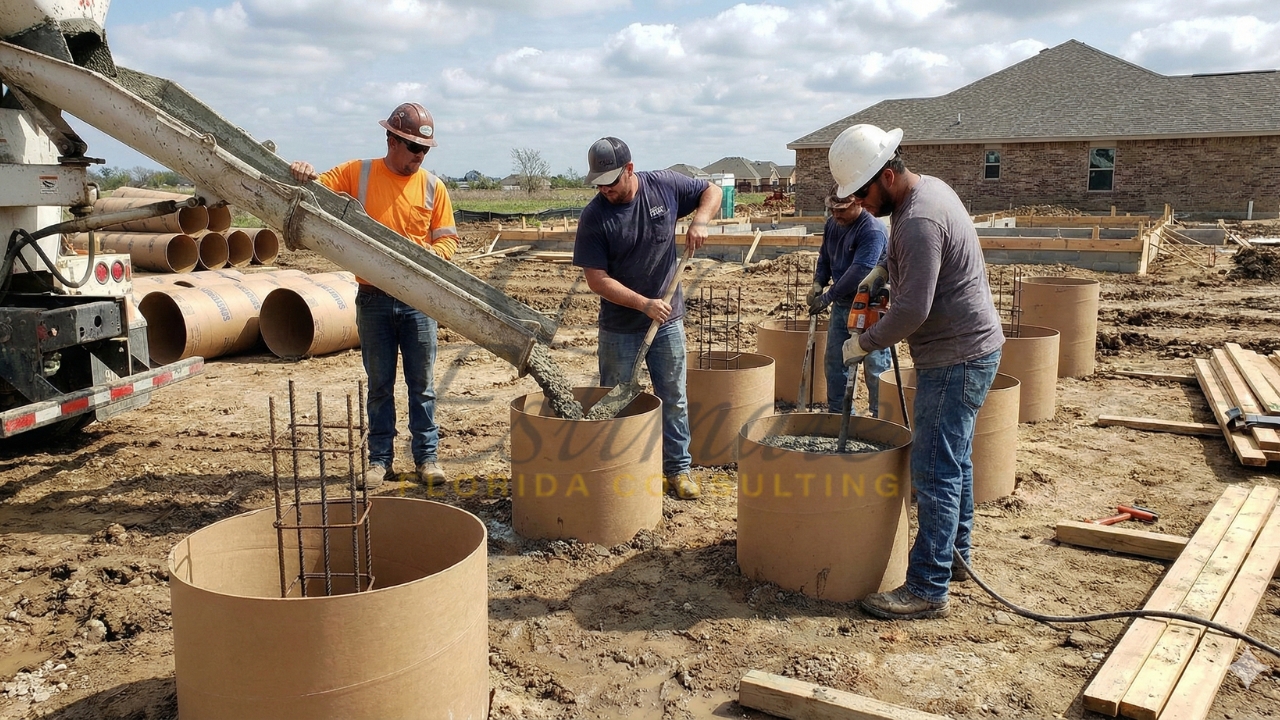
Sonotubes, also known as concrete form tubes, are widely used in construction to create cylindrical footings, columns, piers, mailbox posts, deck supports, fencing posts, and structural foundation columns for homes and outdoor structures. They provide a controlled and consistent shape for poured concrete, making them essential for both residential and commercial building applications. Before any installation begins, an accurate estimate of concrete volume is required to ensure enough material is purchased and delivered.
Estimating concrete for a Sonotube is different from estimating a slab because the shape is cylindrical, not rectangular. Instead of calculating length × width × height, the calculation involves determining the volume of a cylinder using π × radius² × height.
The purpose of a Sonotube concrete estimator is to simplify the calculation so homeowners, builders, contractors, and engineers can determine how much concrete is needed for each column, how many tubes are required, and what reinforcement or labor planning will be needed.
Accurate Sonotube estimating matters because ordering too little concrete can delay the project, create weak layers, or lead to poor bonding if multiple pours occur. Ordering too much results in waste, increased cost, and unnecessary transportation or disposal. In Florida, estimating correctly is even more important because soil type, moisture levels, hurricane-resistant construction standards, and outdoor humidity can affect footing depth, reinforcement use, and required concrete PSI strength.
Why Sonotube Footings Are Common in Florida Construction?
Concrete tubes are used throughout Florida for several reasons:
Adaptable to Sandy and Wet Soil Conditions
In coastal areas like Tampa, Naples, Orlando, Jacksonville, and Miami, soil can shift. Sonotube columns provide deeper structural anchoring for decks, pergolas, docks, and exterior load-bearing structures.
Meets Wind and Hurricane Requirements
Florida building codes require secure footing foundations for outdoor structures. Sonotube-based foundations and piers are often used to resist uplift, shear, and lateral movement from strong winds.
Works with Above-Grade Constructio
Decks, modular homes, sheds, and steel column supports often rely on poured vertical foundations rather than full slab systems.
Cleaner, Faster, and More Predictable Forming
Unlike digging square wooden forms, Sonotubes come pre-shaped, saving installation time and reducing labor.
Common Sonotube Sizes and Dimensions
Sonotubes come in multiple diameters depending on the load and purpose.
Diameter Size | Typical Use Case |
6-inch | Mailbox posts, small fencing posts |
8-inch | Light signs, pergola posts |
10-inch | Small deck supports |
12-inch | Standard deck, porch, and small column supports |
16–18 inch | Medium structural loads, porches, patios |
20–24 inch | Large patios, structural beams, home additions |
30–36 inch | Heavy duty footings, commercial foundations |
In Florida, 8-inch to 18-inch tubes are most common for residential projects, while 24-inch and larger tubes are used for major structures or reinforced foundations.
Get High-Quality 3D Rendering Services Today!
Transform your space with stunning 3D Rendering that blends style, comfort, and functionality.
We Specialize in Both Residential and Commercial 3D Rendering Projects.
- Luxury Villas
- Apartment Complexes
- Modular Kitchens
- Bathrooms
- Office Buildings
- Shopping Malls
- Hospitals
- Hotels & Resorts
Formula to Calculate Concrete Volume in Sonotubes
A Sonotube is a cylinder, so the formula used is:
Volume = π × radius² × height
Convert measurements to feet to calculate cubic feet, or convert to yards by dividing by 27.
Example Calculation — 12-inch (1-ft diameter) tube, 3 feet deep:
Radius = 6 inches = 0.5 feet
Volume = 3.14 × (0.5²) × 3
Volume = 3.14 × 0.25 × 3
Volume = 2.355 cubic feet
Convert to cubic yards: 2.355 ÷ 27 ≈ 0.087 yd³
If installing 4 tubes:
0.087 × 4 = 0.348 yd³
Round to 0.5 yd³ including waste
Sonotube Concrete Volume Reference Table
Tube Diameter | Depth 1 ft | Depth 2 ft | Depth 3 ft | Depth 4 ft |
6 inch | 0.15 ft³ | 0.30 ft³ | 0.45 ft³ | 0.60 ft³ |
8 inch | 0.35 ft³ | 0.70 ft³ | 1.05 ft³ | 1.40 ft³ |
10 inch | 0.55 ft³ | 1.10 ft³ | 1.65 ft³ | 2.20 ft³ |
12 inch | 0.79 ft³ | 1.57 ft³ | 2.36 ft³ | 3.14 ft³ |
16 inch | 1.39 ft³ | 2.78 ft³ | 4.17 ft³ | 5.56 ft³ |
18 inch | 1.77 ft³ | 3.53 ft³ | 5.30 ft³ | 7.07 ft³ |
24 inch | 3.14 ft³ | 6.28 ft³ | 9.42 ft³ | 12.56 ft³ |
Concrete Cost Estimate for Sonotube Installations in Florida (Material + Labor)
Estimating the cost of installing concrete in Sonotubes includes more than the concrete itself. Material cost, tube cost, reinforcement, excavation, delivery, equipment, and labor all contribute to the total budget. Prices in Florida vary based on region, access difficulty, soil type, depth, and building code requirements.
Below is the estimated cost breakdown for Sonotube projects based on 2025 Florida construction pricing.
Cost of Concrete Material
Concrete pricing depends on whether you use bag mix or ready-mix delivery.
Supply Type | Cost Range |
Bagged concrete (60–80 lb bags) | $6.60 – $11.55 per bag |
Ready-mix concrete (per cubic yard) | $155 – $310 per yard |
Bagged concrete is practical for 1–2 Sonotubes, but for multiple tubes or deep foundations, ready-mix is more efficient and cost-effective.
Sonotube Cost (Material Only)
Diameter Size | Price per Tube (4-ft length) |
6″ | $12 – $20 |
8″ | $18 – $32 |
10″ | $28 – $48 |
12″ | $40 – $65 |
14–16″ | $60 – $110 |
18–24″ | $95 – $210 |
Taller tubes (8–12 ft) for deep foundation work can cost 2–3× more.
Reinforcement Costs
Most Florida installations require reinforcement due to humidity, shifting soils, and hurricane uplift forces.
Reinforcement Type | added cost per tube |
No reinforcement | $0 |
Rebar cage (#3 or #4 bars) | $18 – $85 |
Rebar with structural tied cage | $55 – $165 |
Fiber mesh in concrete mix | $12 – $55 per yard added |
Coastal regions may require epoxy-coated rebar to prevent corrosion — especially near saltwater.
Labor Cost (Installation + Pouring)
Project Type | Labor Cost per Tube |
Small tubes (6–8″) | $55 – $110 |
Medium tubes (10–12″) | $110 – $275 |
Large tubes (16–24″) | $275 – $550 |
Commercial-grade heavy installations | $550 – $1,100+ |
Labor cost increases if:
- Soil requires compaction
- Tube depth exceeds 4 ft
- Access requires pump trucks
- Forms require leveling or bracing
Total Cost per Installed Tube (Florida Average)
Tube Size | Installed Cost Range |
6–8 inch | $110 – $280 per tube |
10–12 inch | $220 – $550 per tube |
16–18 inch | $385 – $990 per tube |
20–24 inch | $660 – $1,650 per tube |
These estimates include excavation, tube placement, reinforcement, concrete, leveling, and finishing — but not permits or engineering fees if required.
Depth Requirements in Florida
In cold states, frost depth determines footing depth — but in Florida, footing depth is related to:
- Soil stability
- Hurricane uplift resistance
- Building load requirement
- Flood zone elevation
Typical recommended Sonotube depths in Florida:
Application Type | Recommended Depth |
Mailbox/sign post | 18–24 inches |
Small fence post | 24–36 inches |
Deck/pergola footing | 36–48 inches |
Structural porch/patio column | 4–6 feet |
Hurricane-rated pier | 6–10 feet (engineered) |
Coastal or dock installation | 6–12+ feet |
Deeper installations help prevent shifting from sandy soils and vibration from heavy winds or water runoff.
Soil Types Affecting Depth & Tube Diameter
Florida Soil Condition | Additional Consideration |
Sandy soil | May require larger diameter or compaction |
Clay/expansive soil | Risk of shifting — reinforcement recommended |
Coastal salt soil | Corrosion-resistant rebar advised |
Wet or marsh zones | Extended depth + gravel base needed |
Concrete Volume Examples (Florida Use Cases)
Here are practical examples:
Example 1 — 10-inch Tube, 3 Feet Deep
Volume = 3.14 × (0.416ft²) × 3 = ~1.31 ft³
Concrete needed for 4 tubes: 1.31 × 4 = ~5.24 ft³
Convert to yards: 5.24 ÷ 27 = 0.194 yd³
Order with waste → 0.25 yd³
Example 2 — 12-inch Tube, 4 Feet Deep
Volume = 3.14 × (0.5ft²) × 4 ≈ 3.14 ft³
For 6 tubes → 3.14 × 6 ≈ 18.84 ft³
Convert → 18.84 ÷ 27 ≈ 0.70 yd³
Order → 1 cubic yard
Example 3 — 18-inch Tube, 6 Feet Deep (Structural)
Volume = 3.14 × (0.75ft²) × 6 ≈ 10.60 ft³
For 4 tubes → 42.4 ft³
Convert → 42.4 ÷ 27 ≈ 1.57 yd³
Order → 2 cubic yards
Concrete Volume Examples (Florida Use Cases)
Concrete work using Sonotubes may look simple, but timing and environmental conditions play a major role in the final strength and stability of the installation. Florida’s climate includes extreme heat, humidity, coastal salt exposure, soft sandy soil, and seasonal heavy rainfall — all of which affect how concrete behaves during mixing, pouring, and curing. Accounting for these variables in your estimate ensures the final footing or column performs as expected.
Waste Factor for Sonotube Projects
Sonotube pours typically require more waste allowance than slab installations because:
- Concrete spills during filling
- Tubes sometimes absorb moisture and expand
- Air pockets inside narrow tubes may require adjustment
- Tube reinforcement takes up internal space
Recommended waste allowance:
Project Type | Waste Factor |
Small tubes (≤ 10″) | 5–10% |
Medium tubes (12–18″) | 10–15% |
Large structural tubes (20″+) | 15–20% |
Including a waste buffer prevents concrete shortages, which can lead to weak cold joints if a second batch is poured later.
90% More Chances to Win Bids with Our Estimate!
Curing Time and Environmental Effects in Florida
Concrete curing inside Sonotubes requires controlled hydration.
Condition | Effect |
High heat | Speeds curing, increases cracking risk |
High humidity | Slows topping cure but supports interior hydration |
Coastal salt exposure | Requires sealers and corrosion-resistant reinforcement |
Rain/spill inundation | Weakens top layers if curing is interrupted |
Typical curing timeline:
- 24–48 hours: Tube remains supported/braced
- 3–7 days: Light load may be applied (depending on PSI mix)
- 28 days: Full strength is reached
In hot regions like Florida, using a retarder admixture or keeping the tubes shaded can prevent rapid surface drying.
Best Time of Day to Pour Concrete in Florida
Season | Best Pour Time |
Winter | Midday |
Spring/Fall | Morning or late afternoon |
Summer | Very early morning or after 5 PM |
Morning pours during summer reduce rapid moisture loss caused by high mid-day temperatures.
Tools, Equipment & Installation Method Summary
A Sonotube installation requires specific tools for excavation, reinforcement placement, leveling, and pouring.
Type of Tool/Equipment | Needed For |
Post hole digger / auger | Digging deeper footing holes |
Shovel & tamping tool | Leveling and compacting the bottom |
Level & plumb line | Ensuring the tube stands straight |
Stakes and bracing | Preventing tube movement before concrete sets |
Rebar and tie wire | Structural strength and uplift resistance |
Bucket, chute, or pump hose | Concrete placement inside narrow tubes |
Concrete vibrator (optional) | Removing trapped air inside the form |
Using a vibrator or tapping the tube walls helps eliminate voids and improves strength.
Florida Building Code Requirements for Sonotubes
While rules vary by county, typical Florida requirements include:
- Minimum footing depth: 24–48 inches
- Hurricane uplift resistance for structural supports
- Rebar required in most load-bearing installations
- Permits required for decks, porches, and structural columns
- Inspection before pouring in many counties
Coastal zones (Miami-Dade, Broward, Collier, Sarasota, Palm Beach) often require:
- Epoxy-coated rebar
- Deeper embedment
- Higher PSI concrete (3,500–4,500 PSI minimum)
Always verify local codes before estimating or ordering materials.
Example Cost Scenarios (Florida Estimates)
Here are practical example cases to make pricing easier to visualize.
Example 1 — Four 10-inch Tubes, 3 Feet Deep (Deck Posts)
Item | Estimated Cost |
Sonotubes | $120 – $190 |
Concrete (0.5 yd³) | $80 – $155 |
Rebar | $55 – $110 |
Labor | $300 – $550 |
Total | $555 – $1,005 |
Example 2 — Six 12-inch Tubes, 4 Feet Deep (Porch Footing)
Item | Estimated Cost |
Sonotubes | $240 – $390 |
Concrete (1 yard) | $155 – $310 |
Rebar cage system | $110 – $275 |
Labor | $660 – $1,210 |
Total | $1,165 – $2,185 |
Example 3 — Four 18-inch Tubes, 6 Feet Deep (Structural Patio Column)
Item | Estimated Cost |
Sonotubes | $260 – $480 |
Concrete (2 yards) | $310 – $620 |
Epoxy rebar cage | $220 – $550 |
Labor | $1,100 – $2,200 |
Total | $1,890 – $3,850 |
Get 5 New Projects in the Next 7 Days With Our System
Final Summary
A Sonotube concrete estimator helps determine how much concrete is needed based on tube diameter, depth, reinforcement, waste allowance, and Florida building requirements. Proper estimating ensures enough material is ordered, prevents delays, matches structural load requirements, and supports long-term durability. Because Florida’s soil, climate, and building codes are unique, the estimation process must include reinforcement plans, curing considerations, and hurricane resilience.
Whether used for decks, porches, fencing, docks, or full structural builds, accurate Sonotube estimation provides safe installation, cost transparency, and long-term performance.
Frequently Asked Question
It depends on diameter and depth — use the cylinder formula or the table provided.
For structural or hurricane-rated applications in Florida, yes — reinforcement is highly recommended.
Yes, for small installations. For multiple tubes or deep piers, ready-mix is faster and more consistent.
Typical depths range from 24 inches for small posts to 6–10 feet for hurricane-rated footings.
Comprehensive Trade-Specific Estimates
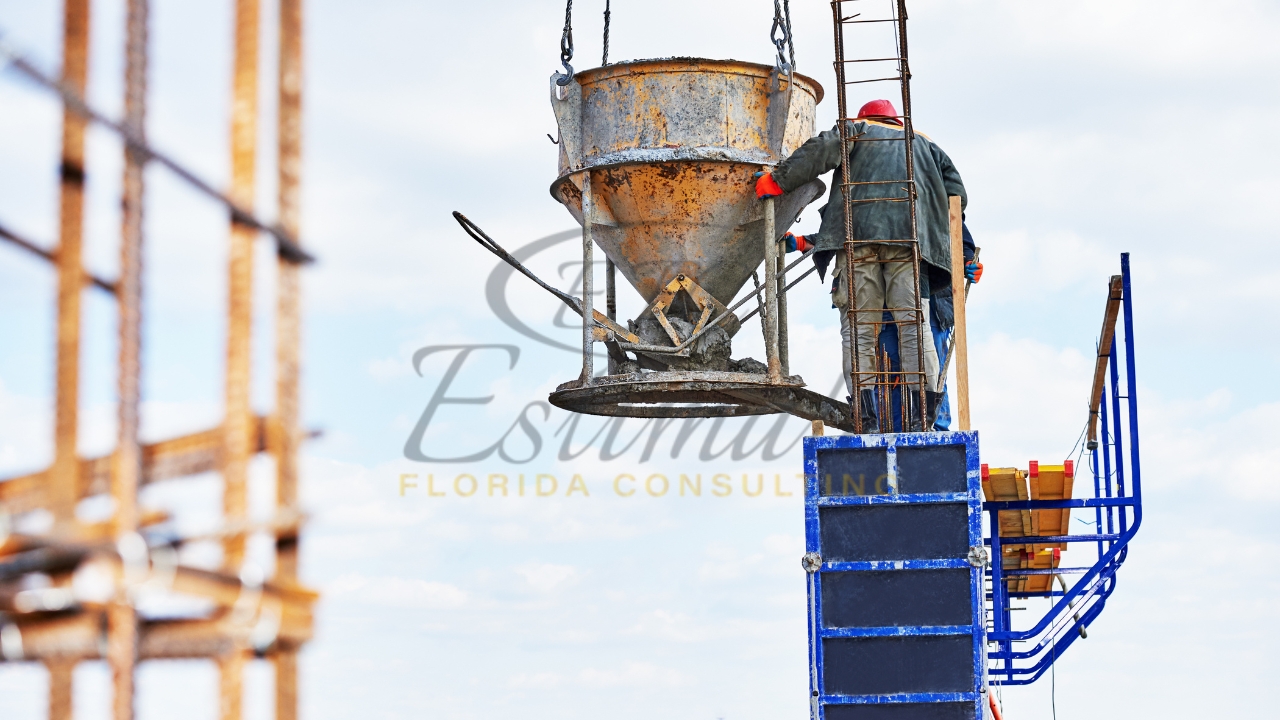
At Estimate Florida Consulting, we offer detailed cost estimates across all major trades, ensuring no part of your project is overlooked. From the foundation to the finishing touches, our trade-specific estimates provide you with a complete and accurate breakdown of costs for any type of construction project.
Our Simple Process to Get Your Estimate
Upload Plans
Submit your project plans, blueprints, or relevant documents through our online form or via email.
Receive Quotation
We’ll review your project details and send you a quote based on your scope and requirements.
Confirmation
Confirm the details and finalize any adjustments to ensure the estimate meets your project needs.
Get Estimate
Receive your detailed, trade-specific estimate within 1-2 business days, ready for your project execution.
Our Clients & Partners
We pride ourselves on building strong, lasting relationships with our clients and partners across the construction industry.
What Our Clients Say?
We take pride in delivering accurate, timely, and reliable estimates that help contractors and builders win more projects. Our clients consistently praise our attention to detail, fast turnaround times, and the positive impact our estimates have on their businesses.
Estimate Florida Consulting has helped us win more bids with their fast and accurate estimates. We trust them for every project!