











- Homepage
- Precast Warehouse Building Cost Estimator
Precast Warehouse Building Cost Estimator
Leading provider of estimating services.
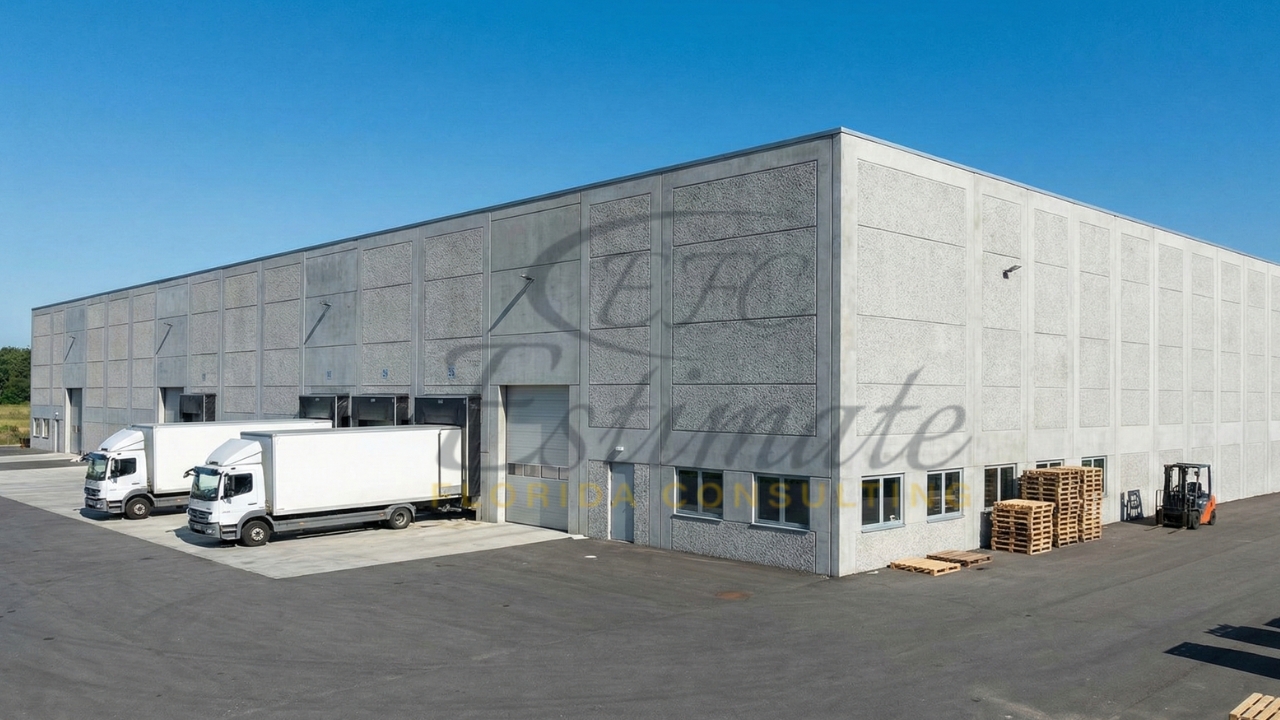
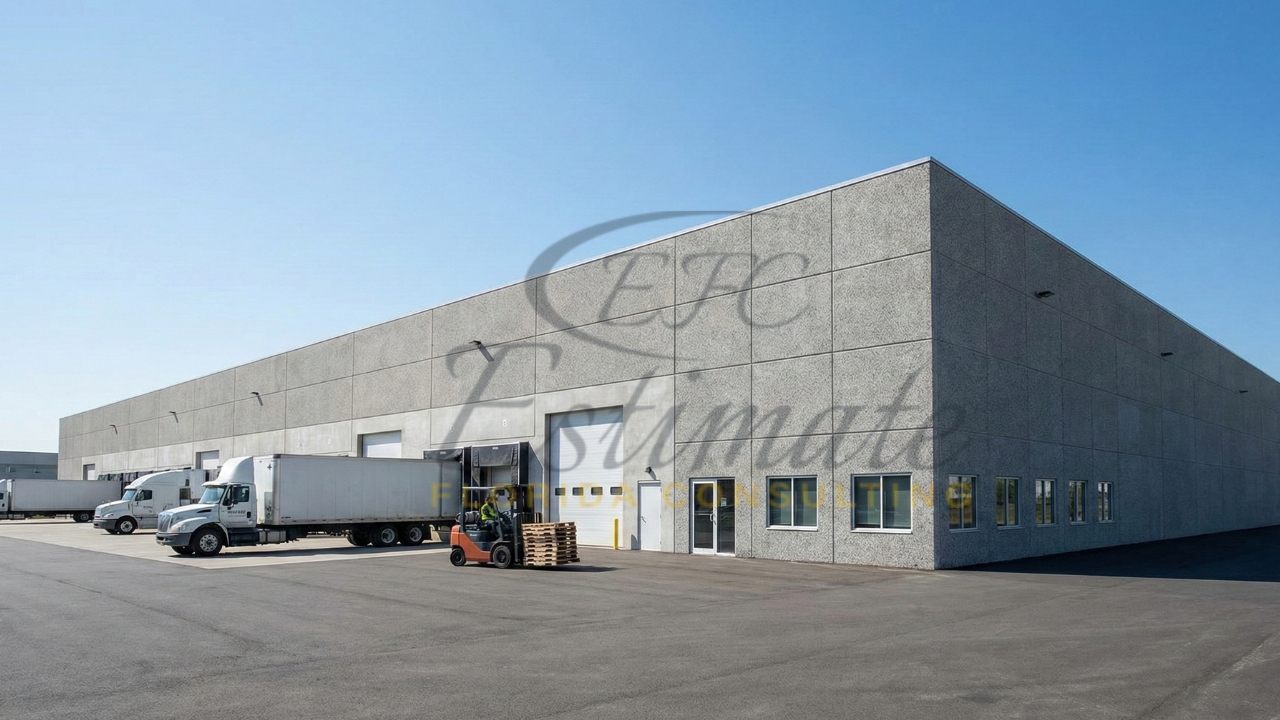
Building a warehouse using precast concrete is becoming a popular choice for businesses seeking durability, efficiency, and speed in construction. Precast concrete is favored for its strength, versatility, and quick turnaround times compared to traditional concrete pouring methods. As demand for warehousing space grows—particularly in areas like Tennessee, where logistics and distribution are key industries—more developers and business owners are turning to precast concrete for industrial construction.
We will explore the estimated costs involved in constructing a precast warehouse, covering everything from material prices and labor costs to site preparation, permits, and customizations.
This detailed breakdown will help you understand the financial investment required for building a precast warehouse, whether you are a business owner, developer, or general contractor.
Estimate Florida Consulting specializes in providing accurate cost estimates for precast warehouse construction, ensuring that your project stays within budget and is completed on time.
How Much Does It Cost to Build a Precast Warehouse?
The cost of building a precast warehouse depends on several factors, including:
- Size of the warehouse
- Location
- Customization (insulation, design, etc.)
- Site preparation
- Labor rates and material availability
Generally, the cost of building a precast warehouse ranges between $85 and $250 per square foot, depending on the factors listed above. Below is a detailed cost breakdown to help you understand how various components contribute to the overall cost.
Warehouse Type | Estimated Cost per Sq.Ft. (Tennessee Average) |
Basic Precast Warehouse (Unfinished Shell) | $85 – $125 per sq.ft. |
Precast Warehouse with Standard Insulation | $120 – $175 per sq.ft. |
Precast Warehouse with Custom Design, HVAC, and Advanced Features | $175 – $250 per sq.ft. |
As seen, the cost can vary widely depending on the level of customization, insulation, design complexity, and the site conditions. Precast buildings are ideal for businesses that need a quick, durable, and cost-effective solution for warehousing and distribution.
Get High-Quality 3D Rendering Services Today!
Transform your space with stunning 3D Rendering that blends style, comfort, and functionality.
We Specialize in Both Residential and Commercial 3D Rendering Projects.
- Luxury Villas
- Apartment Complexes
- Modular Kitchens
- Bathrooms
- Office Buildings
- Shopping Malls
- Hospitals
- Hotels & Resorts
Factors That Affect the Cost of Precast Warehouse Construction
Several key factors can influence the final cost of a precast warehouse. These factors should be considered during the planning and budgeting phase to ensure that the project stays within scope.
1. Size of the Warehouse
Larger warehouses require more materials, labor, and equipment. As the size of the warehouse increases, the overall cost will naturally increase. However, larger projects can often benefit from economies of scale, where the per-square-foot cost may decrease as the total size increases.
Warehouse Size | Estimated Total Cost |
5,000 sq.ft. | $425,000 – $625,000 |
10,000 sq.ft. | $850,000 – $1.25M |
25,000 sq.ft. | $2.125M – $3.125M |
50,000 sq.ft. | $4.25M – $6.25M |
100,000 sq.ft. | $8.5M – $12.5M |
The larger the warehouse, the greater the cost, but it also means more space for storage, distribution, or manufacturing, which may justify the higher cost.
2. Site Preparation Costs
Before the actual construction of the warehouse can begin, the site must be properly prepared. This typically includes clearing, grading, and preparing the foundation. Sitework costs depend on the following:
- Land clearing and grading
- Soil testing and stabilization
- Excavation for foundations
- Stormwater management
Site preparation typically ranges between $3 – $8 per square foot, depending on the complexity of the site and the amount of preparation required. For difficult or undeveloped land, site preparation can add significant costs.
3. Precast Concrete Materials and Delivery
Precast concrete materials—whether for walls, floors, columns, or beams—come in a variety of grades and designs. The quality of precast components, the type of finishes (smooth vs textured), and any additional reinforcement (e.g., rebar) will affect the overall material cost.
Precast Material Type | Cost per Sq.Ft. |
Standard Precast Panels (basic finishes) | $25 – $50 per sq.ft. |
Insulated Precast Panels | $40 – $75 per sq.ft. |
Custom Precast Panels (textured, decorative) | $60 – $100 per sq.ft. |
Precast components are typically manufactured off-site and delivered to the construction site, which adds transportation costs. Delivery fees generally range from $1,000 to $10,000, depending on distance and logistics.
4. Labor Costs
Labor costs will depend on the region, with Tennessee generally offering competitive rates for skilled workers in construction. The cost of labor typically makes up 30% to 50% of the total project cost. The complexity of the project and the timeline can also affect labor costs.
Labor Type | Average Hourly Rate (Tennessee) |
General Labor | $28 – $55/hr |
Skilled Trades (Masonry, Steel, etc.) | $55 – $100/hr |
Project Management | $65 – $125/hr |
Crane Operators | $85 – $150/hr |
For a precast warehouse project, specialized labor for precast installation and crane operators will be required, adding to the overall cost.
5. Foundation and Structural Reinforcement
Precast buildings require solid foundations to ensure they can bear the weight of the structure and withstand external forces such as wind and seismic activity. This involves poured concrete foundations, which typically cost $5 – $15 per square foot depending on the type (slab vs. raised).
Reinforcement costs (rebar, steel) for both the foundation and the precast panels will typically add an additional $2 – $5 per square foot.
6. Insulation and Energy Efficiency
Insulating a precast warehouse is critical for maintaining a stable temperature, reducing heating and cooling costs, and ensuring compliance with building codes. Depending on your location in Tennessee (e.g., rural vs. urban), insulating a warehouse may add significant cost, particularly if the warehouse will be used for temperature-sensitive goods.
Insulation Type | Estimated Cost per Sq.Ft. |
Basic Insulation (fiberglass) | $2 – $6 per sq.ft. |
High-performance Insulation (spray foam, rigid foam) | $5 – $15 per sq.ft. |
Insulated Precast Panels (integrated) | $8 – $20 per sq.ft. |
Precast warehouse buildings with integrated insulated panels offer better energy efficiency, but may come at a higher upfront cost.
90% More Chances to Win Bids with Our Estimate!
Precast vs Steel vs Concrete Warehouse Buildings
Choosing between a precast concrete warehouse, steel warehouse, or traditional concrete warehouse depends on factors such as budget, project requirements, durability, speed of construction, and long-term operational needs. Here, we compare the costs and advantages of each warehouse type to help you make an informed decision.
1. Precast Concrete Warehouses
Precast concrete warehouses use pre-manufactured concrete components that are assembled on-site. These warehouses are known for their durability, speed of construction, and energy efficiency.
Factor | Precast Concrete Warehouse |
Cost per Sq.Ft. | $85 – $250+ |
Construction Time | Faster (6–12 months depending on size) |
Customization | Medium (can be designed with different finishes and insulation) |
Durability | High (resistant to fire, wind, and moisture) |
Maintenance | Moderate (requires periodic cleaning and inspections) |
Energy Efficiency | Good (insulation can be added, or insulated panels can be used) |
Precast concrete warehouses are ideal for businesses that need a durable, low-maintenance, and energy-efficient solution at a reasonable cost. They also offer flexibility in terms of design and space utilization.
2. Steel Warehouses
Steel warehouses are one of the most common types of industrial buildings. They feature a steel frame and are typically covered with steel panels. Steel warehouses are known for their strength and long lifespan.
Factor | Steel Warehouse |
Cost per Sq.Ft. | $75 – $200 |
Construction Time | Faster (6–9 months) |
Customization | High (flexible design, can include insulation and high ceilings) |
Durability | Very High (resistant to severe weather and pests) |
Maintenance | Low (minimal upkeep required, occasional painting) |
Energy Efficiency | Moderate (requires insulation for temperature control) |
Steel warehouses are a great option for businesses that need large, open spaces without internal supports. However, they may require more customization for insulation and energy efficiency. Steel buildings are typically more expensive than precast but less costly than traditional concrete.
3. Traditional Concrete Warehouses
Traditional concrete warehouses are made entirely of poured-in-place concrete, typically requiring more time to construct and more labor than both precast and steel alternatives. They are highly durable and provide excellent protection against external elements.
Factor | Traditional Concrete Warehouse |
Cost per Sq.Ft. | $100 – $250+ |
Construction Time | Longer (12–18 months) |
Customization | High (flexible designs, can include high-performance insulation) |
Durability | Very High (extremely strong, resistant to fire and weather) |
Maintenance | Low (minimal upkeep if well-maintained) |
Energy Efficiency | Very High (great thermal mass, natural temperature control) |
While traditional concrete warehouses offer the best durability and energy efficiency, they come with the highest initial cost and longest construction time. This makes them ideal for large-scale operations or businesses that require specialized spaces, but less ideal for smaller projects or those on a tighter budget.
Comparison Summary Table
Factor | Precast Concrete Warehouse | Steel Warehouse | Traditional Concrete Warehouse |
Cost per Sq.Ft. | $85 – $250 | $75 – $200 | $100 – $250 |
Construction Time | 6–12 months | 6–9 months | 12–18 months |
Customization | Medium | High | High |
Durability | High | Very High | Very High |
Maintenance | Moderate | Low | Low |
Energy Efficiency | Good | Moderate | Very High |
When to Choose Precast Concrete
Precast concrete is a good choice if you need:
- Faster construction times than traditional concrete
- Modular design with a lower cost
- Durability for a variety of climates
- A sustainable building option that requires minimal ongoing maintenance
Precast is particularly ideal for businesses that require quick delivery and affordable initial construction without compromising too much on energy efficiency or durability.
Cost Estimating for Precast Warehouses
Accurate cost estimating for precast warehouses involves several components. The total cost of construction includes:
- Site preparation (grading, excavation, and foundation)
- Precast concrete components (walls, floors, roof slabs, beams, columns)
- Reinforcement (steel for structural strength)
- Modifications (insulation, windows, doors, electrical, plumbing)
- Labor (skilled labor for installation and site work)
- Permitting (local zoning, inspections, and approval fees)
Estimate Florida Consulting provides professional estimating services to ensure that all factors are accounted for in your precast warehouse project, helping you avoid unexpected costs and project delays.
Get 5 New Projects in the Next 7 Days With Our System
Conclusion
Building a precast warehouse is an efficient, cost-effective solution for businesses looking for durability and scalability. While the initial costs of a precast warehouse can vary, it offers long-term value in terms of strength, energy efficiency, and customization potential.
Whether you need a small storage space or a large distribution facility, precast concrete provides a strong, reliable foundation that can be tailored to your business needs. Understanding the cost factors involved in constructing a precast warehouse helps you plan and budget more effectively.
Estimate Florida Consulting specializes in providing professional cost estimating services for warehouse construction projects. If you’re looking to build a precast warehouse, contact us for a detailed estimate that accounts for all project variables, including site preparation, materials, labor, and permits.
Frequently Asked Question
The cost of building a precast warehouse ranges from $85 to $250 per square foot, depending on factors such as the size of the warehouse, level of customization, insulation requirements, and local site conditions. Precast buildings typically fall on the lower end of the cost spectrum compared to traditional steel or concrete warehouses.
The construction time for a precast warehouse typically ranges from 6 to 12 months, depending on the complexity of the design, size of the warehouse, and the availability of materials. Precast construction is generally faster than traditional concrete, as panels are manufactured off-site and assembled on location.
Precast concrete warehouses are often more cost-effective and faster to build than traditional concrete warehouses. However, they can be more expensive than steel warehouses. Precast buildings offer excellent durability and energy efficiency, but the total cost will depend on the level of customization and site preparation needed.
Yes, precast warehouses can be highly customized. You can adjust the size, insulation levels, window and door placements, and even finishes (e.g., textured or smooth surfaces). However, more customization typically increases the cost. Basic designs with minimal modifications will be on the lower end of the cost range, while specialized features will increase the cost.
Yes, precast concrete buildings are naturally energy-efficient due to the thermal mass of the concrete, which helps regulate temperature. Insulated precast panels or additional insulation layers can further enhance energy efficiency, particularly for warehouses that need to maintain a controlled environment. Precast warehouses are an excellent choice for businesses aiming to reduce long-term energy costs.
Yes, building a precast warehouse typically requires several permits, including:
- Building permit
- Zoning approval
- Environmental assessments (if applicable)
- Fire safety inspections
Permit fees and requirements vary by location, and it’s important to check with local authorities before starting construction. Estimate Florida Consulting can help with the permitting process to ensure your project stays on track.
Comprehensive Trade-Specific Estimates
At Estimate Florida Consulting, we offer detailed cost estimates across all major trades, ensuring no part of your project is overlooked. From the foundation to the finishing touches, our trade-specific estimates provide you with a complete and accurate breakdown of costs for any type of construction project.
Our Simple Process to Get Your Estimate
Upload Plans
Submit your project plans, blueprints, or relevant documents through our online form or via email.
Receive Quotation
We’ll review your project details and send you a quote based on your scope and requirements.
Confirmation
Confirm the details and finalize any adjustments to ensure the estimate meets your project needs.
Get Estimate
Receive your detailed, trade-specific estimate within 1-2 business days, ready for your project execution.
Our Clients & Partners
We pride ourselves on building strong, lasting relationships with our clients and partners across the construction industry.
What Our Clients Say?
We take pride in delivering accurate, timely, and reliable estimates that help contractors and builders win more projects. Our clients consistently praise our attention to detail, fast turnaround times, and the positive impact our estimates have on their businesses.
Estimate Florida Consulting has helped us win more bids with their fast and accurate estimates. We trust them for every project!