


















Concrete Duct Bank Cost Estimate

Leading provider of estimating services.

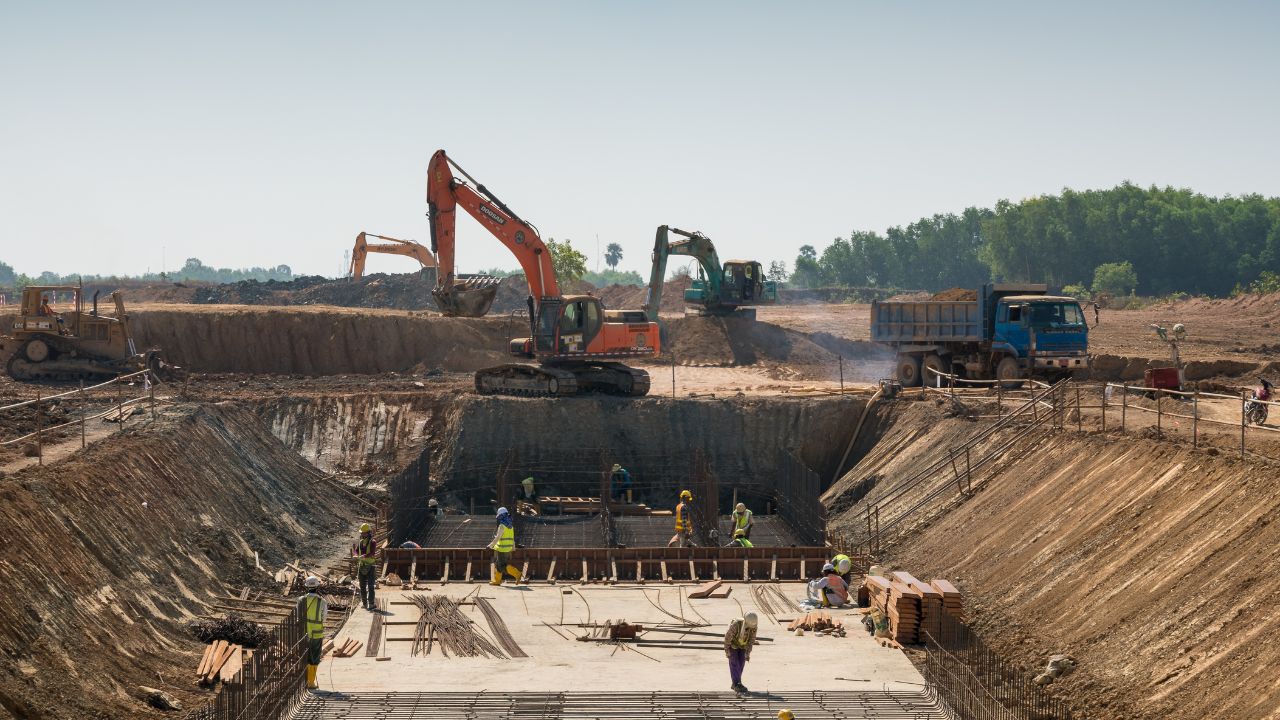
Concrete duct banks play a critical role in protecting underground utility conduits for electrical wiring, fiber optic systems, telecommunications, data infrastructure, and high-voltage transmission networks. They provide durability, thermal protection, load resistance, and long-term reliability for utility infrastructure—especially in areas with heavy construction activity, vehicle traffic, or environmental exposure. Whether part of a commercial build, government project, industrial facility upgrade, or new residential development, duct banks must be accurately estimated before construction begins.

A concrete duct bank cost estimate helps determine the number of conduits needed, trench dimensions, concrete volume, reinforcement requirements, and installation labor.

Concrete Duct Bank Cost Estimate

While some contractors begin planning with rough numbers like dollars per linear foot, real duct bank projects require deeper detail, including site conditions, conduit type, spacing, encasement thickness, and testing requirements. Underground work is costly to repair, so accurate estimates prevent overruns and schedule delays.

Estimate Florida Consulting prepares construction cost estimates for underground utility duct bank systems based on engineered plans, Florida pricing standards, and project-specific installation factors. This guide explains how duct bank estimating works, how pricing is calculated, and what drives cost differences across projects.

Get a Quick
Estimate For Projects

What Is a Concrete Duct Bank?

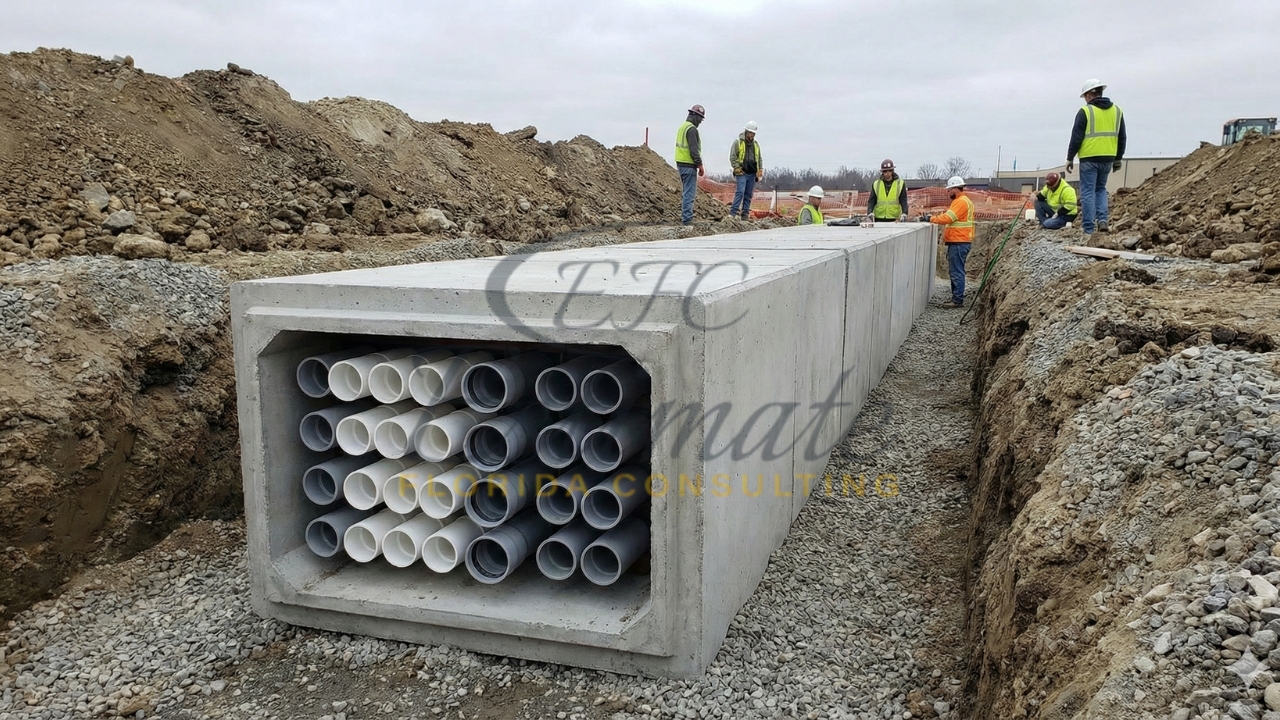
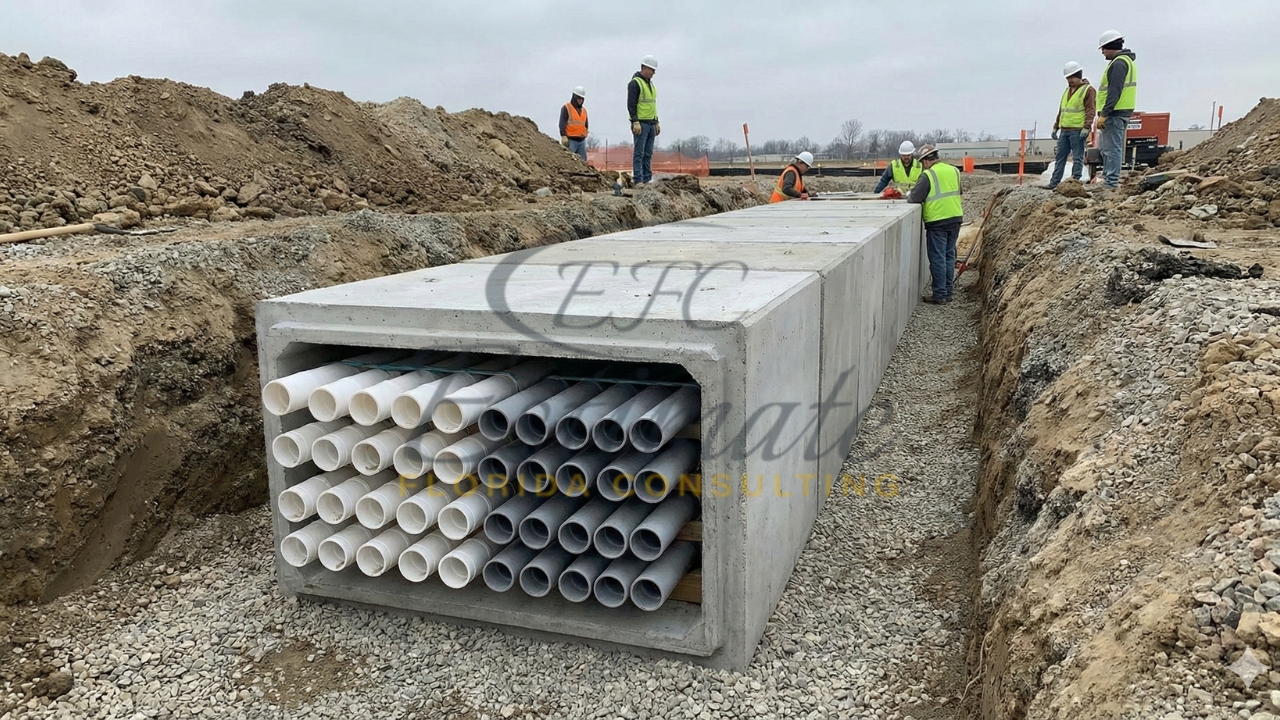
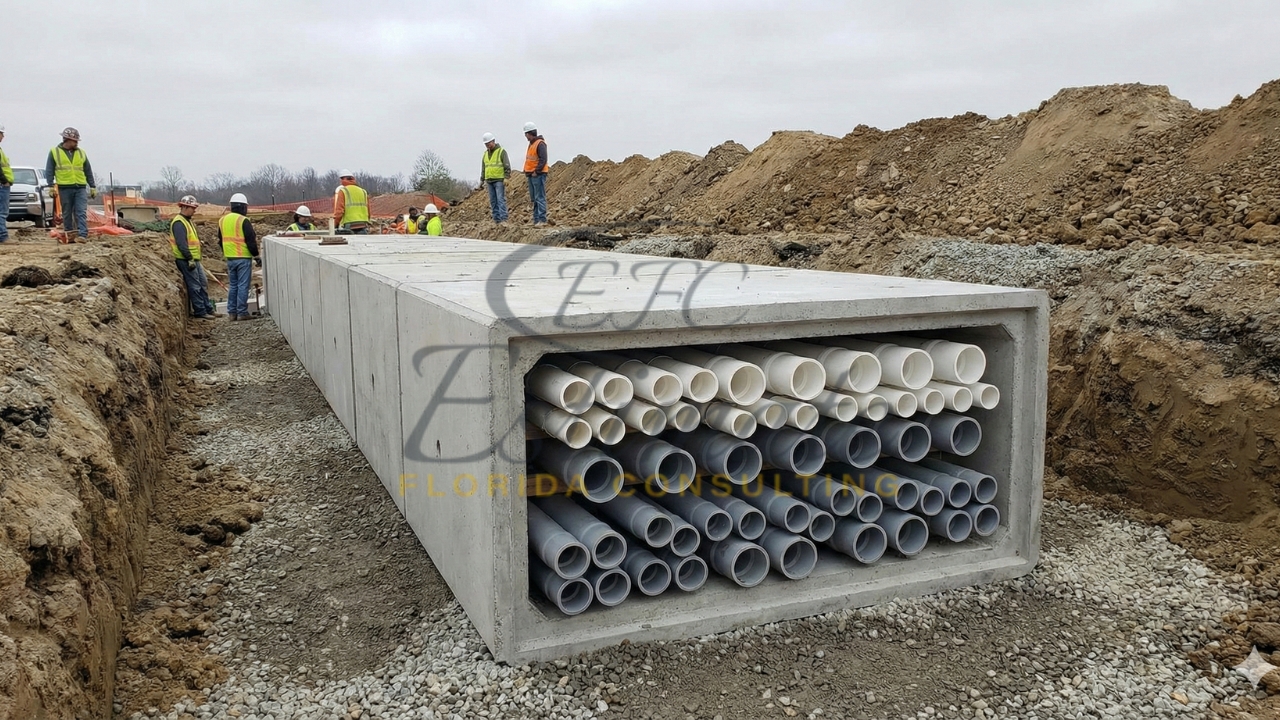
A duct bank is a system of underground conduits encased in concrete to protect electrical and communication cables. Unlike direct burial conduit, duct banks provide:

  • Impact protection

  • Moisture and corrosion resistance

  • Controlled thermal dissipation

  • Protection from load pressure (vehicles, soil movement, equipment)

  • Long-term structural reliability

Duct banks are commonly installed in:

  • Data centers

  • Hospitals

  • Airports

  • Universities

  • Industrial facilities

  • Government infrastructure

  • Substations and utility expansions

  • Smart-city broadband installations

The design varies based on conduit size, voltage rating, number of circuits, and depth of installation.

Get High-Quality 3D Rendering Services Today!

Transform your space with stunning 3D Rendering that blends style, comfort, and functionality.

We Specialize in Both Residential and Commercial 3D Rendering Projects.

Concrete Duct Bank Cost per Linear Foot (Florida Range)

Below is the average installed duct bank cost per linear foot based on common configurations.

Duct Bank Type

Installed Cost per Linear Foot

2-way duct bank

$165 – $385

4-way duct bank

$330 – $660

6-way duct bank

$495 – $990

8-way duct bank

$660 – $1,320

12-way duct bank

$990 – $2,200+

These ranges include materials, labor, concrete encasement, spacers, and typical installation conditions. Complex sites, rock excavation, or traffic-rated designs push costs higher.

Material Cost Breakdown for Concrete Duct Banks

A complete duct bank system includes multiple material components beyond the concrete alone. Each part affects pricing, performance, and installation complexity. Material pricing varies depending on conduit type, spacing requirements, reinforcement level, and encasement depth.

Below is a Florida-based cost breakdown of the primary materials used in duct bank construction.

1. Conduit Material Costs

Conduit selection depends on voltage requirements, traffic loads, soil conditions, and utility engineering standards. The most commonly used materials include PVC Schedule 40/80, HDPE (high-density polyethylene), and fiberglass.

Conduit Type

Cost per Linear Foot

PVC Schedule 40

$2.20 – $5.50

PVC Schedule 80

$4.40 – $12.10

HDPE Smoothwall

$3.85 – $11.00

Fiberglass / Non-metallic Conduit

$8.80 – $27.50

PVC Schedule 80 is often required near structural load paths or traffic-rated zones where added durability is needed.

2. Spacers and Supports

Spacers ensure uniform conduit alignment and maintain separation distances required by engineers and code standards.

Material

Cost per Linear Foot

Plastic/Polymeric Duct Spacers

$1.65 – $6.60

Steel or Custom Spacers (Rare)

$5.50 – $13.20

Larger duct banks require multiple layers of spacers and ties for stability during concrete placement.

3. Concrete Encasement Cost

Concrete encasement protects conduits from physical damage, soil movement, moisture, and freeze-thaw cycles (minimal in Florida but required by specifications).

Concrete Type

Cost per Cubic Yard

3,000 PSI Mix

$132 – $187

4,000 PSI (most common for duct banks)

$154 – $220

High-strength Thermal / Low-Shrink Mix

$176 – $265

Concrete is usually calculated per linear foot based on trench dimensions and required coverage.

Example:
A 4-way duct bank may require 0.10–0.25 cubic yards per linear foot, depending on encasement thickness.

4. Reinforcement Steel

Some duct bank installs require reinforcement depending on load requirements and depth.

Reinforcement Type

Cost Range

Standard Tie Wire & Mesh

$0.55 – $1.65 per ft.

Rebar (#3–#6 Grid)

$0.88 – $3.30 per ft.

Structural Cage Systems

$5.50 – $19.80 per ft.

Projects under streets, parking lots, or industrial equipment areas often require reinforced concrete duct encasement.

5. Pull Boxes, Vaults & Manholes

Duct banks require access points typically spaced between 200 ft – 500 ft, depending on code, cable type, and pulling tension requirements.

Component

Installed Cost

Small Pull Box

$2,200 – $6,600

Standard Utility Vault

$8,800 – $22,000

Traffic-Rated Manhole (DOT-Approved)

$22,000 – $55,000+

These structures significantly influence total project cost, especially on long duct runs.

Material Summary Estimate per Linear Foot

Duct Bank Size

Material Cost per Linear Foot

2-way

$66 – $165

4-way

$132 – $330

6-way

$198 – $495

12-way

$385 – $1,100+

Labor, equipment, permitting, and restoration are separate cost categories covered in the next sections.

Labor Costs for Concrete Duct Bank Installation

Labor is one of the largest cost components in a duct bank installation because the work involves excavation, trench preparation, conduit alignment, reinforcement placement, inspections, concrete encasement, and final restoration. Labor requirements vary greatly based on project scale, installation environment, soil type, and depth specifications.

Florida labor pricing reflects underground utility work performed by licensed crews with experience in electrical and telecom infrastructure.

Concrete Duct Bank Cost Estimate

Average Labor Cost per Linear Foot

Duct Bank Size

Labor Cost per Linear Foot

2-way

$110 – $275

4-way

$165 – $440

6-way

$220 – $660

12-way

$440 – $1,100+

These ranges assume normal digging conditions and standard installation practices.

Key Labor Activities Included

A typical duct bank installation requires several sequential operations:

  • Surveying & Utility Location (811 compliance)


  • Excavation & trenching


  • Base preparation & leveling


  • Spacer and conduit placement


  • Rebar installation (if required)


  • Inspection before concrete pour


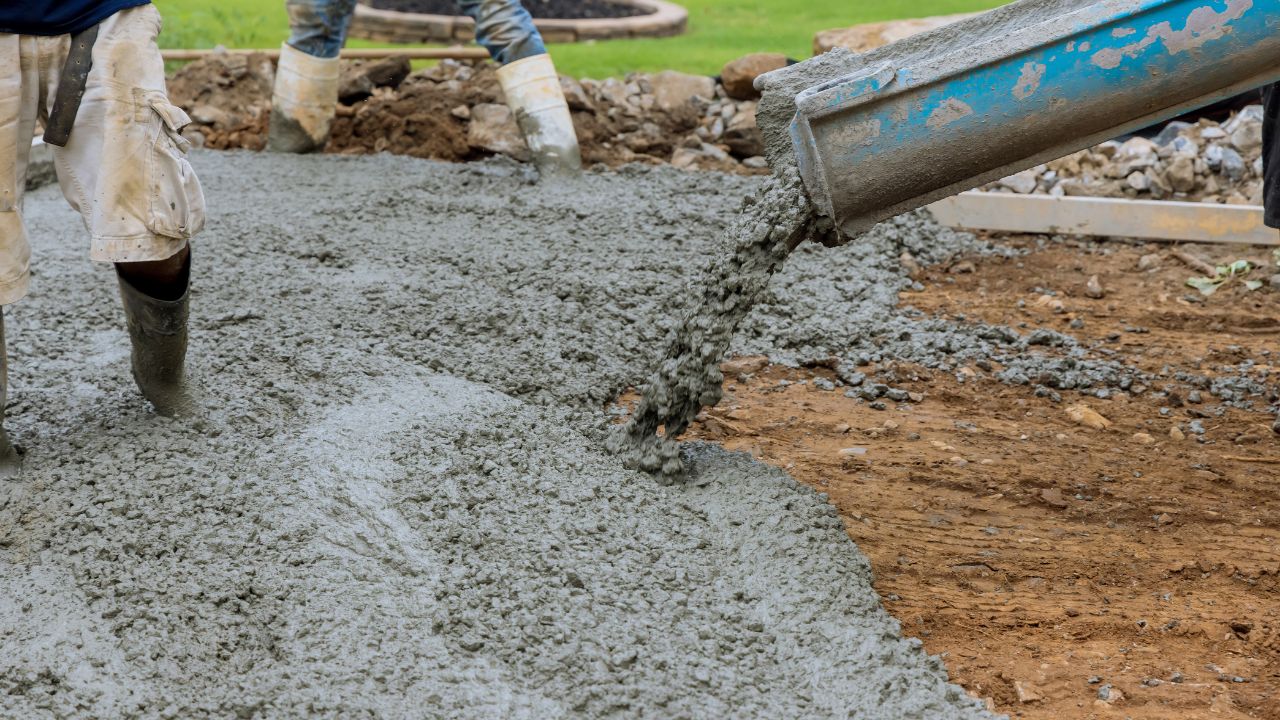
  • Concrete placement (direct or pumped)


  • Backfilling and compaction


  • Site restoration (pavement, sod, gravel, asphalt)

Any disruption or failed inspection may increase labor cost.

Excavation & Trenching Costs

Excavation cost depends on trench depth, width, soil hardness, and obstructions such as existing utilities or rock layers.

Condition

Cost per Linear Foot

Standard soil

$22 – $66

Clay or compacted fill

$55 – $110

Urban utility corridor

$110 – $275

Rock trenching or hydro-excavation

$165 – $440+

Urban areas—especially downtowns, campuses, and industrial parks—usually have higher excavation difficulty and cost.

Concrete Placement & Pumping Labor

Some duct banks require direct chute placement, while others need a pump truck due to site access.

Placement Method

Additional Labor Cost

Direct pour (easy access)

Minimal additional cost

Line pump

$330 – $880

Boom pump (congested or deep trenches)

$660 – $2,200

Pump trucks are more common in large duct bank installations.

Backfill & Compaction Cost

Once encased and approved, the duct bank requires backfill and compaction to protect conduits and prevent settlement.

Backfill Type

Cost per Linear Foot

Native soil reuse

$5.50 – $22

Sand or bedding mix

$11 – $44

Flowable fill

$22 – $66

Concrete Duct Bank Cost Estimate

Compaction testing (density testing) may also be required depending on engineering specs.

Restoration Costs

Restoration depends on what was disturbed during installation:

Surface Type

Cost per sq.ft.

Soil / Soft landscaping

$1.10 – $4.40

Gravel or crushed base

$2.20 – $6.60

Asphalt patching

$8.25 – $19.80

Concrete sidewalk repair

$15.40 – $38.50

Roadway restoration (DOT-approved)

$27.50 – $82.50+

Restoration costs are often a hidden budgeting factor in duct bank projects.

Total Installed Cost per Linear Foot (Material + Labor)

Duct Bank Configuration

Fully Installed Cost

2-way

$275 – $660

4-way

$495 – $1,210

6-way

$715 – $1,760

12-way

$1,430 – $3,300+

Actual pricing depends on site conditions, engineering requirements, and project scale.

Once encased and approved, the duct bank requires backfill and compaction to protect conduits and prevent settlement.

90% More Chances to Win Bids with Our Estimate!

Concrete Duct Bank Cost Examples (Florida Project Scenarios)

Concrete duct bank pricing can vary widely depending on the number of conduits, trench length, required vaults, traffic load rating, and installation environment. The examples below help illustrate realistic project budgets based on actual configurations used in Florida utility work.

2-Way Duct Bank (50–150 Linear Feet)

Typical use: Short campus connections, EV charger feed, garage supply lines, or small telecom extensions.

Cost Component

Estimated Range

Materials (conduit, spacers, concrete)

$3,300 – $9,900

Excavation & Labor

$5,500 – $16,500

Pump Truck or Delivery

$330 – $880

Backfill & Surface Restoration

$1,100 – $3,300

Optional Pull Box or Vault

$2,200 – $8,800

Estimated Total Project Cost:
👉 $12,000 – $38,500+

This cost varies depending on depth, soil, and whether the duct bank crosses traffic paths.

4-Way or 6-Way Duct Bank (200–500 Linear Feet)

Typical use: Data centers, schools, hospitals, substations, and industrial upgrades.

Cost Component

Estimated Range

Materials

$22,000 – $82,500

Labor & Installation

$33,000 – $154,000

Pump Truck & Delivery Logistics

$880 – $4,400

Vaults or Manholes (1–2 units)

$8,800 – $55,000

Traffic-Rated Restoration

$5,500 – $33,000

Estimated Total Project Cost:
👉 $55,000 – $330,000+

Engineered projects requiring testing, as-built documentation, and inspection approvals may increase cost.

8-Way to 12-Way Duct Bank (500–2,000 Linear Feet)

Typical use: airports, military bases, municipal upgrades, utility corridors, and major commercial developments.

Cost Component

Estimated Range

Materials

$110,000 – $660,000

Labor

$165,000 – $990,000+

Concrete Pumping & Delivery

$2,200 – $22,000

Manholes / Traffic-Rated Vaults

$22,000 – $165,000+

Restoration & DOT Requirements

$27,500 – $165,000+

Estimated Total Project Cost:
👉 $330,000 – $2,200,000+

Large-scale duct banks require precise estimating to avoid costly overruns, scheduling delays, or rework.

Maintenance, Lifespan & Long-Term Cost Considerations

Concrete duct banks are designed to last decades, providing long-term protection for underground utility conduits. With proper installation and compliance with engineering standards, duct banks can often outlast surface paving, site infrastructure, and sometimes even the facility they support. However, maintenance planning and long-term considerations help ensure reliability and prevent expensive repairs.

Expected Lifespan of Concrete Duct Banks

Duct Bank Type

Expected Lifespan

Basic PVC-only duct bank (minimal encasement)

25–40 years

Standard engineered concrete duct bank

50–75 years

Reinforced or traffic-rated duct bank

75–100+ years

High-voltage or fiber utility-grade network

100+ years with upgrades

Many failures occur not from concrete degradation, but from:

  • Failed pulling tension limits

  • Improper alignment

  • Moisture infiltration

  • Crushed conduit sections due to insufficient concrete cover

  • Soil movement or settlement under traffic areas

Proper estimating and planning help prevent these long-term risks.

Concrete Duct Bank Cost Estimate

Maintenance Requirements

Concrete duct banks require very little maintenance once installed. Most inspections occur at pull points, vaults, or manholes—not along the encased conduit lines.

Routine maintenance includes:

  • Inspecting manholes and pull boxes for water intrusion

  • Checking for stress cracks or vault surface damage

  • Cleaning sediment from vaults or drainage systems

  • Monitoring cable strain relief fittings

  • Ensuring unused conduits remain capped and dry

Systems supporting fiber optic communication or high-voltage utility lines may require periodic thermal monitoring.

Repair Costs

Repairs to duct banks can be expensive, especially if installed under pavement, concrete slabs, or highly developed sites.

Repair Scenario

Cost Impact

Minor vault or access repair

$2,200 – $11,000

Partial trench exposure & conduit repair

$11,000 – $55,000+

Full traffic-rated reconstruct section

$55,000 – $165,000+

Emergency repair (night/weekend)

Costs may double

Repairs often cost much more than initial construction—making accurate installation and estimating essential.

Future-Proofing and Expansion Planning

When designing duct banks, many owners install:

  • Spare conduits (“empty ducts”)

  • Future-proof space for additional data capacity

  • Pull strings or mule tape for easier future cable installation

  • Thermal spacers for high-voltage growth potential

Adding future provisions during initial construction is significantly less expensive than ordering trench expansion later.

Replacement vs Upgrade Considerations

Most duct banks are not replaced when cables fail—they are simply re-pulled or upgraded with new conduit inserts. Replacement is generally only required when:

  • The encasement was improperly installed

  • Conduits collapse

  • Infrastructure routing changes

  • New loads exceed thermal ratings

Planning and estimating correctly during original design minimizes future disruption.

Get 5 New Projects in the Next 7 Days With Our System

Final Summary

Concrete duct banks are critical infrastructure components used to protect buried electrical and communication cables. Because they require precise trenching, conduit spacing, reinforcement, concrete encasement, and inspection, estimating these systems accurately is essential before installation begins.

Concrete duct bank costs vary widely depending on conduit count, excavation difficulty, restoration requirements, concrete thickness, testing, and compliance with Florida construction standards. While online calculators provide basic material estimates, real projects require detailed estimating to avoid costly overruns, redesigns, and delays — especially on engineered, utility, commercial, industrial, or public-sector projects.

Estimate Florida Consulting provides detailed, Florida-based concrete duct bank cost estimates for contractors, engineers, developers, municipalities, and utility providers. These estimates help teams plan budgets accurately, compare bids, and ensure the project is fully scoped before breaking ground.

Question Answer

Frequently Asked Question

The cost depends on the number of conduits, depth, soil conditions, and installation environment. In Florida, the average installed cost is:

👉 $275 to $3,300+ per linear foot

Smaller 2-way banks cost much less than large 12-way or traffic-rated systems.

A complete estimate typically includes:

  • Conduit type and quantity

  • Concrete encasement volume

  • Trenching and excavation

  • Labor and crew hours

  • Reinforcement steel

  • Spacers and supports

  • Pump truck or delivery equipment

  • Backfill and site restoration

  • Vaults and pull boxes (if required)

Professional estimating ensures nothing is overlooked.

Yes — almost every duct bank installation requires permits, especially if crossing:

  • Roadways

  • Right-of-way zones

  • Utility corridors

  • Municipal or state property

Engineering approval is often mandatory.

Depth depends on utility type and jurisdiction. Most duct banks are installed:

👉 24” to 60” below finished grade,
but deeper installations may be required for public roads or high-voltage lines.

Most duct banks use:

  • 3,000–5,000 PSI concrete

  • Low-shrink or thermal-rated mix (for high-voltage)

Engineered specs determine the exact PSI and mix requirements.

Timelines vary by scope:

Project Size

Typical Timeline

Small duct bank (<150 ft)

3–7 days

Medium (200–500 ft)

2–4 weeks

Large multi-vault system

1–6 months+

Permits, weather, and traffic control impact scheduling.

Comprehensive Trade-Specific Estimates

At Estimate Florida Consulting, we offer detailed cost estimates across all major trades, ensuring no part of your project is overlooked. From the foundation to the finishing touches, our trade-specific estimates provide you with a complete and accurate breakdown of costs for any type of construction project.

Our Simple Process to Get Your Estimate

01

Upload Plans

Submit your project plans, blueprints, or relevant documents through our online form or via email.

02

Receive Quotation

We’ll review your project details and send you a quote based on your scope and requirements.

03

Confirmation

Confirm the details and finalize any adjustments to ensure the estimate meets your project needs.

04

Get Estimate

Receive your detailed, trade-specific estimate within 1-2 business days, ready for your project execution.

Get Started
Construction Cost Estimator
Client Trust Us

Our Clients & Partners

We pride ourselves on building strong, lasting relationships with our clients and partners across the construction industry.

Testimonials

What Our Clients Say?

We take pride in delivering accurate, timely, and reliable estimates that help contractors and builders win more projects. Our clients consistently praise our attention to detail, fast turnaround times, and the positive impact our estimates have on their businesses.

Estimate Florida Consulting has helped us win more bids with their fast and accurate estimates. We trust them for every project!

Marvelous Marble
Marvelous Marble Manager

Their estimates are always on time and on point, making budgeting much easier. We've saved time and money thanks to their services.

6 Star Contractors
6 Star Painting Contractor

Since using their services, we’ve secured more projects. Their attention to detail is second to none.

Patio Pools Driveways
Patio Pools and Driveway Contractor

Upload Plans Here