Commercial concrete construction in Florida forms the structural backbone of nearly every commercial development, including retail plazas, office buildings, warehouses, healthcare facilities, parking structures, and industrial plants. The quality of concrete work directly impacts structural integrity, load-bearing capacity, construction scheduling, and long-term maintenance costs. Selecting experienced commercial concrete contractors Florida developers and property owners trust is essential for achieving structural safety, cost predictability, and long-term asset performance.
Florida’s construction environment places unique demands on commercial concrete systems. High groundwater levels, sandy and expansive soils, extreme heat, humidity, heavy rainfall, and hurricane exposure require concrete mix designs, reinforcement strategies, and installation practices that meet Florida Building Code, ACI standards, and structural engineering requirements. This guide—developed where Estimate Florida Consulting provides professional estimates—explains commercial concrete pricing, contractor scope, material costs, and how accurate estimating supports predictable and cost-efficient construction outcomes.
Commercial Concrete Cost Overview in Florida
The typical commercial concrete cost in Florida ranges from $18 to $49 per square foot, depending on slab thickness, reinforcement density, foundation type, site conditions, and construction complexity. Commercial concrete contractors calculate pricing based on concrete volume, reinforcing steel quantities, formwork systems, labor productivity, equipment usage, curing requirements, and inspection compliance.
Lower-cost commercial concrete projects often include basic slab-on-grade construction, sidewalks, and exterior flatwork for warehouses and light commercial facilities. Mid-range projects involve reinforced slabs, loading docks, structural foundations, and tilt-up construction. Higher-end concrete work includes post-tension slabs, elevated decks, pile-supported foundations, and heavily reinforced structural systems, which increase material quantities, labor effort, and engineering coordination.
Because commercial concrete pricing varies widely by site and structural requirements, project-based estimating provides more reliable cost clarity than generalized averages.
Commercial Concrete Cost per Square Foot – Florida
| Concrete Work Type | Typical Cost Per Sq Ft |
| Basic Slab-on-Grade | $18 – $26 |
| Reinforced Commercial Slabs | $23 – $34 |
| Structural Concrete Foundations | $29 – $42 |
| Post-Tension Concrete Systems | $34 – $49 |
| Exterior Concrete Flatwork | $16 – $29 |
| Tilt-Up Concrete Panels | $36 – $55 |
Pricing varies based on soil conditions, site access, reinforcement density, concrete strength requirements, labor availability, and regional construction demand throughout Florida.
Site Preparation, Excavation, and Subgrade Work Costs
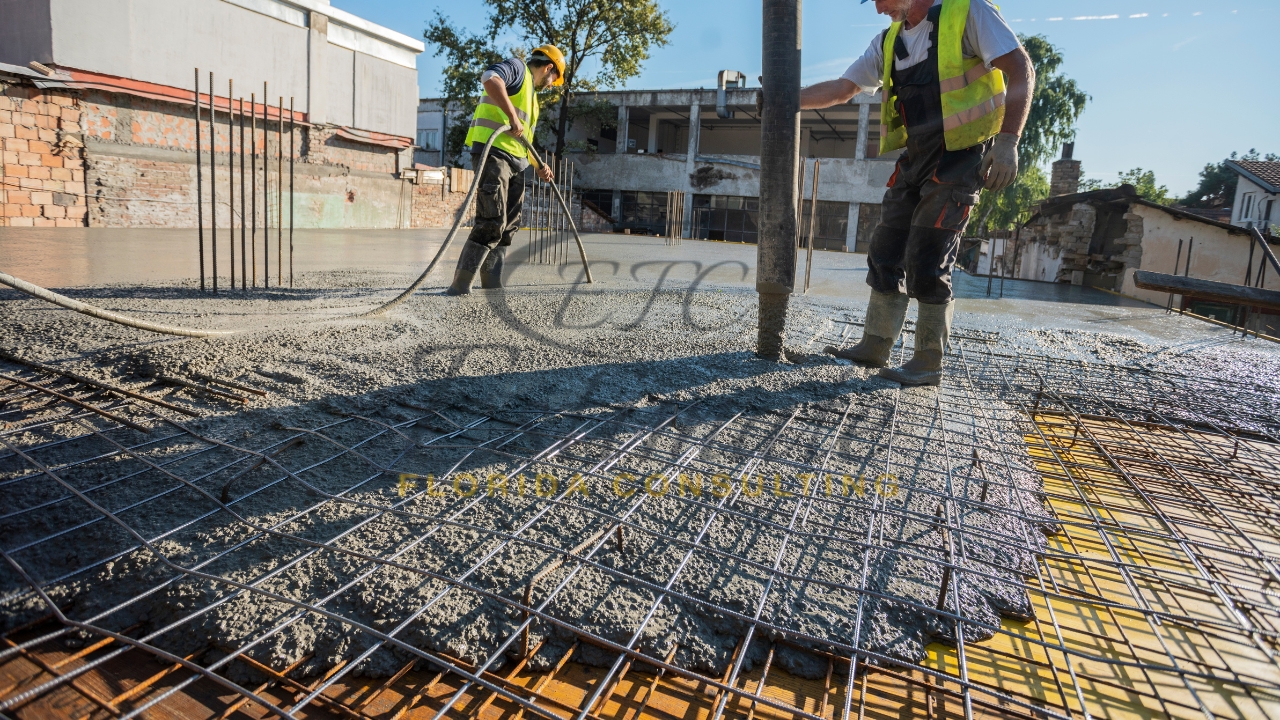
Before any concrete is placed, proper site preparation and subgrade construction are critical to long-term performance. Commercial concrete contractors Florida projects rely on must address excavation, grading, soil compaction, moisture conditioning, and base stabilization to prevent settlement, cracking, and structural failure. In Florida, high water tables, sandy soils, and variable bearing capacity often require imported fill, lime stabilization, or geotextile reinforcement, which directly increases concrete construction costs.
Inadequate site preparation is one of the most common causes of slab failure, uneven settlement, and premature concrete deterioration. Professional estimating accounts for earthwork quantities, compaction testing, moisture barriers, and subbase thickness, ensuring that concrete slabs and foundations perform as designed under commercial load conditions.
Vapor Barriers, Moisture Control, and Slab Protection Systems
Moisture intrusion is a major concern in Florida commercial concrete construction. Vapor barriers, underslab membranes, capillary breaks, and moisture mitigation systems are essential components for slabs supporting retail spaces, warehouses, healthcare facilities, and office buildings. Without proper moisture protection, commercial slabs are vulnerable to flooring failure, mold growth, corrosion of reinforcement, and indoor air quality issues.
Commercial concrete contractors Florida owners trust typically install high-performance vapor retarders, taped seams, sealed penetrations, and perimeter moisture protection to meet code requirements and manufacturer flooring warranties. While these systems increase upfront concrete costs, they significantly reduce long-term maintenance expenses, tenant complaints, and remediation risk.
Concrete Flatwork, Paving, and Exterior Hardscape Construction
In addition to structural slabs and foundations, commercial concrete contractors frequently perform exterior flatwork and hardscape construction, including sidewalks, loading docks, dumpster pads, parking aprons, service ramps, and equipment pads. These elements must be designed to withstand heavy vehicle loads, thermal expansion, water runoff, and long-term wear.
Exterior concrete flatwork pricing varies based on thickness, reinforcement type, joint spacing, surface finish, and drainage requirements. In Florida’s climate, proper slope design, expansion joints, and surface treatments are essential to prevent ponding water, cracking, and surface spalling. Accurate estimating ensures these elements are properly engineered and integrated into the overall site development budget.
Foundations, Slabs, and Structural Concrete Systems
A primary responsibility of commercial concrete contractors Florida projects depend on is the installation of durable foundations and load-bearing slabs. Foundation systems may include spread footings, stem walls, grade beams, mat foundations, and deep foundation systems, depending on structural loads and geotechnical conditions.
Structural concrete elements such as columns, shear walls, elevated slabs, stair cores, podium decks, and transfer slabs require precise engineering coordination, quality control, and experienced placement crews. Errors in concrete placement or reinforcement installation can result in cracking, settlement, reduced load capacity, and costly remediation.
Tilt-Up Concrete Construction for Commercial Buildings
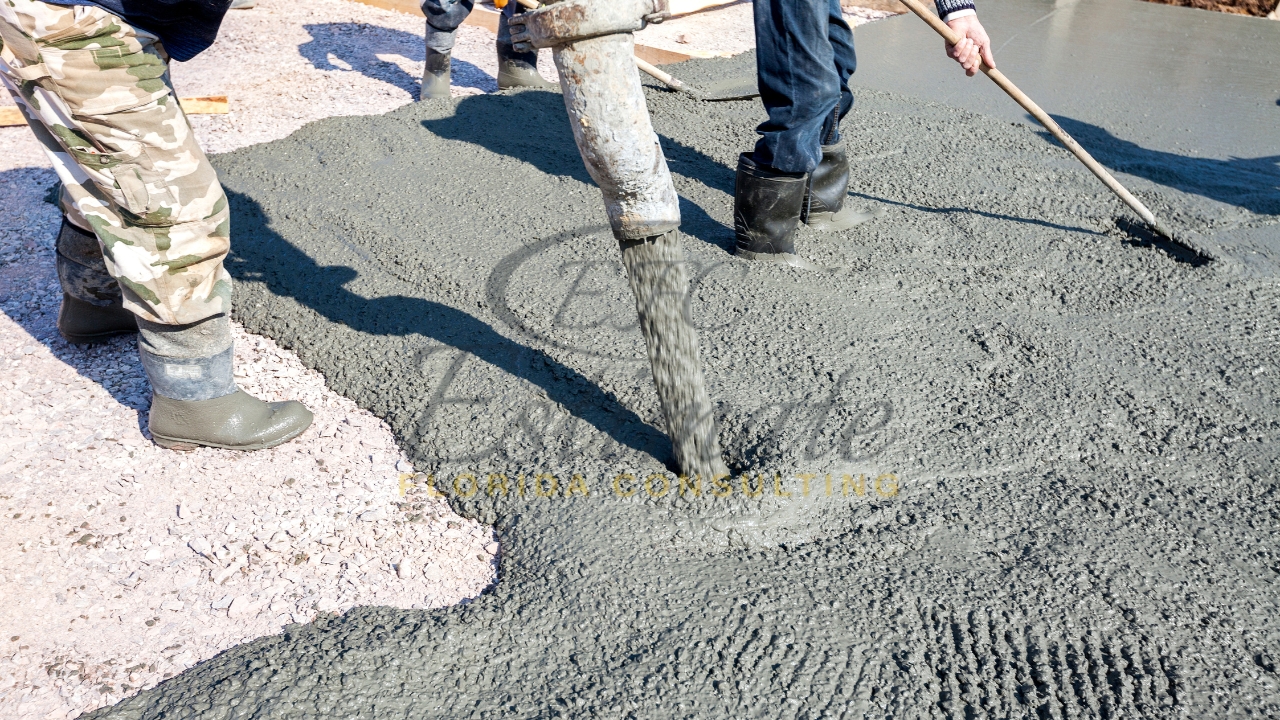
Tilt-up concrete construction is widely used across Florida for warehouses, distribution centers, retail buildings, and industrial facilities. This construction method involves casting concrete wall panels on-site and lifting them into place using cranes. Tilt-up systems offer speed, durability, and cost efficiency, particularly for large commercial footprints.
However, tilt-up construction requires precise coordination between panel engineering, embed placement, crane logistics, bracing systems, and slab design. Commercial concrete contractors Florida developers rely on must factor in panel thickness, reinforcing steel density, lifting hardware, wind bracing duration, and erection sequencing, all of which affect project cost and schedule.
Reinforcement, Rebar, and Concrete Strength Requirements
Concrete performance is directly influenced by reinforcement detailing, rebar placement accuracy, post-tension cable layouts, and concrete PSI strength. Florida commercial projects frequently require higher-strength concrete, corrosion-resistant reinforcement, vapor barriers, and moisture mitigation systems to address environmental exposure and soil conditions.
Coordination between concrete contractors and structural engineers ensures compliance with load ratings, deflection limits, crack control standards, and long-term durability requirements. While increased reinforcement raises initial construction costs, it significantly improves structural reliability and reduces long-term maintenance risk.
Concrete Finishes, Surface Treatments, and Aesthetic Options
Beyond structural performance, concrete finishes play an important role in functionality, durability, and visual appearance. Commercial projects often include machine-troweled slabs, broom finishes, polished concrete, sealed surfaces, and decorative treatments, depending on building use and tenant requirements.
Polished and sealed concrete floors are increasingly popular in retail, office, hospitality, and industrial interiors due to their durability, low maintenance, and modern appearance. These finishes require additional labor, grinding stages, densifiers, and sealers, which increase concrete costs but reduce long-term flooring replacement and maintenance expenses.
Building Size, Site Conditions, and Cost Impact
Commercial concrete costs do not scale evenly with building size. Smaller projects often experience higher per-square-foot pricing due to mobilization costs, formwork setup, inspections, testing, and minimum labor requirements. Larger developments benefit from volume efficiencies but involve complex staging, sequencing, and equipment coordination.
Site conditions such as poor soil bearing capacity, high water tables, excavation depth, dewatering requirements, and limited access can significantly increase foundation and concrete costs. Early site evaluation and accurate estimating help prevent budget escalation.
Understanding how building size and site conditions affect concrete pricing supports more accurate capital planning and lender discussions.
Estimated Commercial Concrete Cost by Building Size (Florida)
| Building Size | Estimated Concrete Cost |
| 5,000 sq ft | $124,000 – $215,000 |
| 10,000 sq ft | $234,000 – $416,000 |
| 25,000 sq ft | $546,000 – $1.01M |
| 50,000 sq ft | $1.04M – $1.95M |
| 100,000+ sq ft | $2.08M – $4.16M+ |
Final pricing depends on foundation type, reinforcement requirements, slab thickness, structural complexity, and site conditions.
Florida Building Code, Durability, and Compliance Requirements
Commercial concrete construction in Florida must comply with Florida Building Code, ACI standards, ASTM specifications, and local jurisdiction requirements. Most projects require special inspections, concrete cylinder testing, slump testing, reinforcement verification, and placement monitoring.
Failure to meet compliance standards can result in inspection failures, construction delays, structural deficiencies, and costly corrective work. Experienced contractors integrate compliance into every phase of concrete construction.
Labor Costs and Florida Commercial Concrete Market
Labor is one of the largest cost drivers in Florida’s commercial concrete market. Demand remains strong for skilled concrete finishers, formwork carpenters, rebar installers, pump operators, and site supervisors, especially during peak development cycles.
Labor shortages and material price volatility continue to affect scheduling and overall pricing, requiring careful planning that accounts for productivity rates, regional wage trends, and ongoing market fluctuations.
Risk Management, Cracking Control, and Long-Term Performance
Concrete construction carries inherent risks, including shrinkage cracking, moisture intrusion, curing failure, reinforcement corrosion, and settlement issues. Proper joint spacing, curing methods, moisture control systems, and quality assurance reduce these risks significantly.
Professional estimating includes risk allowances, testing costs, and quality control measures that protect long-term performance and minimize future repair expenses.
Why Accurate Commercial Concrete Cost Estimating Matters?
Many commercial concrete projects exceed budget due to incomplete scope definition and reliance on generic unit pricing. Missing items often include subgrade preparation, vapor barriers, reinforcing steel, testing fees, curing protection, and inspection coordination.
Accurate commercial concrete cost estimating improves pricing transparency, contractor bid evaluation, lender confidence, and overall budget control, allowing owners to make informed decisions before construction begins.
Why Hire Licensed Commercial Concrete Contractors in Florida?
Hiring licensed commercial concrete contractors in Florida is critical for protecting structural integrity, ensuring code compliance, and minimizing legal and financial risk. Florida’s construction environment is governed by strict Florida Building Code requirements, ACI standards, and local jurisdiction regulations, all of which demand licensed professionals with proven technical expertise. Licensed contractors understand Florida’s soil conditions, groundwater challenges, hurricane exposure, and moisture-related risks, allowing them to design and install concrete systems that perform reliably over the long term.
Licensed commercial concrete contractors also carry proper insurance, bonding, and workers’ compensation coverage, protecting property owners and developers from liability related to jobsite accidents, construction defects, and inspection failures. In addition, licensed contractors coordinate effectively with structural engineers, inspectors, and permitting authorities, reducing delays, rework, and costly compliance issues. While unlicensed concrete work may appear cost-effective upfront, it often leads to structural deficiencies, inspection failures, and expensive remediation—making licensed commercial concrete contractors the smarter, safer investment for Florida commercial projects.
How Professional Estimating Supports Commercial Concrete Projects?
When Estimate Florida Consulting provides professional estimates, commercial owners and developers gain clear visibility into real construction costs, labor requirements, and material pricing. Detailed estimates help clients compare bids accurately, identify risk early, and align concrete scope with budget and performance goals.
With proper planning and estimating, many projects achieve 10–20% cost efficiency, fewer change orders, and smoother execution.
Projects that begin with detailed concrete cost estimating are better positioned for fewer change orders, smoother execution, and long-term performance.
FAQs: Commercial Concrete Contractors Florida
What is the average cost of commercial concrete in Florida?
Most projects range from $23 to $42 per square foot, depending on structure and reinforcement.
Do commercial concrete projects require inspections?
Yes. Most projects require special inspections, testing, and code compliance verification.
What foundation systems are commonly used in Florida?
Slab-on-grade, stem wall, mat foundations, and pile-supported systems are widely used.
Does soil condition affect commercial concrete costs?
Yes. Soil quality and groundwater conditions significantly influence foundation and concrete pricing.
Can accurate estimating reduce concrete construction costs?
Absolutely. Professional estimating minimizes scope gaps, rework, and budget overruns.
How do I choose the right commercial concrete contractor in Florida?
Look for licensing, similar project experience, estimating transparency, inspection history, and familiarity with Florida Building Code and soil conditions.
Conclusion: Build on a Strong Foundation
Hiring experienced commercial concrete contractors Florida developers trust is essential for structural integrity, cost control, and long-term building performance. Concrete is not simply a material—it is the foundation of your investment.
When Estimate Florida Consulting provides professional estimates, project teams gain clarity, confidence, and financial control, ensuring commercial concrete decisions are durable, compliant, and strategically sound.