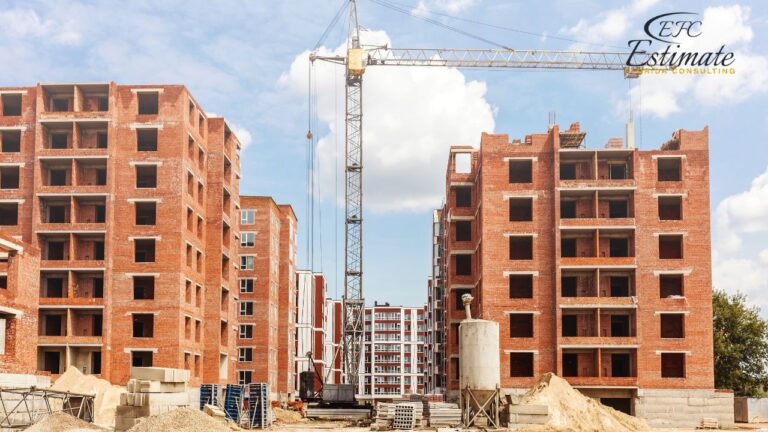
Building a 20,000-seat stadium is a major infrastructure investment that sits between small sports venues and large professional arenas. These mid-sized stadiums are commonly developed for soccer clubs, collegiate athletics, regional sports franchises, concerts, and community events. Because of their scale, the cost to build a 20,000 seat stadium depends on a wide range of factors, including design complexity, site conditions, technology integration, and long-term operational requirements.
At Estimate Florida Consulting, we provide detailed stadium construction cost estimates, feasibility studies, and preconstruction planning services for developers, municipalities, and private investors. Our estimating expertise helps control budgets, support funding decisions, and ensure long-term financial sustainability for stadium projects of this size.
Average Cost to Build a 20,000 Seat Stadium
The total cost to build a 20,000-seat stadium varies significantly depending on location, architectural design, and the level of amenities included. While smaller than major professional stadiums, these venues still require advanced structural systems, high-capacity utilities, and strict life safety compliance.
In today’s market, the cost to build a 20,000 seat stadium typically ranges from:
- $325 million to $780 million
Projects with premium seating, covered or retractable roofs, and advanced technology can exceed this range, especially in high-cost urban markets.
Cost Per Seat and Cost Per Square Foot
Two commonly used benchmarks for stadium budgeting are cost per seat and cost per square foot. These metrics allow owners to compare projects across different regions and design standards.
- Cost per seat: $15,600 to $39,000+
- Cost per square foot: $520 to $1,170+
Higher costs are typically associated with luxury suites, club seating, broadcast-quality technology, and enhanced fan amenities.
Site Selection and Land Development Costs
Site selection plays a critical role in the overall stadium construction budget. A 20,000-seat stadium requires sufficient land for the structure itself, circulation areas, security zones, parking, and transportation access.
Land development costs may include grading, utility extensions, roadway improvements, stormwater management, and environmental mitigation. Urban sites often carry higher land acquisition and infrastructure upgrade costs, while suburban sites may require larger parking footprints and traffic improvements.
Structural Systems and Stadium Bowl Construction
The structural system is one of the largest contributors to stadium construction cost. Most 20,000-seat stadiums use reinforced concrete, structural steel, or hybrid systems to support seating bowls, concourses, and roof structures.
The stadium bowl—comprising seating tiers, risers, concourses, and circulation zones—must be precisely engineered to ensure proper sightlines, accessibility, and safe crowd movement. These components account for a significant share of the total construction budget.
Roofing Systems and Weather Protection
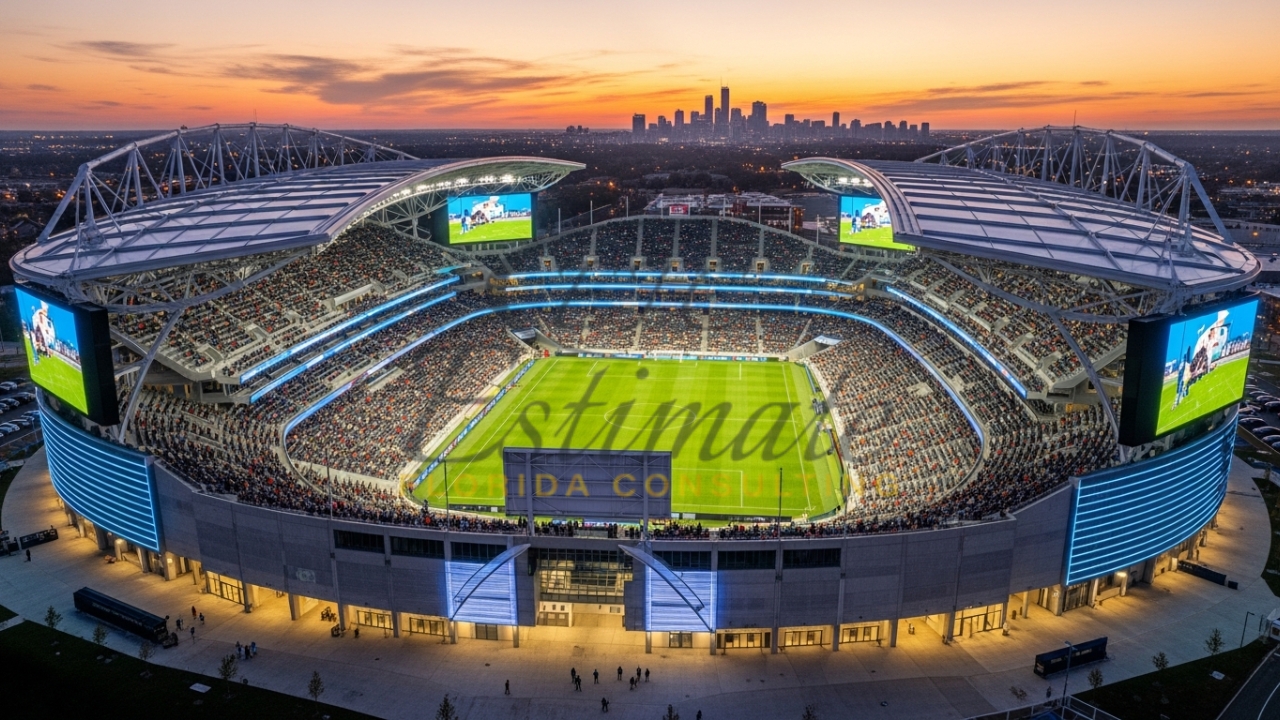
Roof design has a substantial impact on stadium cost. Open-air stadiums are generally the most economical option, while partial canopies or fixed roofs increase construction complexity and material requirements.
Roofing systems may include steel trusses, cantilevered canopies, or tensile structures. While more expensive, covered seating improves fan comfort and expands the range of events the stadium can host throughout the year.
Seating, Premium Areas, and Fan Amenities
Modern stadiums are designed to enhance fan experience while maximizing revenue. A 20,000-seat stadium typically includes general seating, club seating, hospitality areas, press facilities, and limited luxury suites.
Premium seating and VIP areas increase construction cost due to higher finish levels, dedicated services, and enhanced security. However, these features are often critical to the stadium’s long-term financial performance.
Mechanical, Electrical, and Plumbing (MEP) Systems
MEP systems represent a major portion of stadium construction cost. HVAC systems must handle large occupant loads, while electrical systems support lighting, scoreboards, sound systems, and broadcast equipment.
Plumbing systems require high-capacity water supply and drainage to serve restrooms, concessions, and maintenance operations. Accurate MEP estimating is essential to avoid underbudgeting these critical systems.
Technology, Scoreboards, and Digital Infrastructure
Technology is a defining feature of modern stadiums. LED video boards, ribbon displays, sound systems, Wi-Fi networks, and broadcast infrastructure are essential for fan engagement and event production.
Technology and audiovisual systems for a 20,000-seat stadium can cost $26 million to $104 million or more, depending on size, quality, and integration level.
Safety, Security, and Code Compliance
Stadiums must comply with strict safety, security, and accessibility standards. Fire protection systems, emergency egress routes, surveillance, access control, and crowd management infrastructure are critical components of the design.
Compliance with building codes, ADA requirements, and event safety regulations directly affects construction cost and design complexity.
Parking, Transportation, and Supporting Infrastructure
A 20,000-seat stadium requires comprehensive transportation planning. Costs may include surface parking, parking structures, pedestrian walkways, public transit connections, and traffic control systems.
In many cases, off-site infrastructure improvements are required to support stadium operations, adding to the overall project budget.
Construction Timeline and Labor Costs
Construction of a 20,000-seat stadium typically takes 2 to 4 years, depending on design complexity, permitting timelines, and funding structure. Longer schedules increase labor costs and exposure to material price escalation.
Regional labor rates, union requirements, and workforce availability play a significant role in final project cost.
Operating Costs and Long-Term Financial Considerations
Beyond construction, stadium owners must account for long-term operating costs, including staffing, utilities, maintenance, security, and capital replacements. Energy-efficient systems and durable materials can significantly reduce ongoing expenses.
Evaluating lifecycle costs during planning helps ensure the stadium remains financially sustainable over decades of operation.
Pre-Construction Planning and Feasibility Analysis
Before moving into full architectural design, a 20,000-seat stadium project should undergo detailed pre-construction planning and feasibility analysis. At this scale, even minor design or site assumptions can translate into millions of dollars in cost differences.
Feasibility studies evaluate zoning compliance, site constraints, environmental conditions, utility capacity, and preliminary construction budgets to confirm whether the project is financially and logistically viable.
Funding Models and Public-Private Partnerships
Many 20,000-seat stadiums are developed through a mix of public funding and private investment. Public-private partnerships are common for collegiate, municipal, and regional sports venues, where economic development and community impact are key considerations.
Accurate stadium construction cost estimates are essential for bond financing, grant approvals, and long-term debt planning.
Sustainability and Energy-Efficient Design Strategies
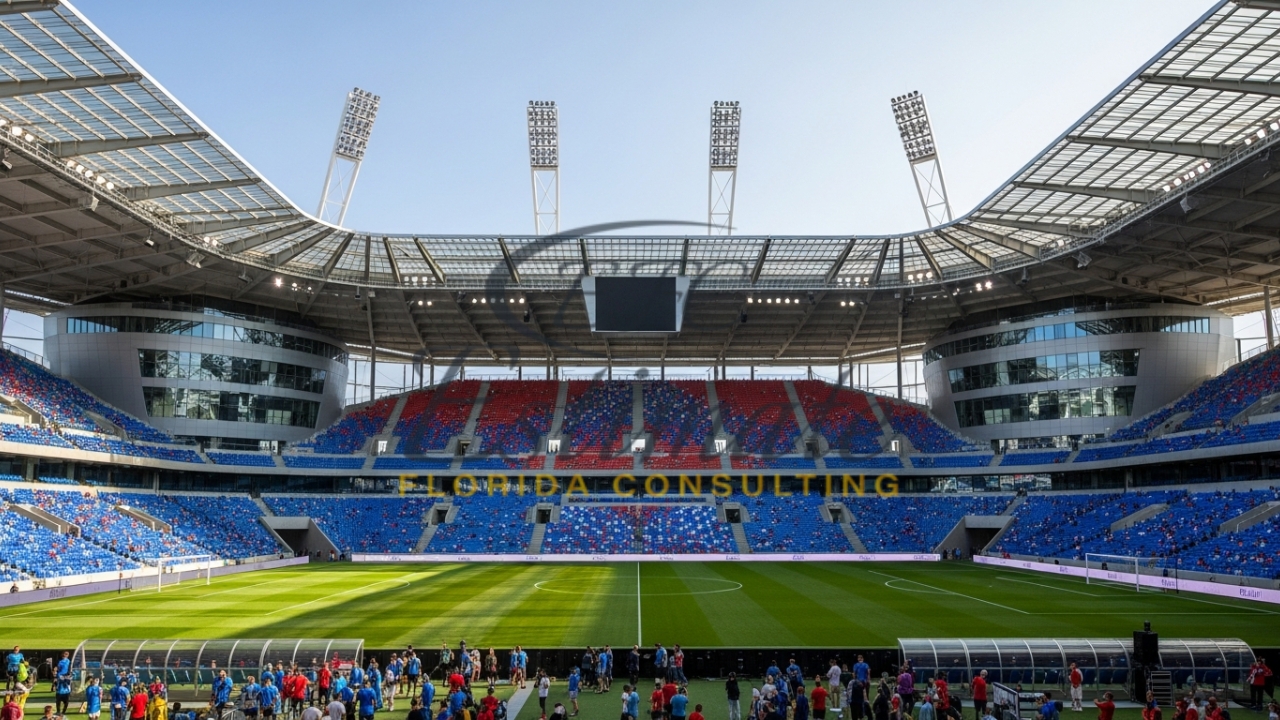
Sustainability is increasingly important in mid-size stadium construction. Energy-efficient HVAC systems, LED lighting, water-saving plumbing fixtures, and durable materials can significantly reduce long-term operating costs.
Although sustainable design features may increase upfront construction cost, they often deliver measurable savings over the stadium’s lifecycle.
Crowd Flow, Circulation, and Fan Safety
Efficient crowd circulation is critical in a 20,000-seat stadium to ensure safety, comfort, and operational efficiency. Concourse widths, stairways, ramps, elevators, and entry points must be carefully designed to handle peak event loads without congestion.
Investments in circulation design directly influence construction cost but reduce operational risk and improve the fan experience.
Phased Construction and Project Delivery Methods
Depending on funding availability and site conditions, some 20,000-seat stadiums are delivered using phased construction or alternative project delivery methods such as design-build or construction manager at risk (CMAR).
Each delivery method affects cost control, scheduling, and risk allocation.
Risk Management and Cost Contingency Planning
Stadium construction projects carry inherent risks, including material price volatility, labor shortages, weather delays, and permitting challenges. Establishing realistic contingencies during budgeting helps protect against unexpected cost increases.
Professional cost estimating identifies high-risk cost areas early, allowing project teams to allocate contingencies strategically.
Long-Term Asset Value and Community Impact
A 20,000-seat stadium is more than a construction project—it is a long-term community asset. Beyond hosting sports and entertainment events, these venues often act as economic catalysts, supporting surrounding development, tourism, and local employment.
Construction cost decisions should balance financial discipline with long-term value, ensuring the stadium remains functional, competitive, and adaptable for decades.
Why Choose Us – Estimate Florida Consulting
At Estimate Florida Consulting, we provide accurate, project-specific stadium cost estimating services for mid-size venues such as 20,000-seat stadiums. Our team understands the complexities of stadium construction, from structural systems and site development to MEP coordination and technology integration.
We deliver detailed quantity takeoffs and realistic construction budgets that support funding approvals, contractor bidding, and long-term cost control. With a focus on accuracy and transparency, we help owners and developers move forward with confidence.
Conclusion
Building a 20,000-seat stadium is a complex, capital-intensive undertaking that requires careful coordination between design, engineering, funding, and long-term operational planning. While these venues are smaller than major professional arenas, they still demand sophisticated structural systems, high-capacity MEP infrastructure, advanced technology, and strict safety and accessibility compliance. As outlined, the cost to build a 20,000 seat stadium can range from $325 million to $780 million or more, depending on site conditions, amenities, roofing systems, and market location.
The success of a stadium project at this scale depends heavily on early feasibility analysis, accurate cost modeling, and disciplined preconstruction planning. Decisions made during site selection, seating configuration, technology integration, and sustainability design can influence not only construction costs but also long-term operating expenses and revenue potential. With professional cost estimating and strategic planning, developers and public stakeholders can control risk, secure funding, and deliver a stadium that serves as a durable community asset and a financially sustainable venue for decades.
Frequently Asked Questions (FAQs)
- How much does it cost to build a 20,000-seat stadium?
The total cost to build a 20,000-seat stadium typically ranges from $325 million to $780 million, depending on design complexity, location, amenities, and technology integration. Premium features and urban sites can push costs higher.
- What is the average cost per seat for a 20,000-seat stadium?
The average cost per seat generally falls between $15,600 and $39,000+ per seat, with higher costs associated with luxury seating, club areas, advanced technology, and covered roofing systems.
- How long does it take to build a 20,000-seat stadium?
Construction timelines usually range from 2 to 4 years, depending on permitting, funding structure, design complexity, and construction delivery method. Longer schedules can increase labor and financing costs.
- What are the biggest cost drivers in stadium construction?
Major cost drivers include structural systems and stadium bowl construction, roofing design, MEP systems, technology and scoreboards, site development, parking infrastructure, and code compliance requirements.
- How much do technology and scoreboards cost in a stadium?
Technology and audiovisual systems—including LED video boards, sound systems, Wi-Fi, and broadcast infrastructure—can cost $26 million to $104 million or more, depending on size, quality, and integration level.
- Does adding a roof significantly increase stadium construction cost?
Yes. Open-air stadiums are the most economical, while partial canopies or fixed roofs substantially increase costs due to added steel, structural complexity, and weather protection systems.
- Are 20,000-seat stadiums often publicly funded?
Many projects use public-private partnerships, especially for municipal or collegiate stadiums. Accurate construction cost estimates are critical for bond financing, grants, and long-term debt planning.
- Why is preconstruction planning important for stadium projects?
Preconstruction planning helps identify site constraints, zoning issues, infrastructure needs, and realistic budgets early. At this scale, small planning errors can lead to millions of dollars in cost overruns if not addressed upfront.