Bridging the Height Gap: Ground-to-Dock Ramps
Efficient loading and unloading play a major role in how smoothly a warehouse or distribution center operates. One of the biggest challenges many facilities face is managing the height difference between ground level and a raised dock platform. This is where ground-to-dock ramps make a practical difference. These heavy-duty structures facilitate the movement of goods, vehicles, and equipment between levels with enhanced safety, speed, and precision.
The Challenge of Uneven Loading Levels
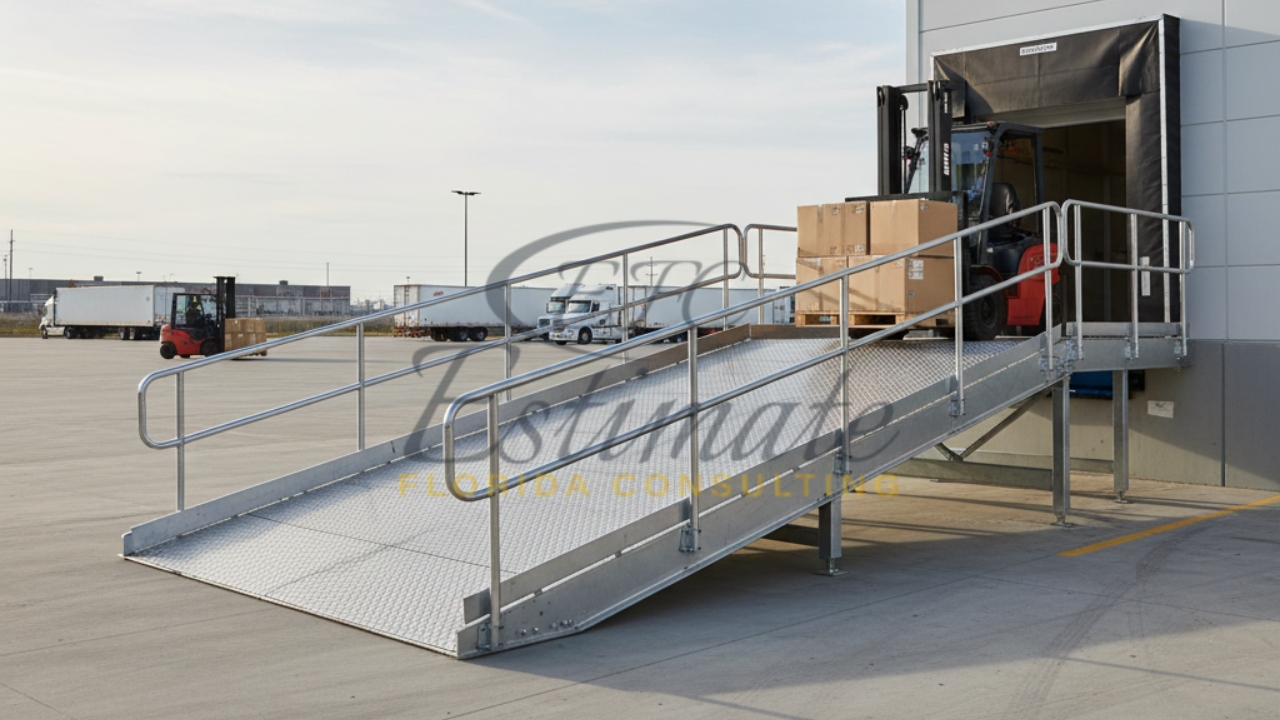
Warehouses often operate with mixed access points; some at dock height and others directly on the ground. Without a reliable transition system, workers spend extra time adjusting forklifts or repositioning vehicles. That lost time adds up quickly and affects overall productivity. The uneven surface can also increase the risk of accidents or product damage. A ground-to-dock ramp solves these challenges by creating a smooth, continuous path between the ground and the loading dock. This structure eliminates the need for constant equipment adjustment or manual lifting. It also improves safety by providing a stable driving surface for forklifts and trucks. The simplicity of the design hides its importance. By physically connecting two levels, the ramp becomes a key part of daily warehouse operations.
How Ground-To-Dock Ramps Work
At its core, a ground-to-dock ramp acts as a bridge between two elevations. It is built from strong steel capable of handling the constant movement of forklifts, pallet jacks, and heavy cargo. The surface is typically designed with a textured grip pattern that prevents slippage, even in wet or icy conditions. A ramp is placed at the dock edge, extending down to ground level at a gradual incline. This slope allows vehicles to enter or exit the dock safely while carrying full loads. In some cases, the ramp is designed for permanent installation, while others are built for flexibility so they can be moved or repositioned as needed. Each ramp is measured to match the specific height and layout of the dock area. This ensures a stable fit and consistent driving surface. Once set in place, it becomes a dependable link between indoor loading bays and outdoor work zones.
Key Benefits for Warehouses and Distribution Centers
A well-built ramp delivers a range of advantages that directly support warehouse efficiency. One of the main benefits is improved access. Trucks no longer have to wait for specialized docks to become available, as the ramp allows for simultaneous loading and unloading from multiple points. Safety also improves because forklifts and other equipment no longer need to maneuver on uneven ground or makeshift slopes. This reduces strain on operators and minimizes the chance of load spills or collisions. The predictable path also lowers the risk of damage to both equipment and goods. Speed is another important factor. By reducing the time needed to align vehicles or adjust lifts, operations move faster. This improved flow helps warehouses meet deadlines more easily and increases the number of shipments handled in a single day. Finally, ramps offer flexibility. As business demands change, a ramp can be relocated or modified to fit new layouts. This adaptability is particularly useful for facilities that experience seasonal demand shifts or expansion.
Material and Design Considerations
The performance of a ground-to-dock ramp depends heavily on its design and construction material. Steel remains the preferred choice due to its strength, durability, and ability to handle heavy loads without warping or cracking. It also resists corrosion, which is important for facilities exposed to weather or moisture. The surface pattern adds traction, making it safe for use with forklifts and heavy machinery. Some ramps include side curbs for added safety, preventing wheels from slipping off the edges. The angle of the incline is calculated carefully to allow easy movement without putting too much strain on engines or brakes. Proper anchoring also plays a role. A stable base keeps the ramp in place, even under frequent use or heavy vibration. Many facilities also use approach plates or transition lips to create an even smoother connection between the ramp and the dock platform.
Permanent VS. Portable Options
Not every warehouse has the same space or traffic needs. Some facilities prefer a permanent installation that becomes a fixed part of the building’s infrastructure. These ramps offer long-term stability and require minimal repositioning once installed. They are ideal for facilities with consistent dock usage patterns. Others benefit more from portable ramps. These ramps are designed to be moved with a forklift or other lifting equipment. This flexibility allows warehouses to adjust their layout or use the same ramp for multiple dock locations. It also helps operations that rent temporary spaces or frequently reconfigure their storage areas. Both types serve the same core function but differ in how they support workflow. The choice depends on how the facility operates, the type of vehicles in use, and the expected volume of daily movement.
Maintenance and Longevity
Keeping a ramp in good shape is simple but important. Regular cleaning prevents the buildup of dirt or grease that could reduce traction. Checking for corrosion or minor wear keeps small issues from growing into major problems. Steel ramps have a long lifespan, but periodic touch-ups, such as repainting or tightening anchor bolts, keep them performing like new. Routine inspections also help confirm that the slope and alignment remain stable after years of heavy use. By maintaining the ramp properly, facilities extend their service life and maintain consistent performance. This simple attention to detail keeps operations running without unnecessary interruptions.
Choosing the Right Ramp for the Job
Every facility is unique, so the right ramp depends on specific factors such as dock height, available space, vehicle type, and expected load weight. Some locations benefit from longer, lower-angle ramps for smooth transitions, while others may need compact, steeper designs to fit a tight space. The decision also depends on how frequently the ramp will be used. A high-traffic warehouse may prefer a permanent, heavy-duty structure, while smaller or seasonal operations may favor a portable option that can be stored when not needed. The key is matching ramp specifications with the physical and operational needs of the site. A well-fitted ramp becomes an integral part of the workflow, improving both safety and productivity.
By choosing a ramp that fits the space and workload, facilities strengthen the connection between indoor and outdoor work areas. Over time, that simple bridge between levels becomes one of the most valuable tools in maintaining consistent, high-performance operations.