Accurate Cost Estimating for EV Charger Installations in Florida Builds
You’re staring at blueprints for a new Florida build, trying to pin down a realistic line-item for the EV chargers that future owners will expect.
Between code requirements, utility fees, and possible service-panel upgrades, the numbers can shift quickly.
This guide walks you through practical steps, the right questions for subcontractors, and common pitfalls so your estimate does not unravel halfway through construction.
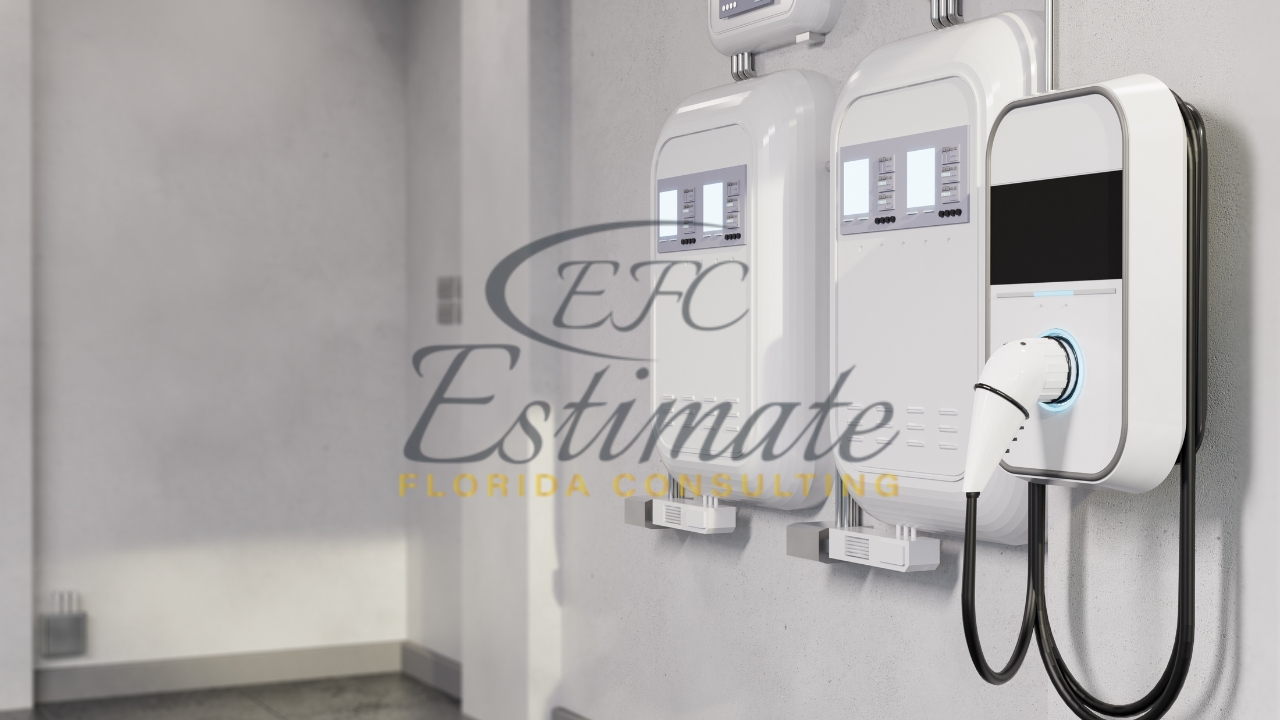
EV Charger Categories
Florida drivers typically encounter three charger categories, and understanding the differences early helps you budget accurately and select equipment that matches real-world use patterns.
Level 1: Trickle Convenience
Using a standard 120-volt outlet, these chargers add only a few miles of range per hour. They suit golf carts, plug-in hybrids, or emergency top-offs overnight.
Level 2: Residential Workhorse
A 240-volt circuit cuts charge time to under ten hours for most battery-electric cars. This balance of speed, hardware cost, and moderate grid impact makes Level 2 today’s dominant home-installation choice statewide.
Level 3: DC Fast Charging
Commercial plazas rely on these 400- to 1,000-volt units to deliver up to 80 percent capacity in minutes. Their industrial power draw and price tag keep them out of typical homes, but they remain vital for highway corridors and fleet depots.
Equipment Price Ranges
Hardware costs swing widely, so anchoring expectations before shopping prevents sticker shock and lets rebates feel like a bonus instead of financial salvation.
- Level 1 cords usually ship with the vehicle: Yet replacements still cost $200–$400 because weather-resistant cabling and integrated sensors raise manufacturing costs.
- Plug-in Level 2 units run $350–$650: These often provide Wi-Fi scheduling, load sharing, and UL certification. Higher-amperage models can reach $800 or more.
- Hardwired smart stations priced $700–$1,400: They add RFID access, demand-response capability, and longer warranties, making them attractive for multifamily garages and vacation rentals. For technical details on proper installation, see EV charger installation and repair guidance.
- Bidirectional chargers start near $4,000: Their inverters and grid-sync firmware add complexity, but they can someday power your home during hurricane outages.
Always verify NEMA ratings, cable length, and firmware-update pathways; those small specification lines determine whether future EV upgrades force another equipment purchase.
Labor And Installation Factors
Florida’s humid climate and varied housing stock mean labor quotes differ dramatically. Knowing what drives the price helps you negotiate confidently with electricians.
- Panel proximity determines conduit length. Every extra foot of trench or attic crawl equals more materials, labor hours, and possible drywall repair.
- Amperage availability dictates whether load management or a full service upgrade is required. Upgrades add $1,200–$3,000 but prevent nuisance breaker trips later.
- Mounting surface matters. Concrete block walls demand hammer-drilling and Tapcon fasteners, while wooden studs accept lag bolts quickly, reducing labor minutes and dollars.
- Permitting logistics vary by county. Some inspectors allow virtual sign-offs; others schedule two onsite visits, both billed as hourly wait time by contractors.
Collect at least three bids and insist each electrician walks the route from panel to parking spot; clear routing now eliminates the dreaded change order later.
Electrical Panel Review
Before any Florida installer touches a saw, they check panel load to keep your lights bright and breakers cool during those sultry August afternoons.
Load Calculation Essentials
Installers tally existing HVAC, pool pumps, and appliances, then add charger amperage under NEC Article 220. Miss something here and you risk breaker trips and insurance headaches.
Upgrade Versus Load-Shedding
A 200-amp upgrade costs more upfront, yet supports future EVs and heat pumps. Load-shedding devices cost less but may limit simultaneous appliance use.
Smart Panel Opportunities
Florida Power & Light incentivizes smart panels that dynamically share capacity, letting smaller service drops behave like larger ones while collecting useful energy data.
Permits And Inspection Fees
Skipping permits might sound tempting, but hurricanes teach Floridians why code compliance matters. Insurance claims evaporate when undocumented electrical work causes damage.
Typical Municipal Fees
Across Orlando, Tampa, and Miami, electrical-permit fees hover between $50 and $300. Re-inspection costs are tacked on if corrections are required.
Submission Package Contents
You will need load calculations, equipment cut sheets, and a site sketch. Many professionals include these in turnkey pricing, simplifying homeowner involvement to a single signature.
Inspection Day Checklist
Keep the breaker off, provide ladder access, and have charger manuals onsite. A smooth inspection passes quickly, avoiding costly return trips.
Regional Cost Variations
From Pensacola’s modest wages to South Beach’s premium labor, Florida’s size alone creates pricing gaps that you must consider when comparing statewide quotes.
- Panhandle bargains reflect lower hourly electrician rates—often around $90—yet longer distances to distributors can offset savings with higher material delivery fees.
- Central-corridor demand keeps contractors busy; scheduling flexibility sometimes trims costs more than haggling over rate sheets.
- Coastal code stringency near storm-surge zones increases anchoring requirements and corrosion-resistant hardware, adding roughly 10 percent to base budgets.
- Utility programs differ. Duke Energy’s free meter-collar pilot in select ZIP codes can erase panel-upgrade costs for qualifying homeowners.
Pair local labor intel with utility-incentive research to reveal genuine bottom-line numbers instead of assuming national averages apply to your neighborhood.
Rebates, Credits, Savings
Florida may lack a statewide incentive, yet combining federal, utility, and manufacturer offers can slash total spend dramatically if timelines and paperwork align.
- Federal 30 percent credit returns up to $1,000 against taxes when you use qualified hardware and submit IRS Form 8911 with receipts.
- Utility rebates like Tampa Electric’s $400 bill credit arrive once inspection passes and data-sharing terms are accepted in their portal.
- Manufacturer promotions often bundle free cables or extended warranties during Earth Month, trimming accessory costs.
- Insurance discounts occasionally appear because permanently mounted chargers pose lower trip and fire risks than portable cords.
Bookmark regional incentive pages and set calendar reminders—many programs close once budget caps hit, leaving late applicants to pay full price unnecessarily.
Long-Term Investment Value
An EV charger is not just another appliance; it is infrastructure that boosts property desirability much like rooftop solar, especially within tourism-heavy Florida markets.
Home Resale Premiums
Realtor surveys show listings highlighting Level 2 charging receive more showings and command roughly 2 percent higher offers, reflecting buyer readiness for electric mobility.
Fleet Future-Proofing
A duplex or Airbnb hosting multiple vehicles today can scale revenue later by installing load-sharing chargers that bill guests seamlessly through smartphone apps.
Grid Interaction Revenue
Utilities are piloting vehicle-to-grid programs that buy back stored energy. Enrolling early positions homeowners to earn passive income once regulations fully open.
Professional Versus DIY
The YouTube rabbit hole makes wiring look simple, yet Florida’s humidity, code nuances, and permit requirements challenge even seasoned weekend warriors.
DIY Temptations
Skipping labor fees appeals to budget-minded owners, but one mis-torqued lug could arc through aluminum conductors and void expensive vehicle warranties.
Professional Advantages
Licensed electricians handle permitting, carry liability insurance, and often bundle workmanship warranties. A single service call later can outweigh the initial savings you imagined.
Cost Differential Reality
Statewide data shows professional installs average $1,200 more than DIY material costs, yet homeowners avoid rework fines and stressful inspections that frequently follow self-installs. Explore a balanced view at Qmerit’s cost factor guide before picking up a screwdriver or dialing your favorite contractor.
Ongoing Energy Expenses
After the inspector signs off, electricity becomes your real fuel bill, and Florida’s tiered utility rates reward smarter charging habits over brute-force hardware upgrades.
Time-of-Use Strategy
Scheduling overnight sessions between 10 p.m. and 6 a.m. can nearly halve per-kilowatt costs, especially under Duke Energy’s Residential Service Time-of-Use tariff.
Solar Synergy
Pairing a five-kilowatt photovoltaic array with daytime workplace charging allows surplus production to offset home energy use, shrinking net charger cost each month.
Monitoring And Maintenance
Most smart chargers log consumption; reviewing data quarterly uncovers phantom loads or cable corrosion early, keeping your 25-year infrastructure investment efficient and safe.
Practical Takeaways
You now grasp the real-world numbers, trade-offs, and paperwork shaping Florida charger projects. Verify panel capacity, schedule inspections early, and leverage incentives before budgets close. With a clear scope and verified load calculations, accurate cost estimating will stand up from groundbreaking through final walkthrough.