
Whether you are a homeowner dealing with a midnight pipe burst or a developer planning a $500K commercial build in Miami, the choice between licensed vs unlicensed plumbers is one of the most consequential decisions you will make. At first glance, the difference might seem like a matter of hourly rates or “red tape,” but in the state of Florida, it represents the thin line between a successful investment and a financial disaster.
In Florida’s rapidly evolving construction market, licensed plumbers offer verified expertise, adherence to the 2026 Florida Building Code, and essential legal protections. Conversely, while unlicensed individuals may offer lower upfront costs, they often bring significant risks of hiring unlicensed plumber Florida, including failed inspections, lack of insurance coverage, and zero accountability if the work fails.
💰 Don’t let hidden expenses drain your budget—start with a detailed plumbing estimate today.
As professional construction estimators, Estimate Florida Consulting has seen how “budget” plumbing can lead to project overruns costing five times the original savings. This guide explores the critical differences in qualifications, legal requirements, and long-term value to help you make an informed choice for your property.
What Does It Mean to Be a Licensed Plumber in Florida?
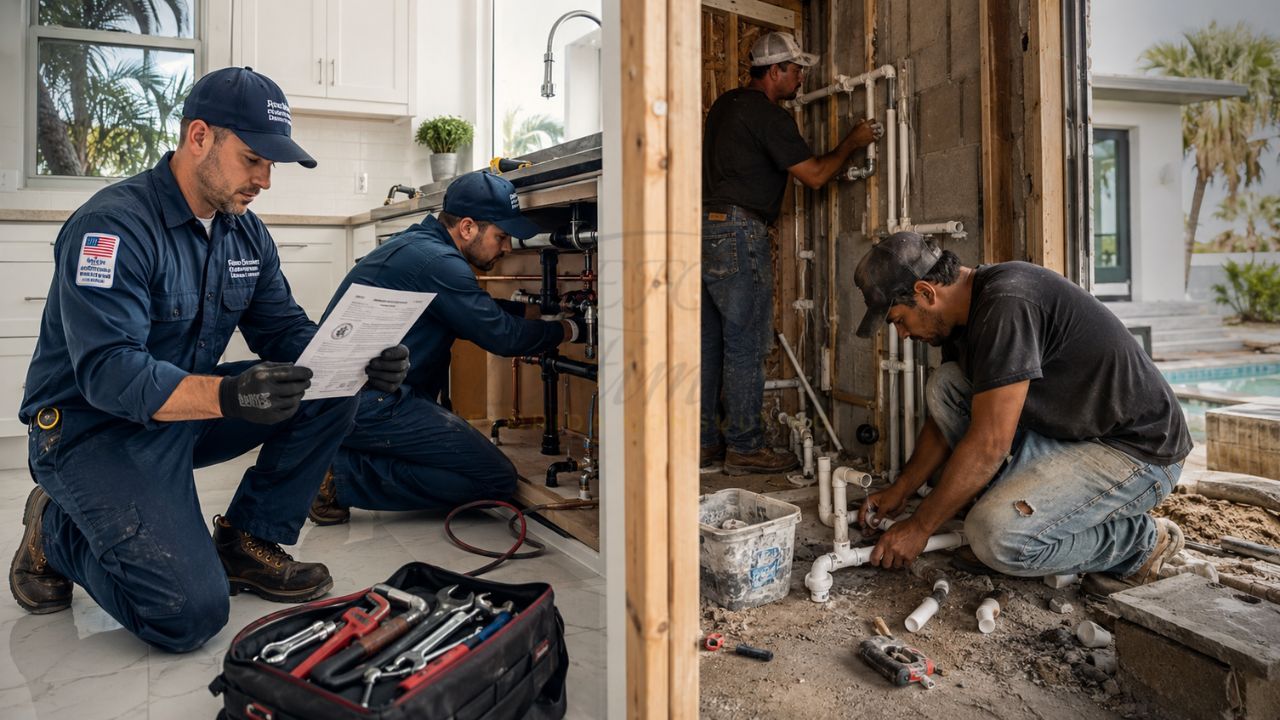
In Florida, “plumber” isn’t just a job title—it’s a regulated profession overseen by the Department of Business and Professional Regulation (DBPR). Florida plumbing license requirements are among the strictest in the nation to ensure public safety and environmental protection.
Types of Florida Plumbing Licenses
The DBPR offers two primary licensing paths, each with specific jurisdictional authority:
- Certified Plumber: This license allows a professional to work anywhere in the state of Florida.
- Registered Plumber: This professional is limited to working within specific counties or cities where they have local competency credentials.
The Path to Licensure
Earning a license is not a simple weekend task. It requires a rigorous combination of education and hands-on experience:
- Apprenticeships: Professionals typically complete 4 to 8 years of on-the-job training (4,000–8,000 hours) under a master plumber.
- Formal Education: Many undergo 2 to 4 years of technical schooling.
- Standardized Testing: Applicants must pass trade-specific exams and business/finance exams covering everything from pipe installation to Florida’s strict lien laws.
- Background and Credit Checks: The DBPR requires all applicants to undergo background and credit checks to ensure financial and professional stability.
📊 Make informed choices with precise plumbing estimates tailored to your project’s needs.
Key Differences Between Licensed and Unlicensed Plumbers
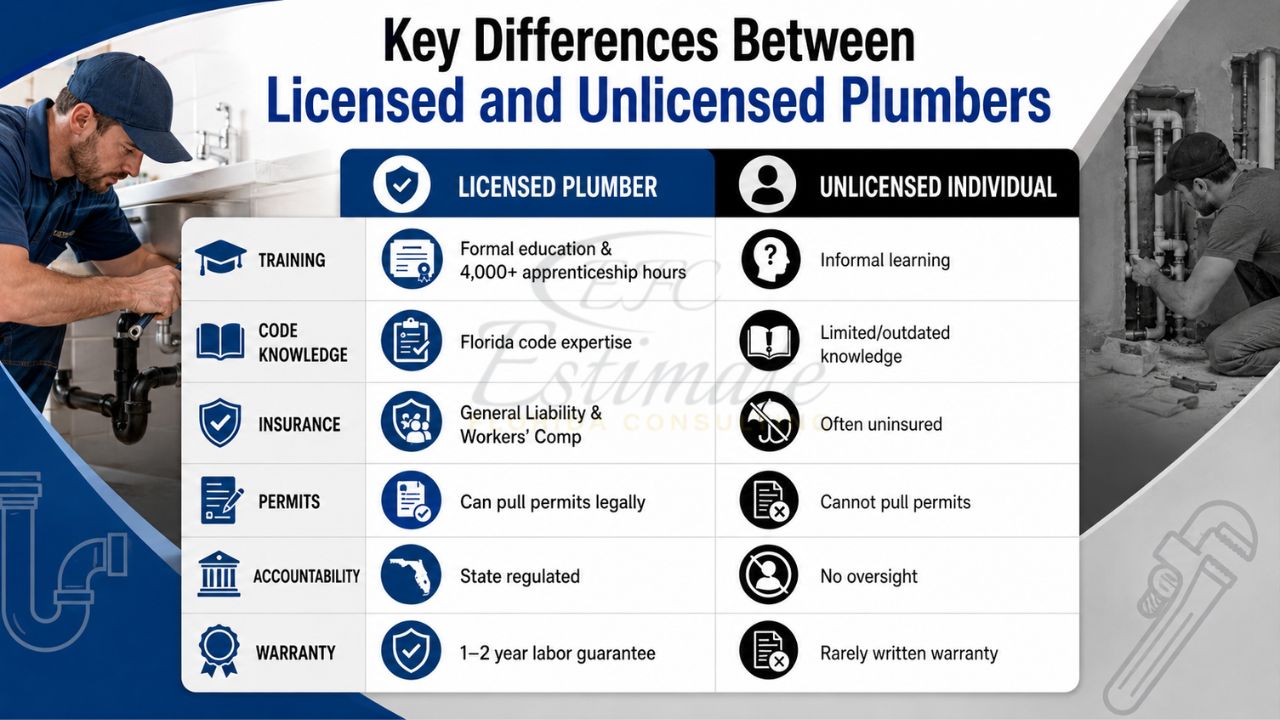
When you ask, “should I hire a licensed plumber,” you are essentially asking whether you want a professional with verified skills or a “handyman” with a pipe wrench. The table below summarizes the operational differences:
| Feature | Licensed Plumber | Unlicensed Individual |
|---|---|---|
| Training | Formal education & 4,000+ hours apprenticeship | Informal learning or limited exposure |
| Code Knowledge | Verified expertise in 2026 Florida Building Code | Likely outdated or incomplete knowledge |
| Insurance | Carries General Liability & Workers’ Comp | Often zero business-specific insurance |
| Permits | Legally authorized to pull necessary city permits | Cannot pull permits; work remains “off books” |
| Accountability | Answerable to the DBPR and state boards | No regulatory oversight or recourse |
| Warranty | Typically offers 1–2 year labor guarantees | Rarely provides written warranties |
Risks of Hiring an Unlicensed Plumber in Florida
The risks of hiring unlicensed plumber Florida go far beyond a leaky faucet. In a state prone to extreme weather and high humidity, poor plumbing can quickly escalate into a catastrophic property loss.
1. Financial Loss from Subpar Work
Unlicensed individuals often lack the advanced diagnostic tools—like video inspection cameras or hydro-jetting equipment—needed for complex fixes. A misdiagnosed sewer line issue or an improperly vented drainage system can cause persistent odors or recurring backups that cost $500 to $10,000 to fix correctly.
2. Failed Property Inspections
If you are doing new construction or a major renovation, all plumbing must pass a city inspection. Unlicensed work often ignores Florida Building Code (FBC) mandates for pipe slopes or high-wind straps for roof vents. A failed inspection can cost thousands in rework and delay occupancy permits.
3. Impact on Resale Value
When you sell a property in Florida, you must disclose whether improvements were made with permits. Unpermitted plumbing discovered during a buyer’s inspection can tank a sale or force you to pay for expensive “permits by affidavit” and destructive testing to prove the work is safe.
🏆 Save time, reduce risk, and maximize value with professional plumbing estimating services.
Benefits of Hiring a Licensed Plumber
The benefits of licensed plumbers are foundational to your property’s long-term health and your own peace of mind.
- Precision and Standards: Licensed pros use industry-standard materials, such as PEX or copper pipes, and ensure correct pressure venting to prevent “sump pump failure” or “pipe corrosion”.
- Long-Term Cost Savings: While a licensed plumber might charge $75–$150 per hour compared to an unlicensed individual’s $30–$80, the durable repairs and energy-efficient fixture installations save homeowners $500–$5,000 over time.
- Hurricane Resilience: In coastal zones like Miami or Fort Lauderdale, licensed plumbers are trained to install impact-resistant fittings and hurricane-code piping upgrades required by current Florida laws.
Insurance and Liability Concerns
One of the most dangerous aspects of trade work is unlicensed plumber insurance liability. Plumbing involves high-pressure water, gas lines, and structural drilling—all of which carry high risk.
Liability for Property Damage
If a licensed plumber accidentally floods your basement or causes mold growth due to a faulty pipe installation, their general liability insurance covers the remediation costs. If an unlicensed plumber causes the same damage, you—the property owner—are likely responsible for 100% of the repairs.
The Danger of Injuries on Your Property
Florida law is strict regarding workers’ compensation. If an unlicensed worker is injured on your roof or in your crawlspace, they may not have their own insurance. They could potentially file a claim against your homeowner’s or commercial property insurance policy, leading to legal battles and massive premium hikes.
Permit Requirements and Legal Implications
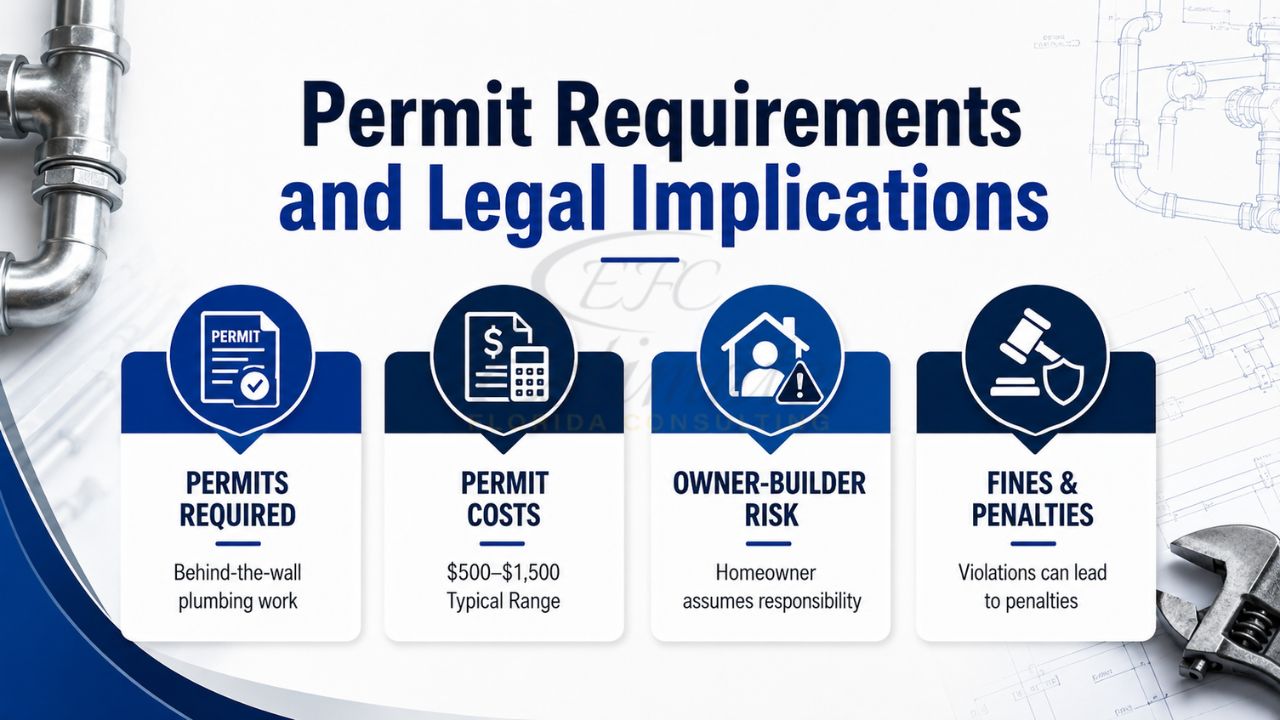
In Florida, almost any plumbing work that goes “behind the wall”—including water heater installations, sewer line repairs, or new branch lines—requires a plumbing permit.
- Permit Costs: Typical residential permits range from $500 to $1,500 depending on the project scope.
- The “Owner-Builder” Trap: Some unlicensed individuals ask homeowners to pull the permit as an “owner-builder.” This makes you legally responsible for the work’s compliance and the safety of the workers on site.
- Fines and Penalties: Performing unlicensed plumbing work is a crime in Florida. The individual can face “cease and desist” orders and criminal charges, while the property owner may face triple-fee penalties from the building department.
How This Affects Construction Projects and Estimates
At Estimate Florida Consulting, we focus on accuracy. When we provide plumbing estimating Florida services, we base our numbers on the cost of licensed labor and code-compliant materials.
Why Accurate Estimates Matter
- Bidding as a Subcontractor: If you are a general contractor, using “ballpark” numbers from an unlicensed plumber will lead to a 20–30% loss in bid accuracy.
- Hurricane Code Integration: Our estimates include the 5–12% Year-over-Year (YoY) spikes in copper and PEX pricing, as well as the specific hurricane-code upgrades required by the 2026 Florida Building Code.
- Budget Overruns: Using unlicensed labor often leads to “hidden costs” like missed backflow preventers or incorrect pipe sizing, which are caught late in the project when they are most expensive to fix.
✅ Protect your investment, avoid surprises, and plan your plumbing budget with confidence.
How to Verify if a Plumber is Licensed in Florida
Protect yourself by following these three steps before signing any contract:
- Ask for the License Number: Every licensed plumber in Florida must have a number starting with “CFC” (Certified) or “RF” (Registered).
- Use the DBPR Portal: Visit the MyFloridaLicense.com website and use the “Verify a License” tool to ensure the license is “Active” and has no pending disciplinary actions.
- Check Sunbiz.org: Ensure the company is a legally registered business in Florida and that the person you are talking to is actually an authorized representative of that license holder.
Related Estimating Information
For readers comparing plumbing scope, quantities, and current trade-pricing data, these related estimating resources may be useful:
- Plumbing system cost estimator
- Plumbing installation cost guide
- New construction plumbing cost guide
- Construction estimating services
Frequently Asked Questions (FAQ)
- Should I hire a licensed plumber for small jobs like a leaky faucet?
While some minor repairs can be done by a handyman, any work involving the main supply or drainage lines should be handled by a licensed professional to ensure it meets Florida safety standards and doesn’t lead to larger issues like mold growth. - Can an unlicensed plumber pull a permit in Florida?
No. Only a licensed plumbing contractor (or an authorized “owner-builder” homeowner) can pull a plumbing permit in Florida. - What happens if an unlicensed plumber is injured on my property?
You may be held financially liable for their medical expenses and lost wages through your own property insurance, as unlicensed workers rarely carry their own workers’ compensation - Is PEX piping allowed under the Florida Building Code?
Yes, PEX is very popular in Florida because it is flexible and resistant to the corrosion often caused by Florida’s water chemistry. However, it must be installed by a professional who understands the specific “hurricane-resistant” routing requirements. - How much more does a licensed plumber cost in Florida?
Hourly rates are typically 40–60% higher than unlicensed labor, but the long-term savings from avoiding rework, property damage, and failed inspections make the licensed professional the more cost-effective choice. - Does homeowner’s insurance cover damage caused by unlicensed work?
Many policies have clauses that exclude coverage for damage caused by “faulty workmanship” or work performed without required permits. - How do I know if my project needs a plumbing permit?
In general, if you are moving pipes, adding fixtures, or replacing a water heater, a permit is required by the state of Florida.
Conclusion: Choose Expertise for Your Next Project
In the Florida construction world, your plumbing system is only as good as the person installing it. While the lower price tag of an unlicensed individual may be tempting, the risks of hiring unlicensed plumber Florida far outweigh the short-term savings. From insurance liability to code compliance, a licensed plumber is the only way to ensure your property remains safe, legal, and valuable.
For contractors, developers, and homeowners who want to get it right the first time, Estimate Florida Consulting is your partner for success. We provide precise, code-compliant plumbing estimates that help you bid with confidence and manage your budget without surprises.
Ready for accurate, fast trade-specific estimates that help you win more Florida projects?
Contact Estimate Florida Consulting today for a free, no-obligation quote and recommendations for reliable licensed trades in your area.
Email: info@estimatorflorida.com
Phone: 561-530-2845